
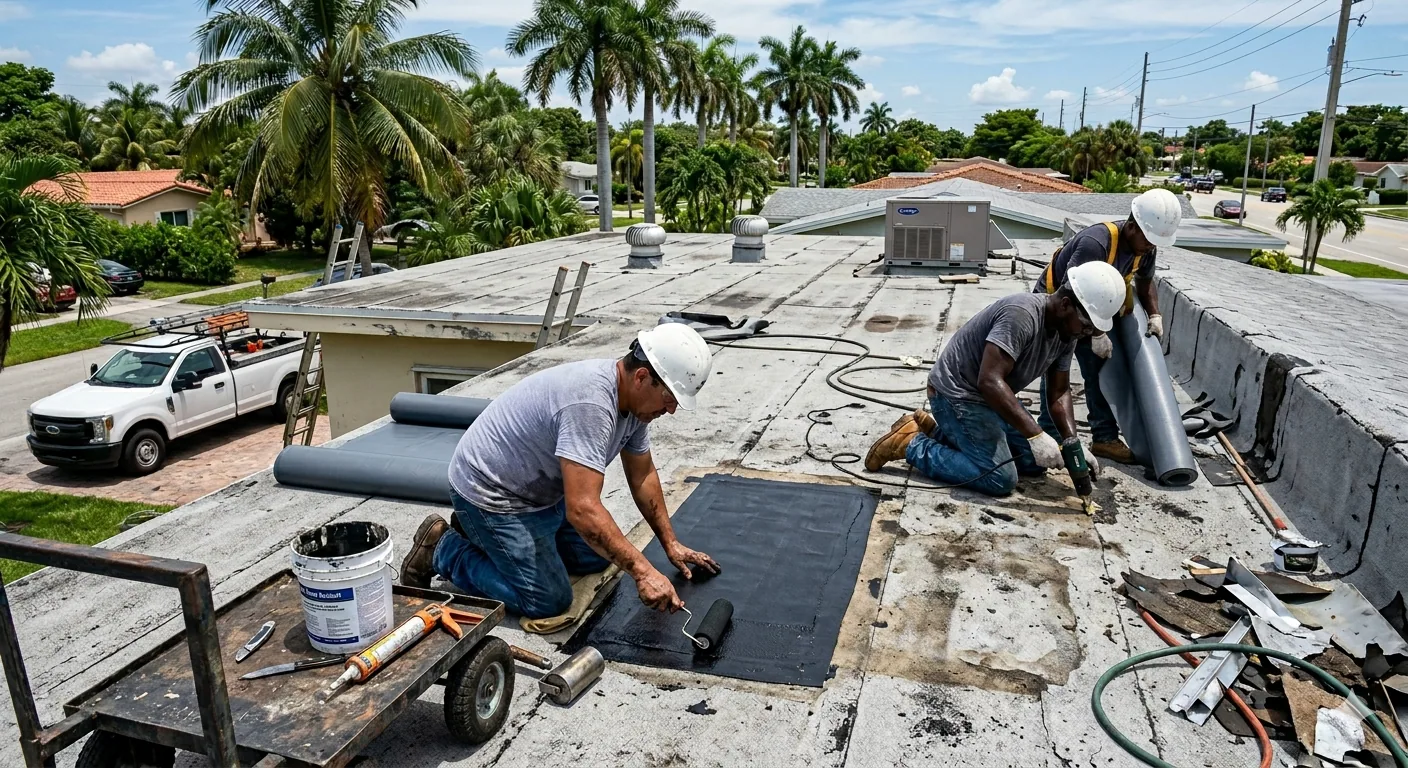
Commercial Roof Membrane Puncture Repair in Victoria, TX
Roof Damage Repair · Victoria, TX
Commercial roof membrane puncture repair in Victoria confirms the opening, checks concealed moisture limits, and ties the patch to a sound compatible surface.
Next step
Request a Roof Assessment
Call
555-555-5555
A cut, puncture, or small opening in a roof membrane can admit water while remaining easy to miss from the ground. Commercial roof membrane puncture repair in Victoria starts with a safe roof walk, a marked opening, and the material around it. We inspect for impact, abrasion, tool damage, or another source, then prepare a repair that ties into sound, compatible membrane instead of covering an uncertain surface.
Commercial Roof Membrane Puncture Repair
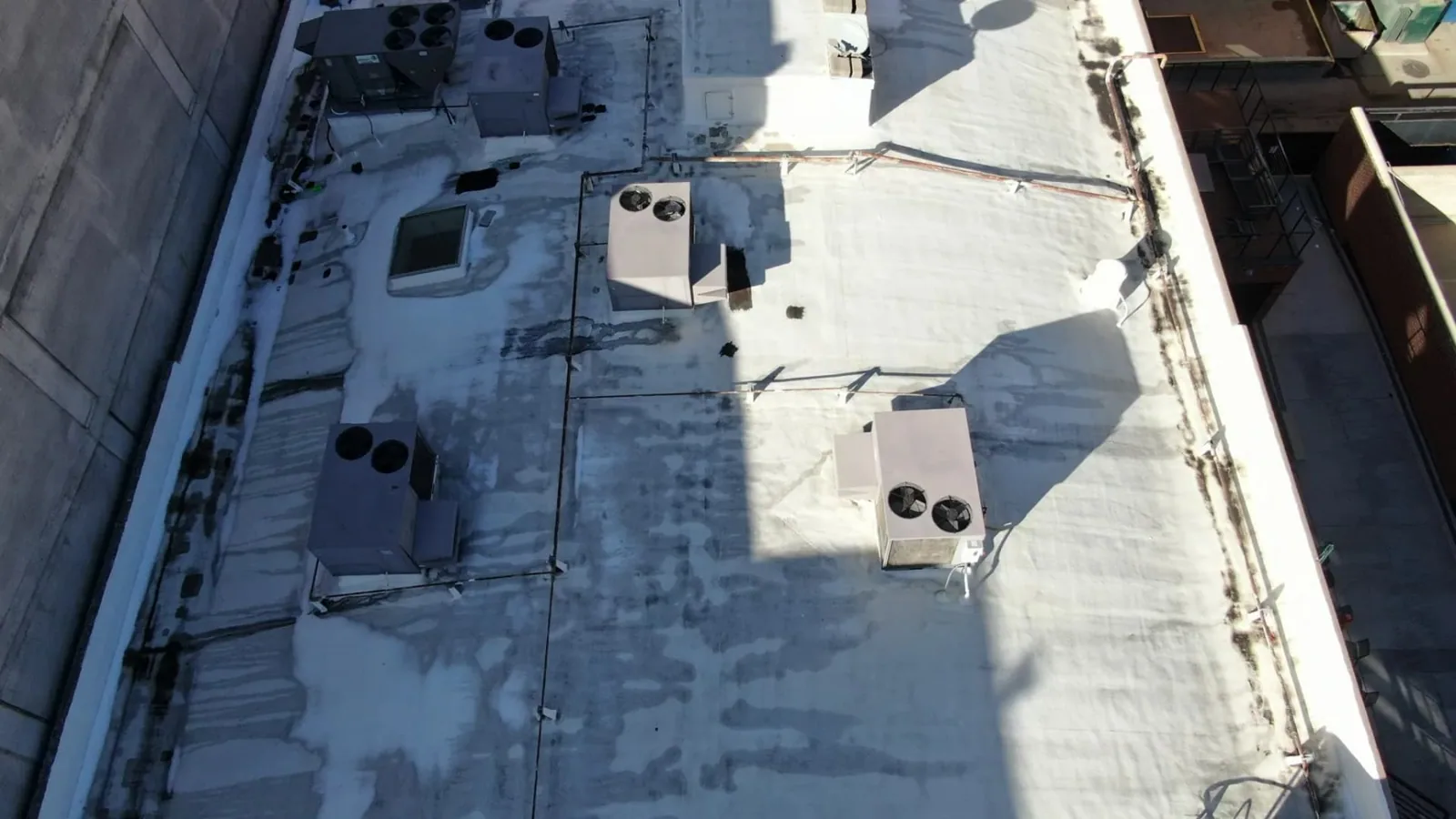
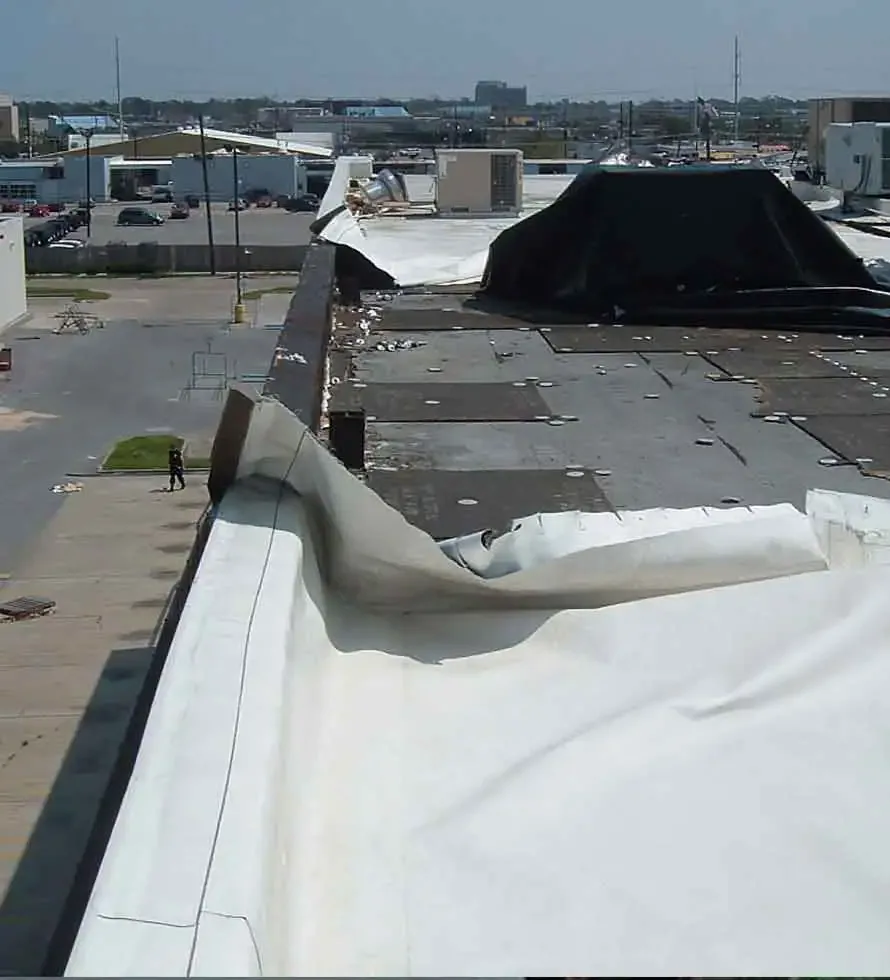
If water is active inside, the property contact should protect occupants, equipment, stock, and electrical areas while arranging qualified roof access. Loose material, a damaged ladder, or a wet roof changes the route and timing. Do not send untrained staff to probe an opening or move equipment across the membrane. We document the reported room, date, weather, and any work that took place nearby. That information helps locate the roof section without treating an interior stain as proof of the puncture point.
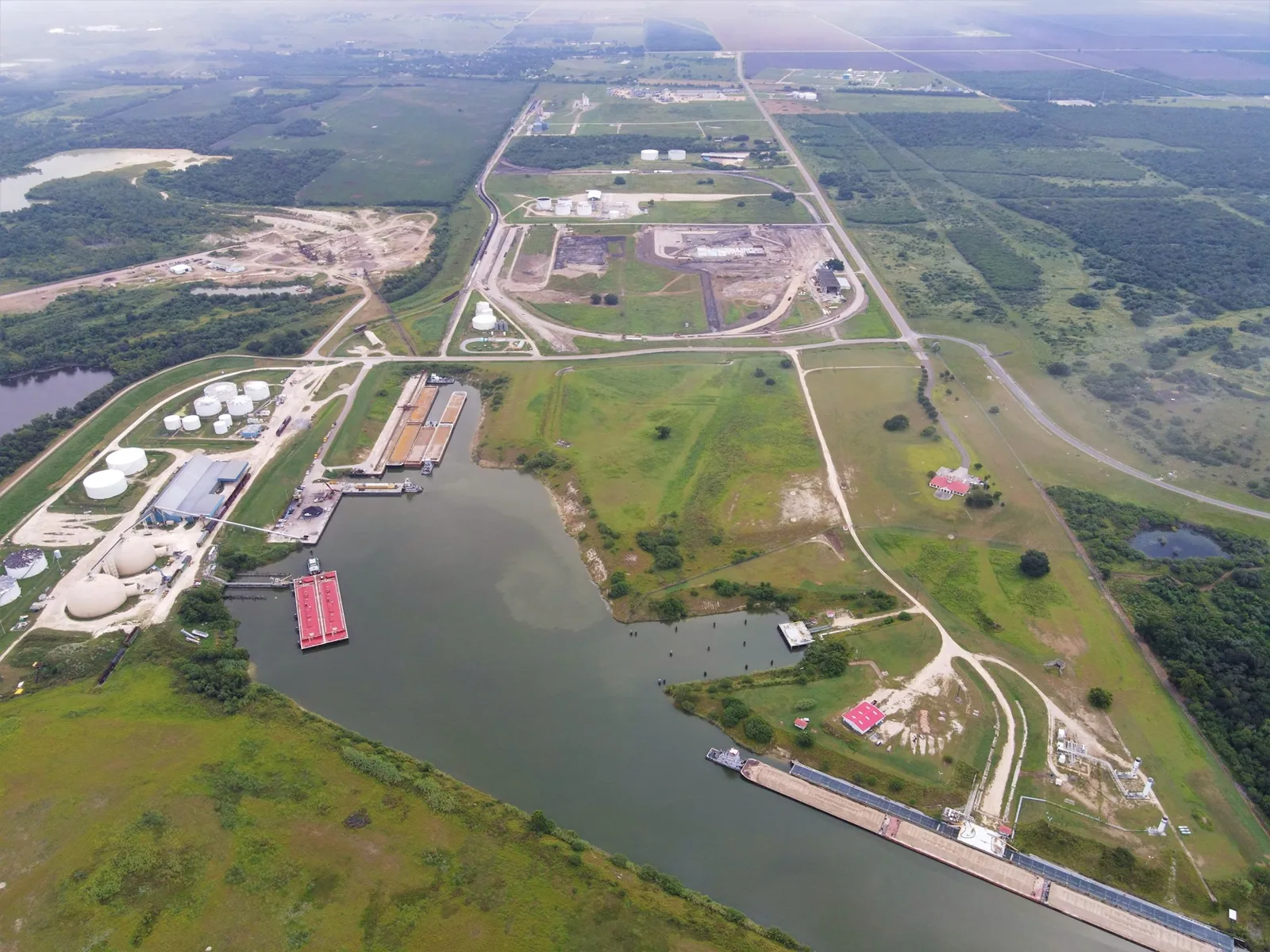
At a large industrial property such as those in Port of Victoria Industrial Park South, site rules may control escorts, vehicle lanes, or equipment shutdowns. The facility contact confirms those rules and the approved roof entrance. A commercial roof leak repair may be needed to protect an active opening while the membrane and interior path are evaluated.
Protect the area before anyone reaches the roof
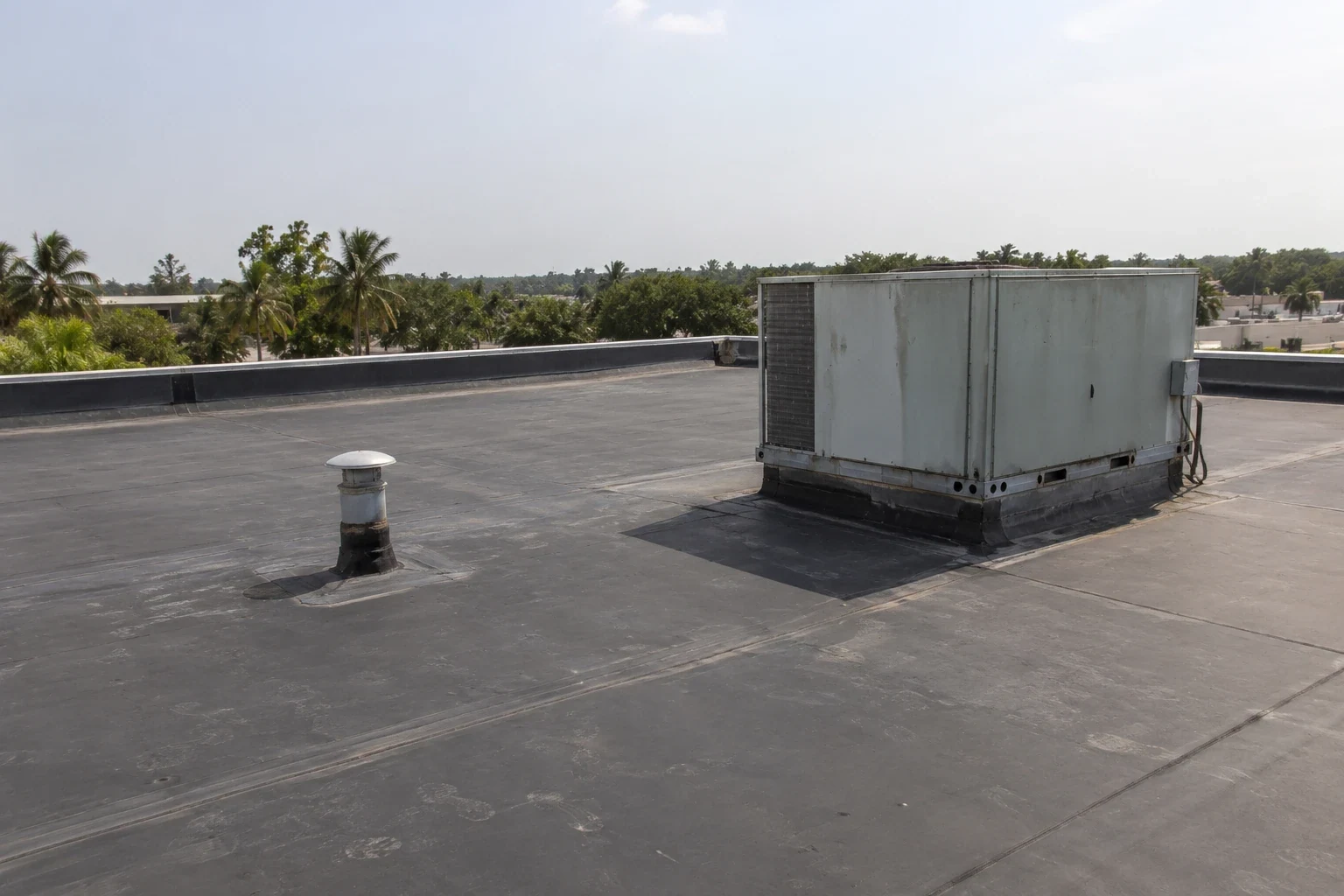
We inspect the reported area and the likely travel path for cuts, punctures, scuffs, indentations, splits, or abrasion. The nearby membrane may show stress beyond the visible hole, especially around a support, loose debris, rooftop equipment, or a maintenance route. We photograph the opening with a location reference and assess whether the substrate or insulation appears wet or displaced. Concealed conditions remain unknown unless testing or an opening provides evidence.
Some marks are superficial, while a small cut may extend below a coating or expose reinforcement. We identify the membrane type, age if documented, existing surface treatment, and nearby seams or penetrations. For properties across the Victoria service area, a roof plan and clear photo labels keep observations tied to the correct building. The report separates a confirmed puncture from suspected impact or wear that has not been tested.
For a multi-building owner, use the building name, roof section, grid reference, and a nearby permanent feature to label the photograph. A loose fastener beside a puncture can be an observation, but it is not enough to say that the fastener caused the opening. The record can note likely contact sources as possibilities and identify who supplied that information. This keeps a later repair or insurance review grounded in what the crew could see rather than a guessed sequence of events.
Find the opening and its surrounding damage
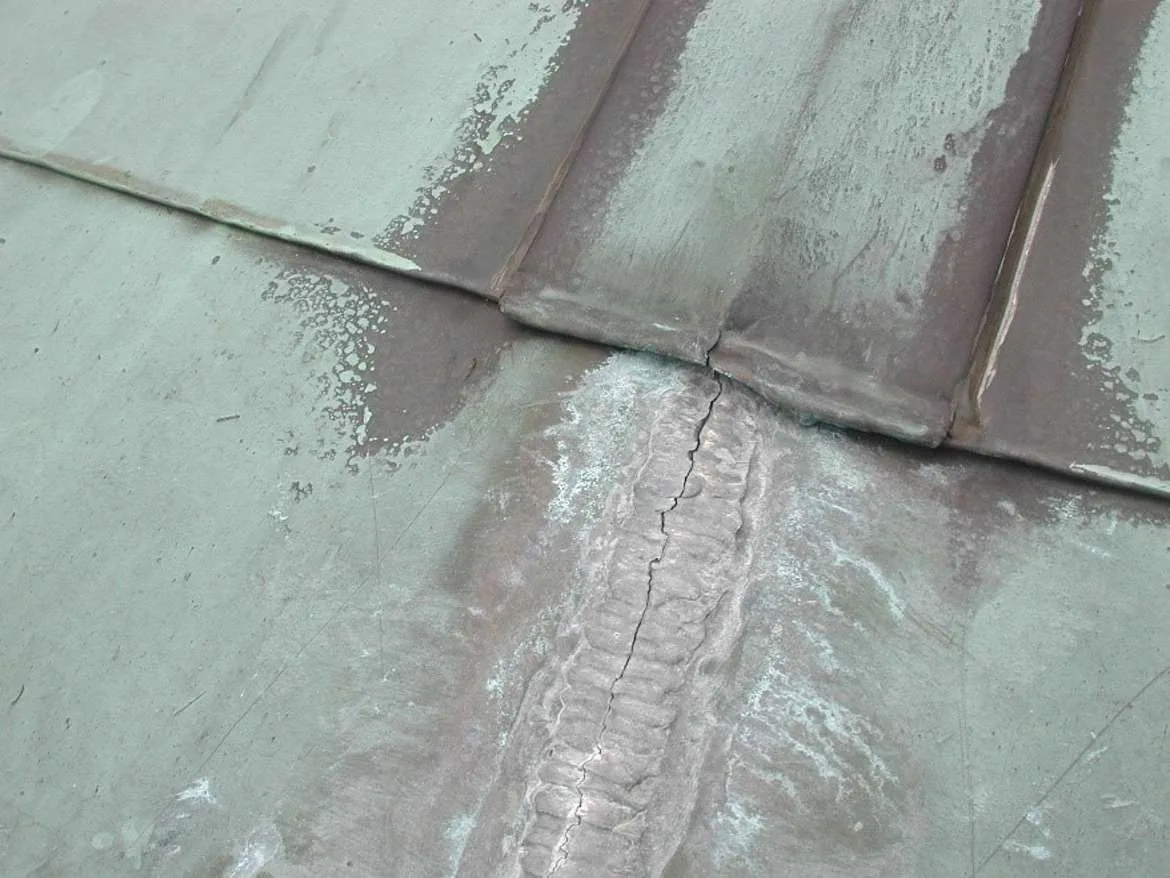
Possible sources include a dropped fastener, sharp debris, a tool, a footpath edge, or movement around equipment. We look for a plausible contact point and nearby witness marks, but do not assign responsibility without evidence. A single indentation does not identify who caused it or when. If maintenance crews or other contractors recently accessed the roof, the owner can compare work records and access logs with the marked location.
Surface damage at a seam or flashing may require a different repair than a puncture in the open field. A seam failure repair addresses a separated joint; a flashing failure repair follows a curb, wall, or penetration interface. We keep the scope matched to the observed defect rather than expanding it to every nearby detail without inspection.
Assess what may have contacted the membrane
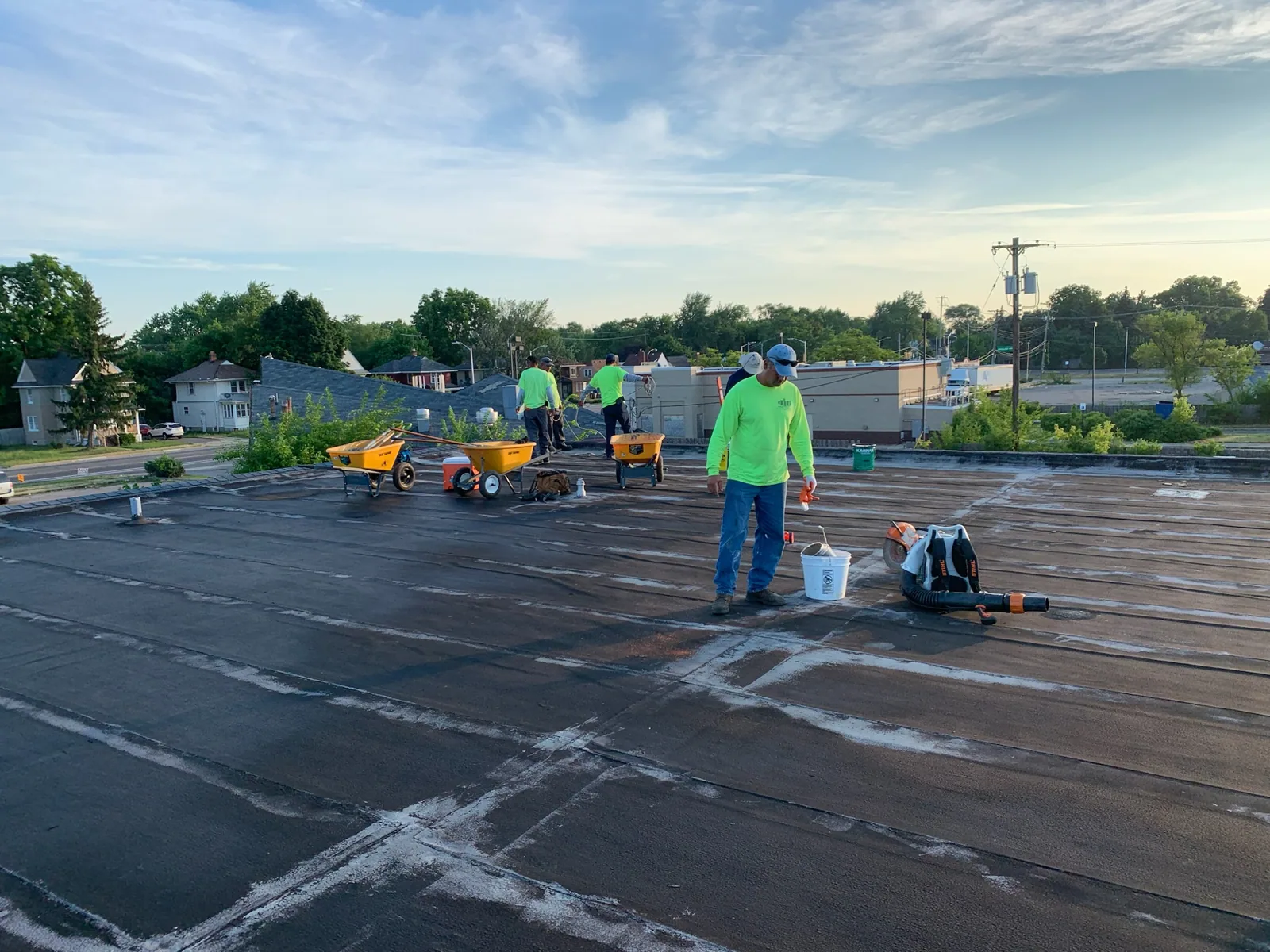
Before installing a patch, the crew identifies the membrane and confirms that the repair material can connect to it. Surface preparation may require removal of loose or contaminated material, cleaning, drying, and trimming only what is needed to establish a sound boundary. The patch shape and overlap follow the roof-system requirements. We do not apply a generic sealant to an unknown polymer or assume a coating can bridge a tear without compatible reinforcement.
A TPO, PVC, EPDM, modified-bitumen, and coated roof each require different preparation and connection methods. The EPDM roof system may call for a manufacturer-compatible adhesive or flashing detail; another membrane may use a different process. If the area cannot bond reliably because of widespread brittleness or incompatible coatings, a broader replacement evaluation should explain why a local patch is not sound.
Prepare a patch that bonds to the existing system
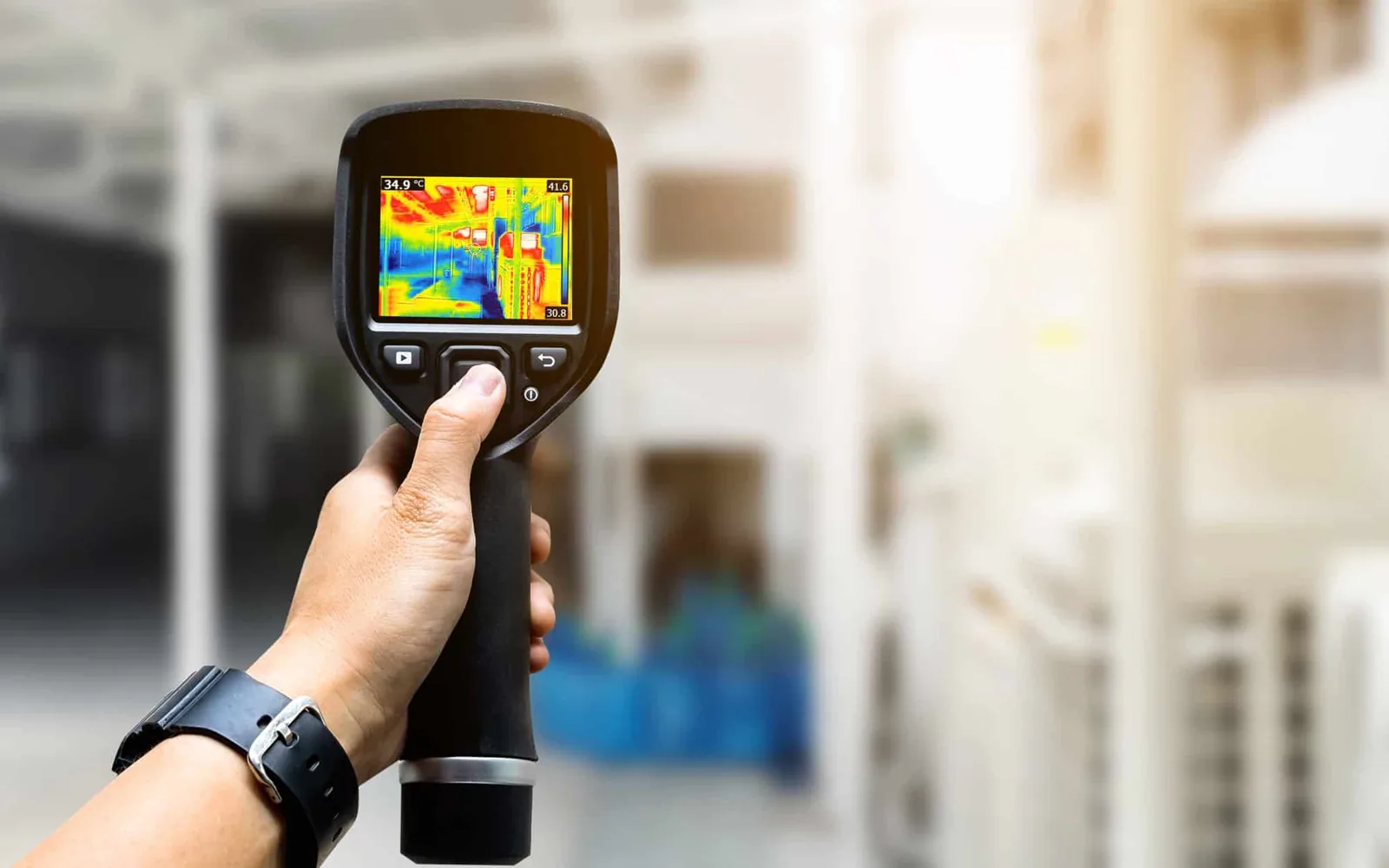
A puncture can let water reach insulation, cover board, or deck, but the extent is not visible from the hole alone. We note staining, soft or displaced surface, damp material at an edge, and any limits on inspection. If the work scope calls for moisture testing or a selective opening, the method and locations should be agreed with the owner first. Testing can support a removal boundary; it should not be presented as a complete map if only selected areas were sampled.
When water has spread, the repair may include removal and replacement of affected materials around the opening. The area to be removed should be supported by the field findings and the assembly requirements. If standing water is also present, a separate ponding water roof repair assessment may identify a drainage condition, but it does not change the need to document the puncture itself. A photo record distinguishes the two observations.
Check whether moisture extends beyond the surface
Closeout photographs should show the opening before work, the prepared surface, completed patch, and the adjacent seam or field. The report names the roof section, material used, repair perimeter, and any concealed condition that remains unknown. If the opening is under equipment or near a maintenance path, note the access limitation and any change needed to reduce repeat contact. A completed patch does not prove that an unrelated interior stain has dried or that other roof zones were inspected.
For the next maintenance visit, the property team can compare the same location and photo orientation. A roof condition report preserves the repair record alongside nearby equipment and drainage notes. Buildings at Lone Tree II Industrial Park or in other Victoria locations still need their own roof-system and access records, even when the owner uses one vendor for the portfolio.
Good closeout records should remain useful after the site contact or roofing crew changes. Include the inspection date, roof plan version, photo names, system identification, repair material, and any area that could not be reached safely. If the manager tracks a roof asset register, link the repair record to its building and roof section rather than filing it only under a service ticket. That makes the next condition review easier to compare without implying that every section was inspected.
Record the patch and any limits
Related Roofing Work
Frequently Asked Questions
Can a small puncture be patched without replacing the roof?
Often, when inspection finds a sound boundary and a compatible material can tie into the existing membrane. The assembly and concealed moisture still need review.
Can you tell what caused a puncture?
Sometimes the contact pattern and nearby work records provide context, but responsibility or timing should not be assigned without evidence.
Does a patch confirm the insulation is dry?
No. Concealed moisture requires appropriate testing or an agreed selective opening. The closeout should state what was and was not checked.
Can I use roofing cement on a membrane hole?
A generic material can be incompatible. Identify the roof system and use a repair detail suitable for that membrane.
What should be included in the repair record?
Record the roof section, opening, preparation, patch material, photographs, access limits, and any condition that still needs investigation.
Share the roof system, marked location, leak timing, recent roof activity, and access rules. We will document the opening and compatible patch scope.
Call 555-555-5555 or email [email protected].