
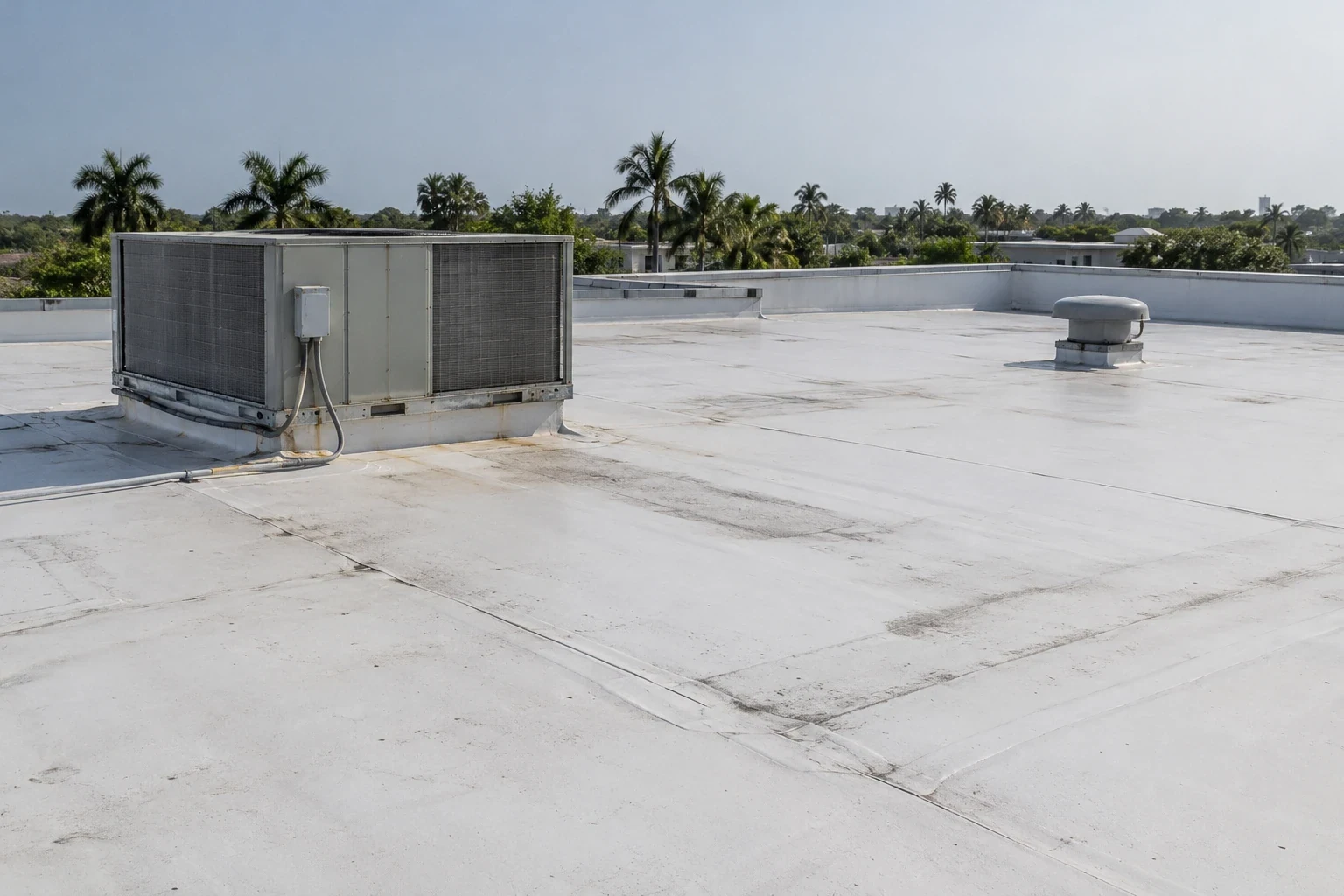
PVC Roofing in Victoria, TX
Roof Systems · Victoria, TX
PVC roofing in Victoria requires a compatible assembly, clean welded seams, and careful flashing at drains, equipment, walls, and roof edges.
Next step
Request a Roof Assessment
Call
555-555-5555
A PVC roof is judged at the drain, curb, and perimeter as much as across the open field. Its thermoplastic seams are heat-welded, and each transition must connect to a sound substrate and flashing detail. In Victoria, strong summer heat and storm exposure make surface condition, attachment, and weather timing part of the installation plan. We inspect the existing assembly before setting a repair or replacement scope.
PVC Roofing
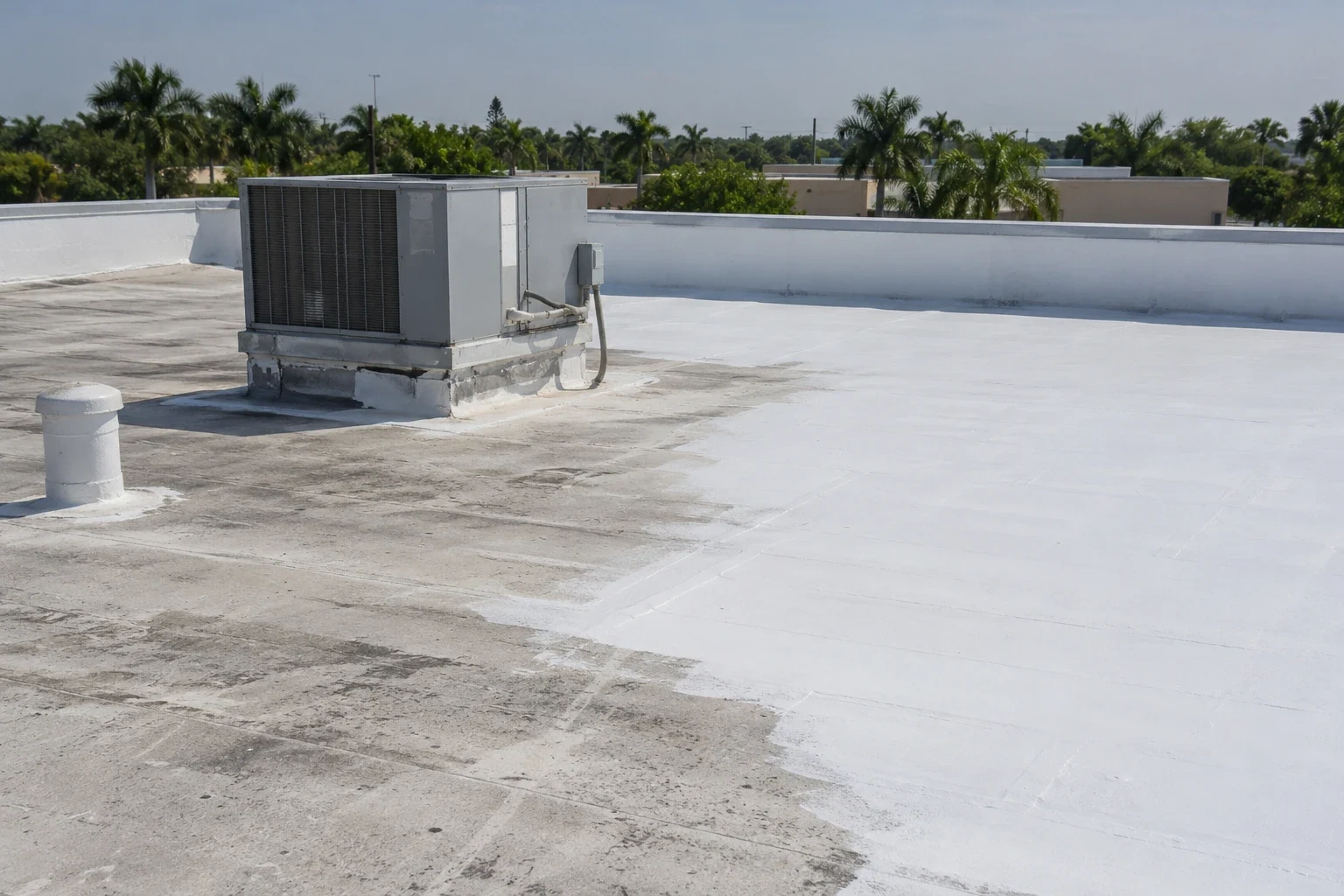
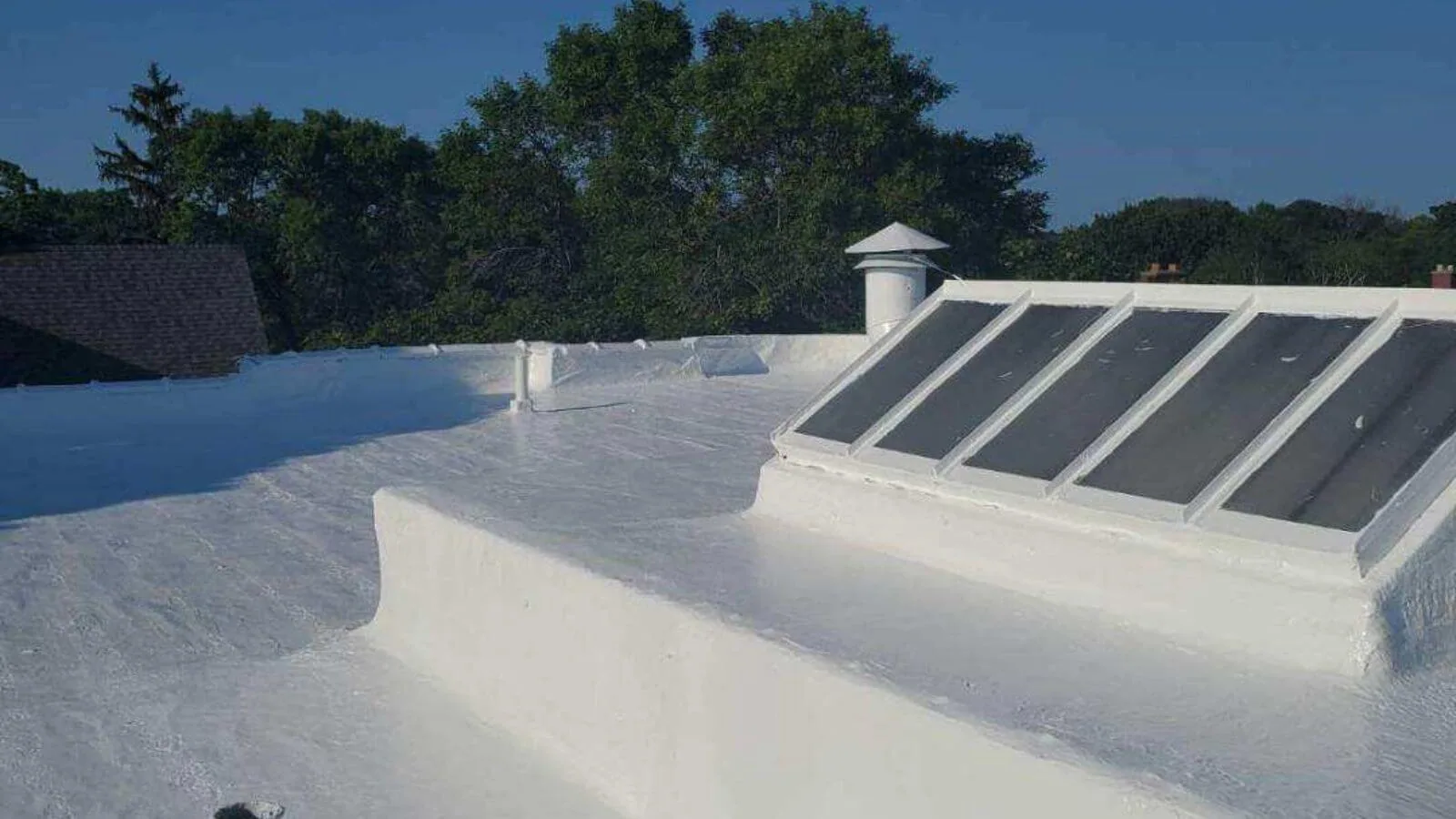
PVC is a single-ply membrane used in several commercial roof assemblies. We verify the membrane type, thickness where records or markings allow, attachment method, insulation, cover board, and deck condition. Similar white membranes are not interchangeable. Confirming the material matters before choosing a patch, cleaner, primer, flashing accessory, or welding procedure.
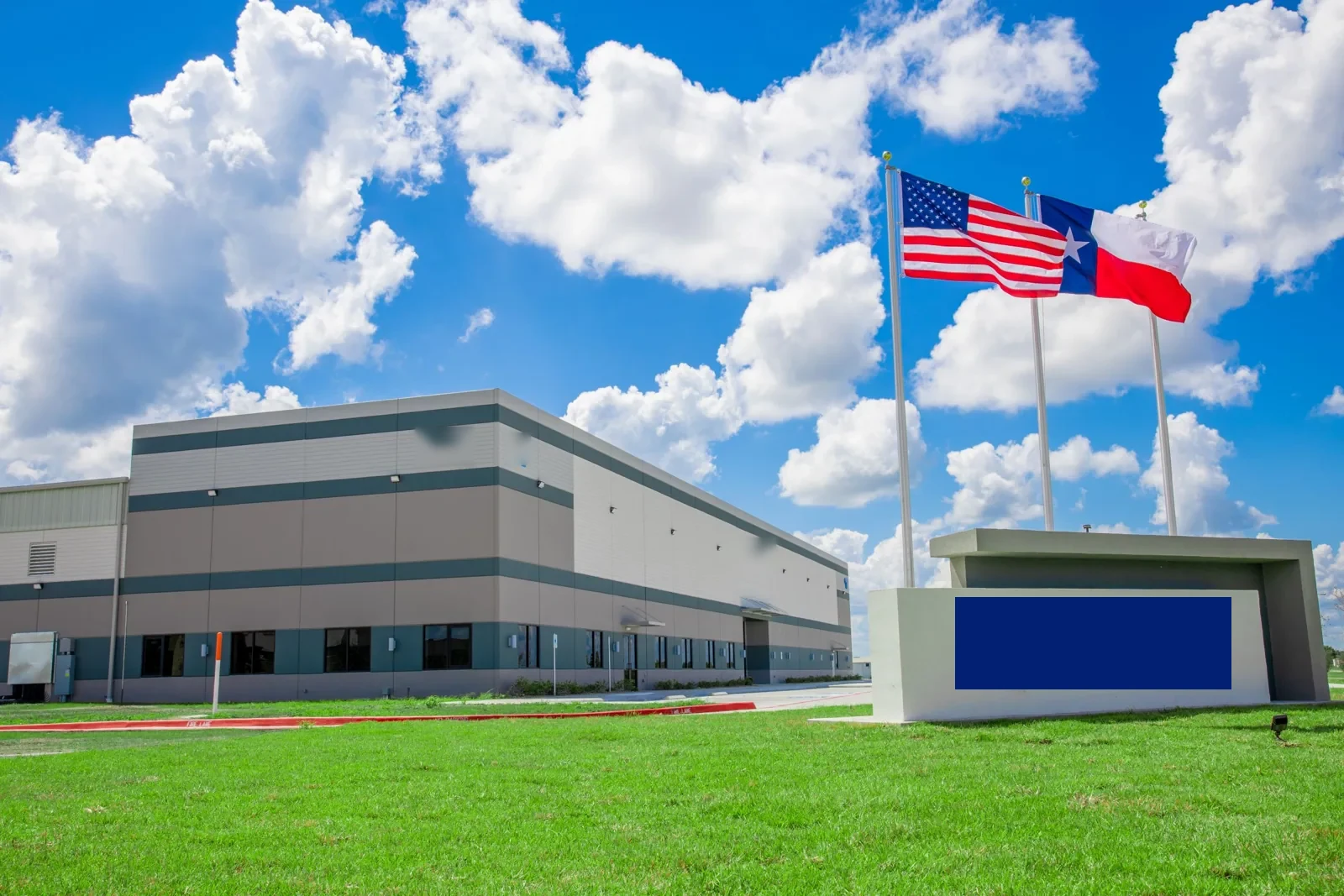
At a building near Lone Tree II Industrial Park, equipment, support feet, and service routes may divide a broad roof into operating zones. We label the actual roof sections and inspect how each detail connects to the field. Regional manufacturing activity does not establish the system or condition at any individual property.
Moisture, weak attachment, repeated seam separation, or a deteriorated deck can change whether repair, recover, or replacement is suitable. A commercial roof inspection maps visible findings and identifies where testing could resolve an assembly question. If the roof is dry and stable, a targeted repair may be enough; if failure is widespread, surface patches will not address the larger cause.
Identify the PVC sheet and roof build-up
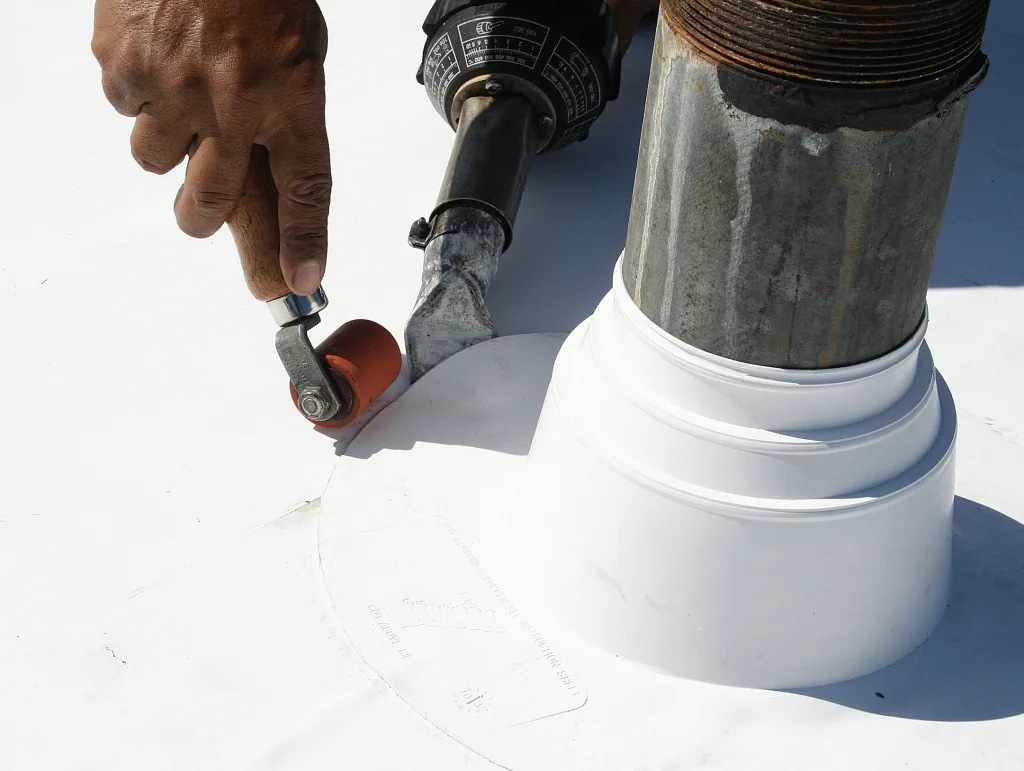
Weld quality starts with clean, compatible surfaces. We remove contamination and oxidation from the overlap, set the welding equipment for the membrane and conditions, and make test welds before production. The cooled test is checked for bond and consistency. During installation, maintain overlap and pressure, protect the joint from dust or moisture, and verify the seam edge after it has cooled.
Inside and outside corners, patches, and changes in plane need careful forming. An overly tight fold can create a fish-mouth; a poorly fitted patch may leave a channel at the edge. The crew checks the finished detail rather than relying on a smooth top surface. If the membrane is aged, contaminated, or incompatible with the proposed material, the preparation or repair method changes.
Victoria’s summer heat can warm the membrane and tools quickly. The VCT climate record for July 2026 reports a normal high of 94°F and a 110°F record. Those figures provide local context for work scheduling; temperature at the roof and the selected product’s instructions govern the actual weld procedure.
Prepare and test the welded seams
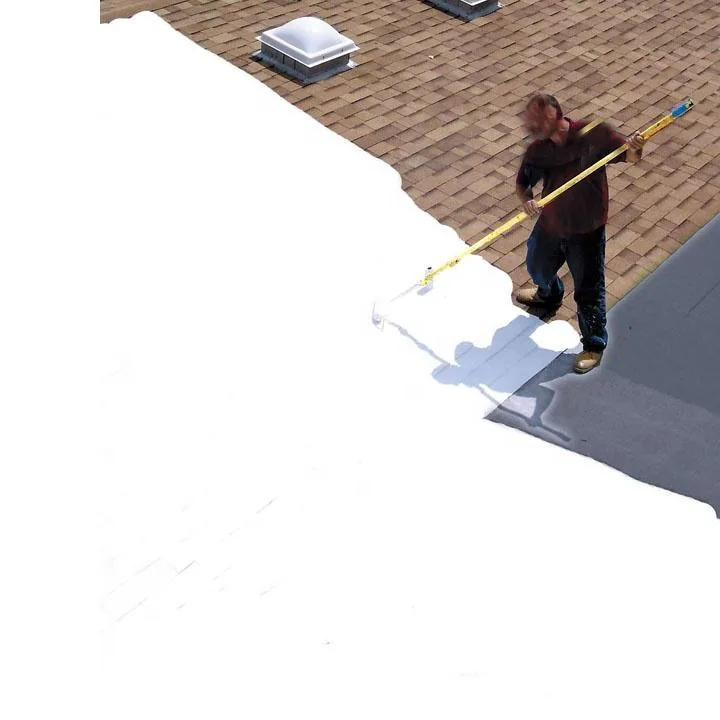
PVC is often selected for commercial conditions where the roof may encounter grease or other substances, but suitability depends on the specific membrane formulation and exposure. Review exhaust locations, kitchen discharge, process vents, cleaning products, and drainage before specifying the assembly. Where an exposure is uncertain, confirm compatibility with the product documentation and design professional instead of making a broad assumption from the generic system name.
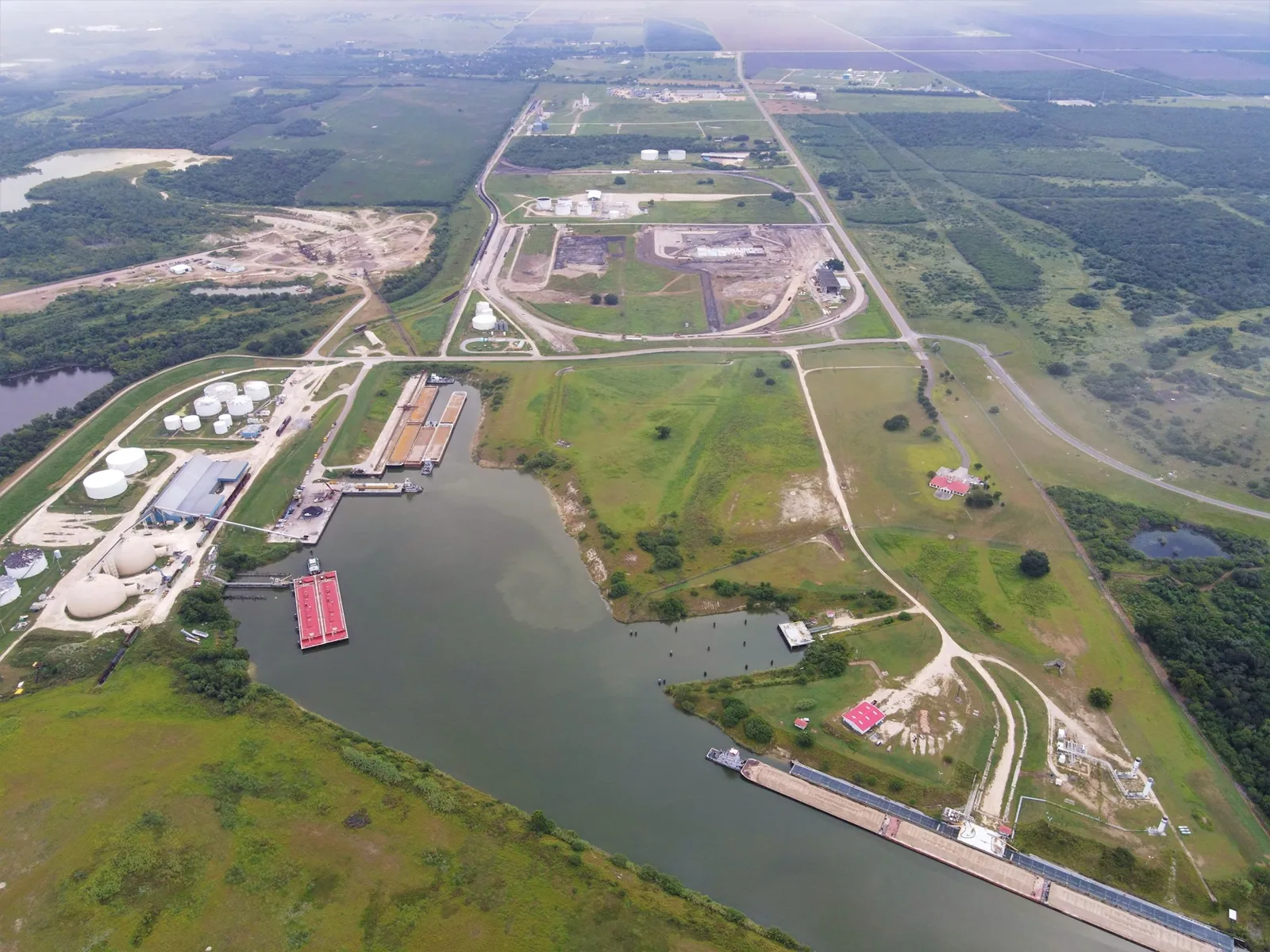
Victoria’s economy includes plastics, petrochemical, metalworking, and manufacturing operations. Those industries make exhausts, pipe supports, and service access important roof details to inspect. A property near the Port of Victoria Industrial Park South may have freight and process activity, but the building’s own operations determine what reaches its roof.
Keep vents and drains clear and investigate residue that repeatedly collects near a seam. A damaged membrane surface may need cleaning, a patch, or a section replacement depending on depth and compatibility. A maintenance visit can record deposits, flashings, and repairs so the owner can see whether a condition is stable or changing. The KEE roof system is another PVC-based option with different formulation details.
Check exposure and maintenance needs
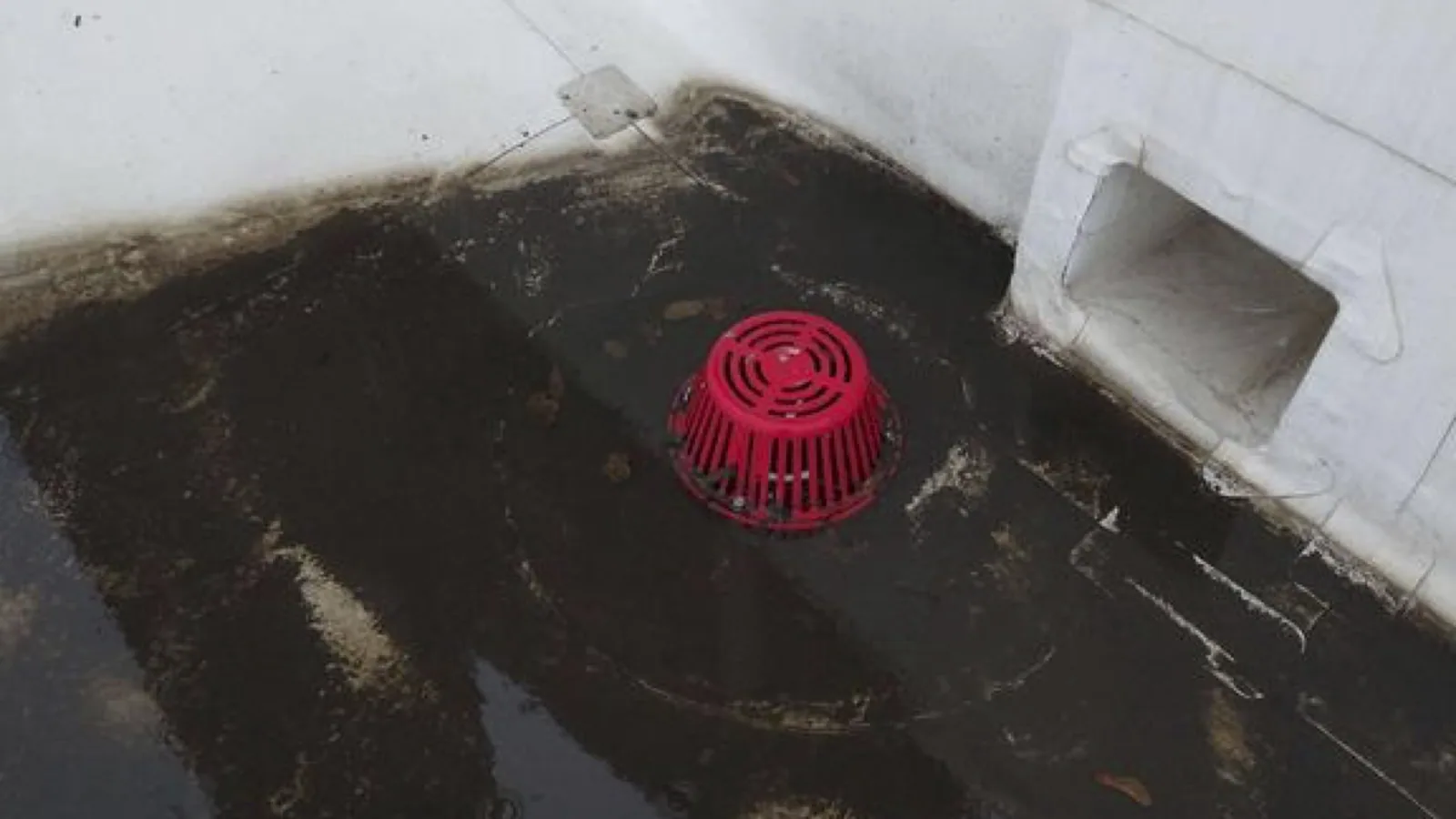
At a drain, integrate the PVC membrane with the specified clamping ring or drain detail and keep the bowl clear. Scuppers, overflow openings, and downspout transitions need a path that remains open after roofing is complete. Added insulation or a new cover board can change drain height and edge clearance. A drainage repair scope should correct the outlet or low area before membrane tie-in where the field condition supports it.
Equipment curbs, pipes, and supports interrupt the membrane and require compatible flashing. Confirm the curb is stable and the substrate sound before welding around the perimeter. A curb and support review can coordinate roof-side work with mechanical access. If the equipment must move, the project’s mechanical contact manages isolation and reset.
At parapets, coping, and edge metal, verify that the membrane termination connects to a secure and compatible assembly. The edge detail should not trap water or expose the membrane edge. Victoria’s documented gusts support inspecting perimeter attachment after storms, but each project still requires its own design review.
Complete drains, curbs, and metal transitions
Attachment may be mechanical, adhered, or part of a specified assembly. Deck type, insulation, pullout values, building geometry, and project criteria determine the method. Follow the approved layout and verify substrate readiness before cover board or membrane conceals it. Perimeter and corner conditions may require additional attention, and changes must be reviewed against the actual project requirements.
For an occupied building, plan deliveries, roof access, air-intake protection, and daily weather closure. Victoria Regional Airport supports freight and commercial activity alongside industrial development. The roof installation at each property still follows its own access instructions, lift locations, and operating schedule. A phased reroof plan can help keep active spaces and exposed roof areas coordinated.
Store membrane rolls and accessories according to project instructions. Protect prepared surfaces from dust, standing water, and traffic. If weather interrupts the work, secure the open boundary and record which seams or transitions remain for completion.
Follow the design through the roof field
Closeout checks welded seams, corners, patches, drains, curbs, parapets, and edge terminations by roof section. The report identifies material and attachment details recorded for the project, repairs completed, and any area excluded from inspection. Photos show the larger location and the detail itself. If access or a concealed layer limited review, state that limit so it is not mistaken for a confirmed condition.
Future repair materials need to match the PVC system and be applied to a properly prepared surface. Keep product information, roof plans, photographs, and changes with the building record. A storm inspection can recheck exposed edges or penetrations after hail or wind and distinguish new damage from existing service history. Compare TPO roofing only after the substrate and project requirements are known.
For a PVC project in Victoria, share the roof plan, system records, reported leaks, building use, and access window. We will confirm the membrane and substrate, review roof details, and explain whether a localized repair or broader replacement is supported by the field conditions.
Verify the finished PVC roof
Related Roofing Work
Frequently Asked Questions
How is a PVC roof seam joined?
A thermoplastic weld bonds compatible sheet edges with heat. The installer prepares the surface and checks cooled test and production seams.
Can PVC roofing handle grease or process exposure?
Suitability depends on the membrane formulation and what reaches the roof. Review exhausts and product compatibility before selecting the assembly.
Can PVC be patched with TPO material?
Materials should not be assumed compatible. Identify the membrane and use an approved repair method and material for that specific roof.
Why does a PVC seam lift at a curb?
The cause may include poor preparation, movement, a weak substrate, or a poorly formed corner. We inspect the full transition before choosing a correction.
What records help after PVC installation?
Retain the membrane and attachment information, roof plan, seam checks, photos, repair details, and limitations from areas not accessed.
Provide the roof plan, system records, leak history, exhaust locations, and access window. We will inspect seams, drains, curbs, and edges, then define the repair or replacement scope.
Call 555-555-5555 or email [email protected].