
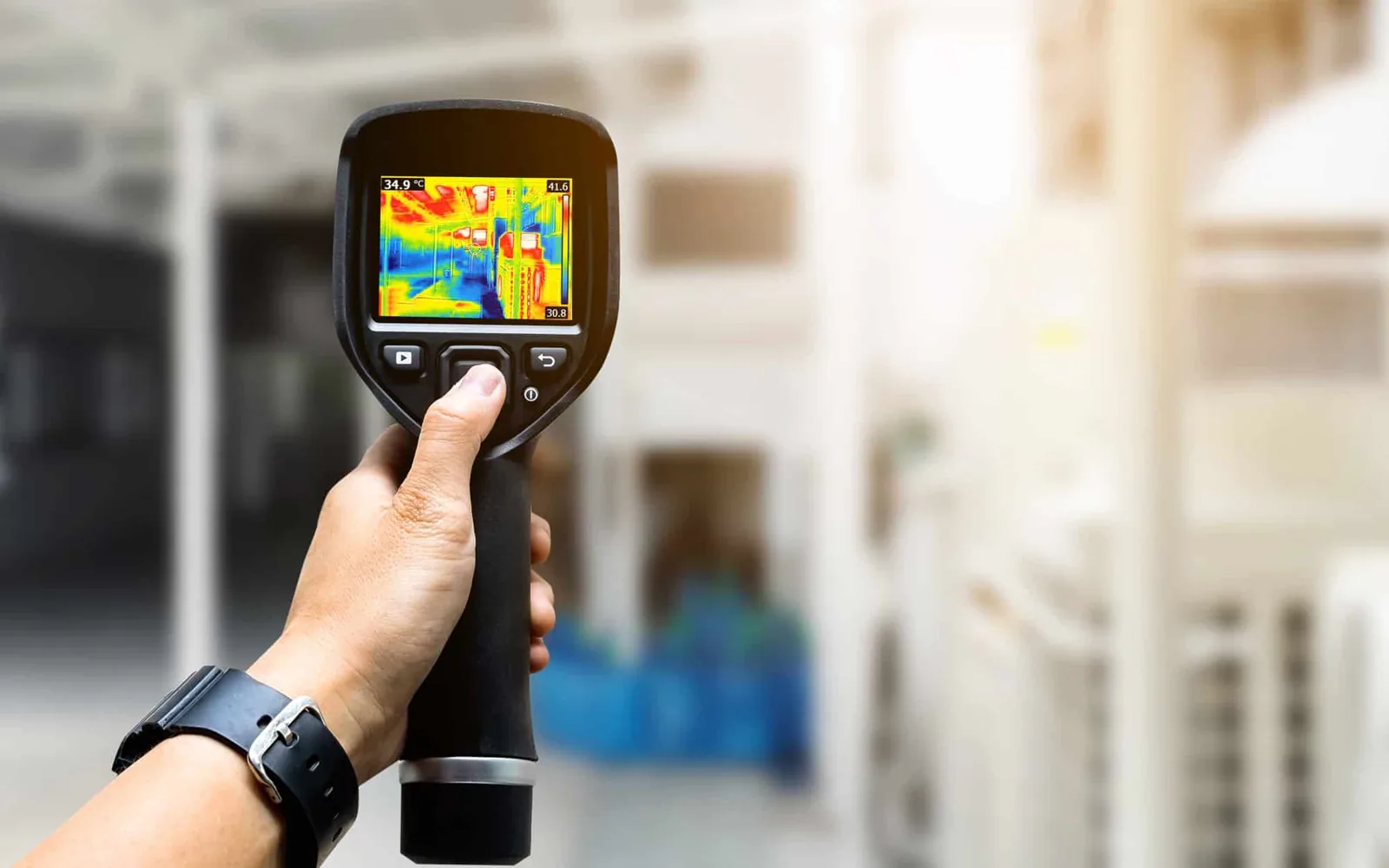
Infrared Roof Moisture Survey in Victoria, TX
Commercial Roofing Services · Victoria, TX
Map roof temperature patterns in Victoria, TX with a qualified infrared survey, documented test areas, and confirmation before repair quantities are set.
Next step
Request a Roof Assessment
Call
555-555-5555
Infrared roof imaging can help locate areas that deserve moisture testing, but a temperature pattern is not proof of wet insulation. Our survey in Victoria combines suitable thermal capture with visible-light images, roof-area labels, weather notes, and confirmation steps. The method can be useful on broad commercial roofs, including industrial properties near the Port of Victoria Industrial Park South and multi-building assets around the Victoria Regional Airport business area. We explain what the scan indicates, what testing confirms, and which areas remain outside the evidence.
Infrared Roof Moisture Survey
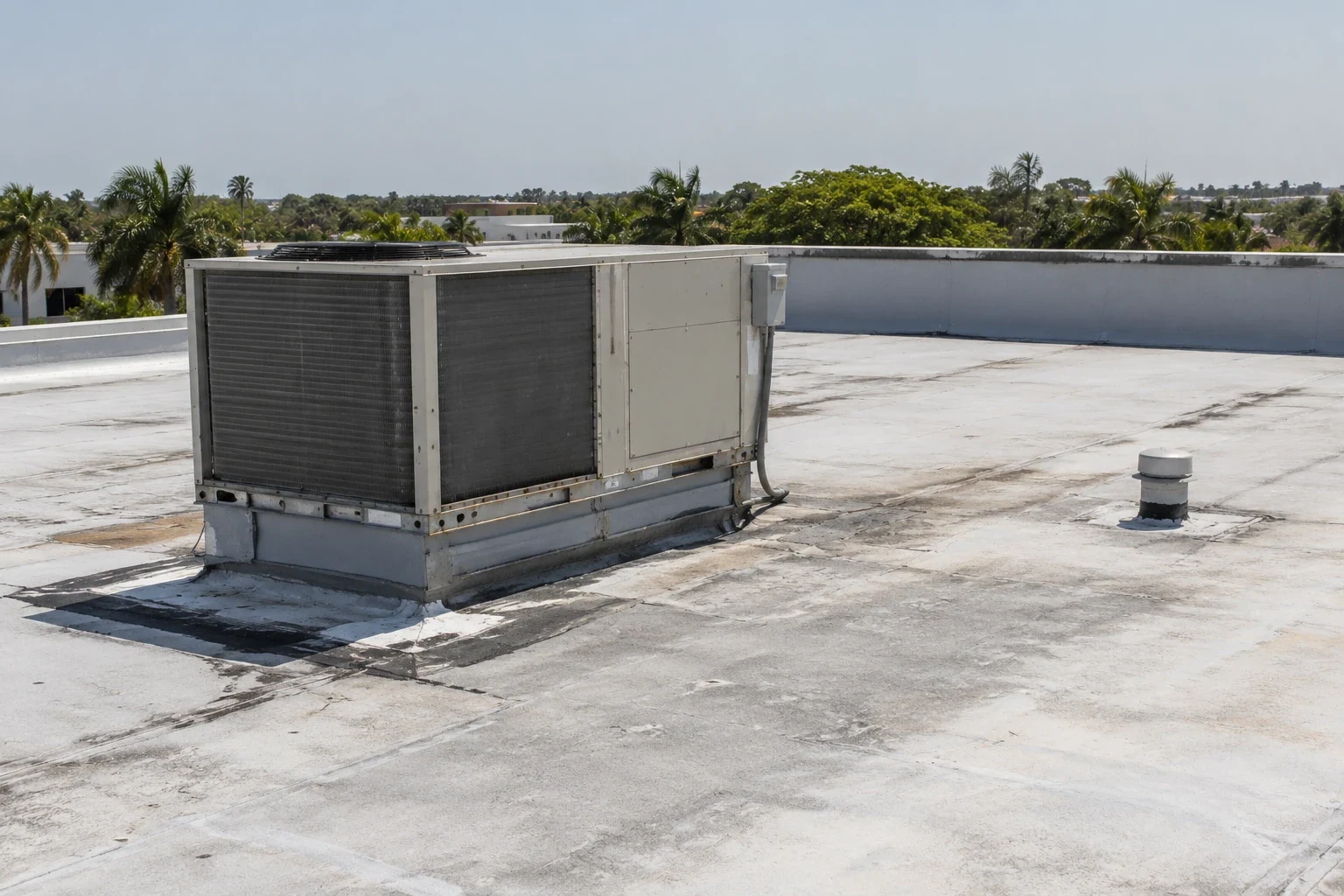
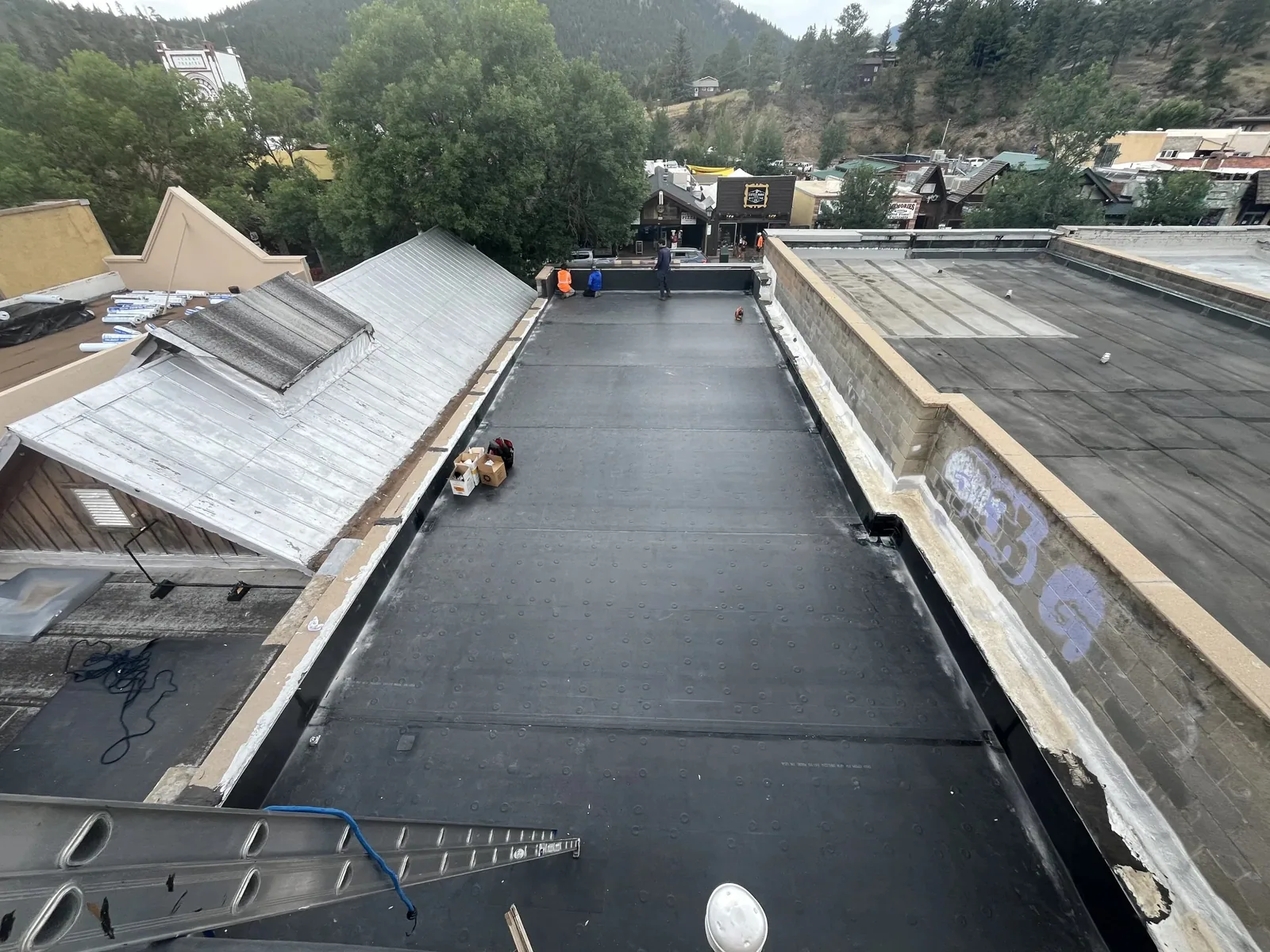
Before scheduling, we review the roof system, insulation and deck records, surface color, recent repairs, reported leakage, and the owner's decision. Infrared works best when the roof and environmental conditions create a useful temperature contrast. Surface changes, shade, wind, equipment, retained water, and recent rainfall can affect the image. A survey may need an evening or other suitable window after daytime solar loading; if conditions do not support useful contrast, we reschedule or select another inspection method.
Victoria's summer warmth matters to scheduling, but a hot day alone does not produce a reliable moisture map. For Victoria, the station record gives July a 94-degree normal high and a 110-degree record. The survey team considers current conditions, forecast, roof material, and safe access together. We also review whether a coating, ballast, membrane color, or reflective surface changes how the roof gains and releases heat.
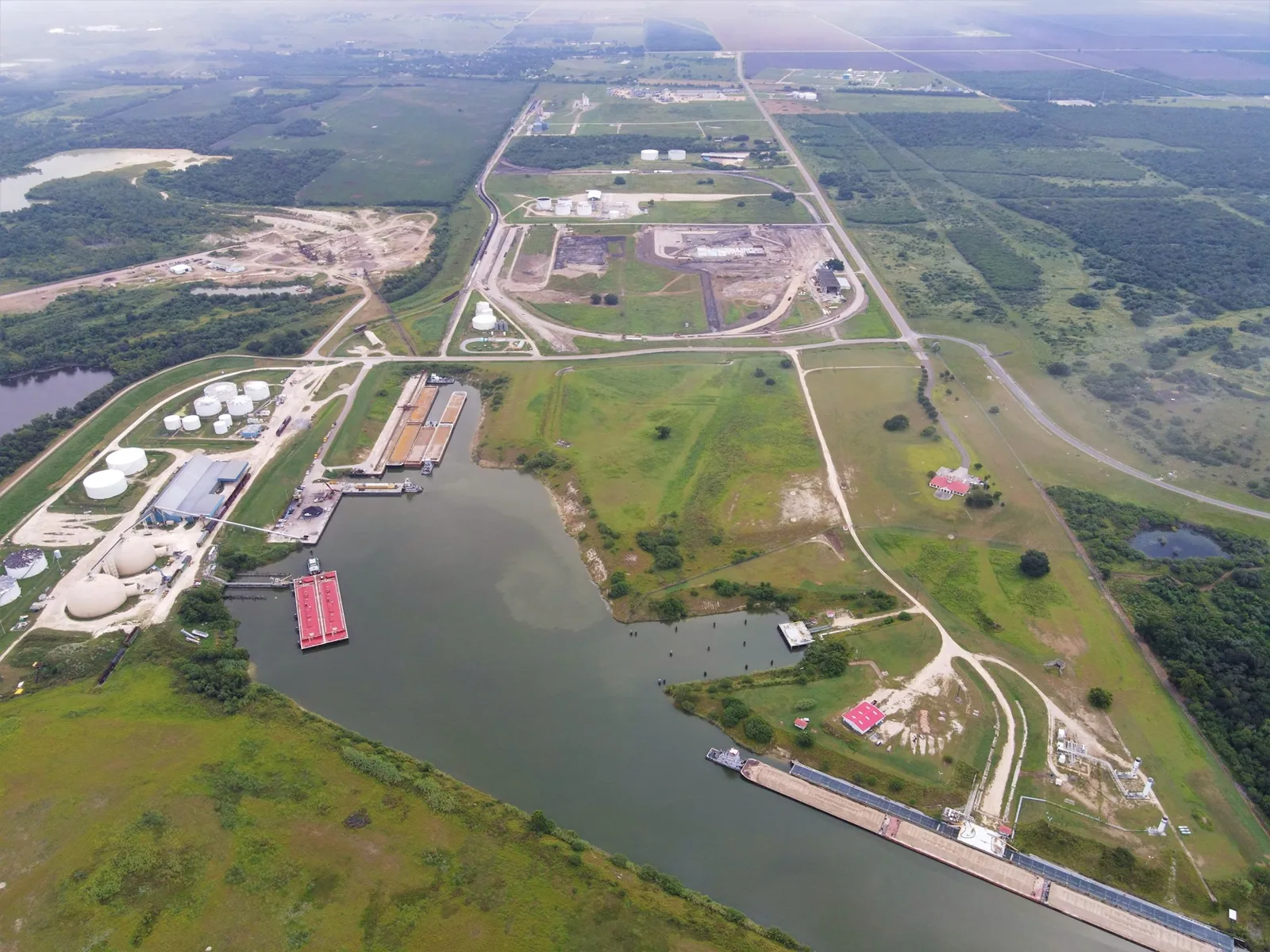
Large industrial properties introduce their own access requirements. The Port of Victoria industrial park includes barge, rail, and highway connections, and individual facilities may have operating and escort procedures. A site contact identifies staging, equipment, roof access, and restricted areas before mobilization. At the airport business area, the property manager can coordinate access around active operations. Nearby Point Comfort developed around aluminum and chemical industries and has rail service, a regional industrial context that makes property-specific entry planning important. The route or neighborhood does not tell us how an individual roof will respond thermally; we evaluate its construction and conditions.
We define survey boundaries by roof section and building identifier. A commercial roof inspection can add close visual review of drains, flashing, seams, and equipment transitions that thermal images cannot assess. If records are missing or assemblies vary between additions, we separate those areas rather than apply one interpretation across the whole property.
Confirm the roof and weather fit the method
The survey records thermal and visible-light views from the agreed areas, with image labels tied to a roof map or sketch. We note capture time, weather conditions, roof exposure, and relevant surface changes. Image scale and overlap matter: broad views locate patterns, while detailed views show their relation to drains, seams, curbs, and roof edges. We avoid reporting an isolated color difference without enough surrounding context to assess it.
Thermal contrast can point to an area for follow-up because wet materials may store or release heat differently from dry materials. But temperature differences also come from shade, repairs, different materials, air movement, equipment, surface contamination, or water above the membrane. A warm or cool pattern is a lead to test, not a diagnosis. We label candidate areas as anomalies for confirmation and preserve the image that led to the selection.
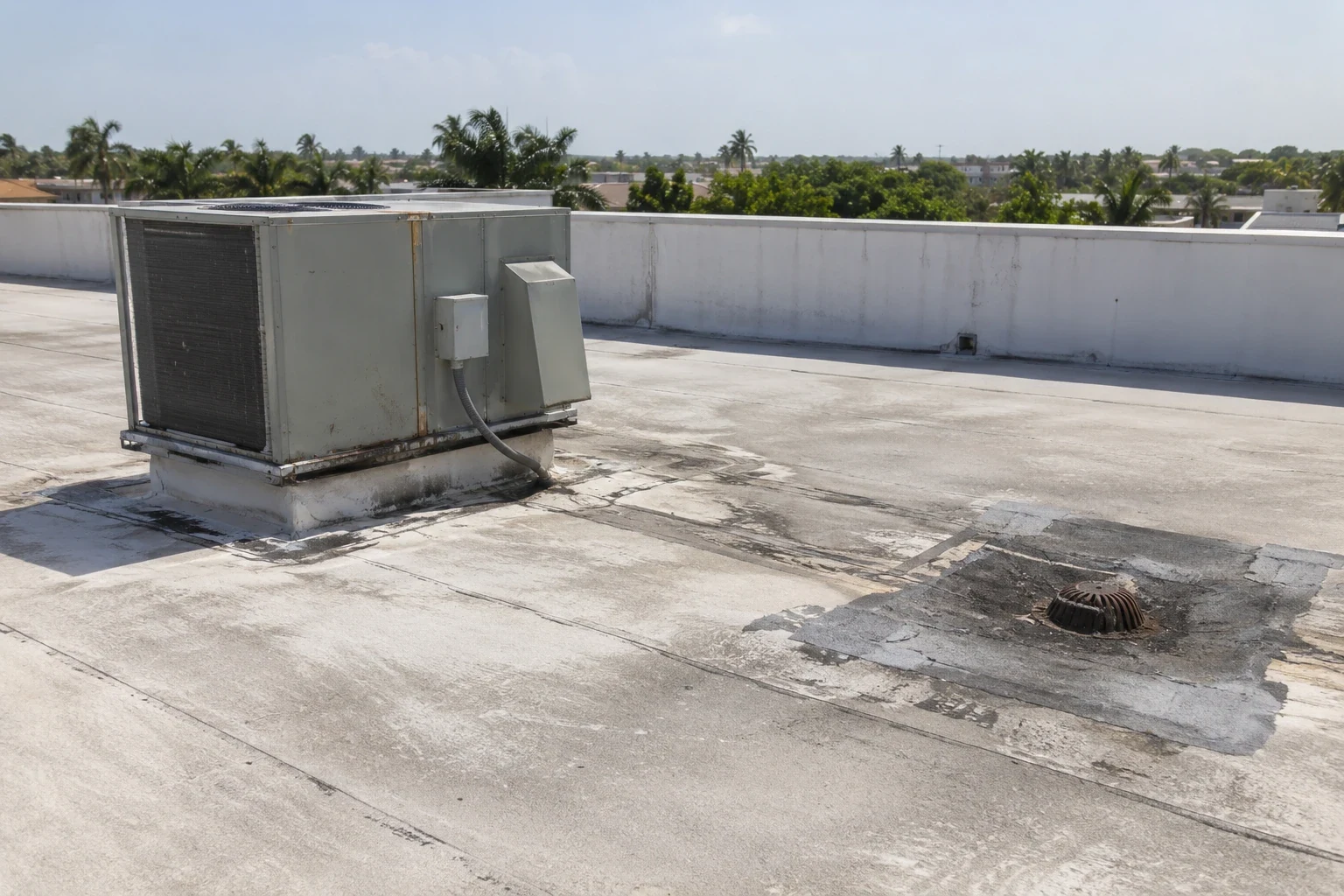
Visible-light photos help a reviewer understand the surface below each thermal frame. A darkened patch, ponding mark, coating boundary, open lap, or nearby mechanical unit can explain why a temperature pattern needs caution. Roof clutter and parapets can block views, while a recent repair may differ from the surrounding material. We record those factors on the map and do not treat a blocked or ambiguous area as a confirmed dry zone.
After capture, we compare candidate zones with roof construction, field observations, and reported interior conditions. We select test locations where results could change the removal boundary, repair plan, or owner decision. A drone inspection may provide broad visual context, while an infrared survey evaluates temperature differences under suitable conditions. These methods can complement each other but neither reveals every concealed detail on its own.
Capture thermal patterns with visible context
We present candidate areas for confirmation before an owner authorizes openings or destructive testing. The selected method depends on the assembly and project question. A moisture meter can compare readings at mapped points when the instrument is appropriate to the surface. A test cut or core can show layers and material condition when authorized and safely closed afterward. We record the method, location, result, and limits; one sample does not characterize an entire roof section.
If testing confirms moisture, we outline the supported boundary and identify where additional checks could affect removal quantities. If readings do not confirm it, we do not convert the thermal anomaly into a wet-area measurement. The owner may ask for more testing, close visual review, or a different diagnostic method. A leak investigation can compare interior reports with the roof evidence when water entry is part of the concern.
Some assemblies contain materials or conditions that influence instrument readings. Metal deck, foil-faced insulation, multiple roof layers, vapor barriers, ballast, or conductive components may limit the method. If system records conflict with field observations, we state the uncertainty and recommend an approved opening or other suitable evaluation. We identify who will restore each test location and what materials or warranty conditions need review before testing begins.
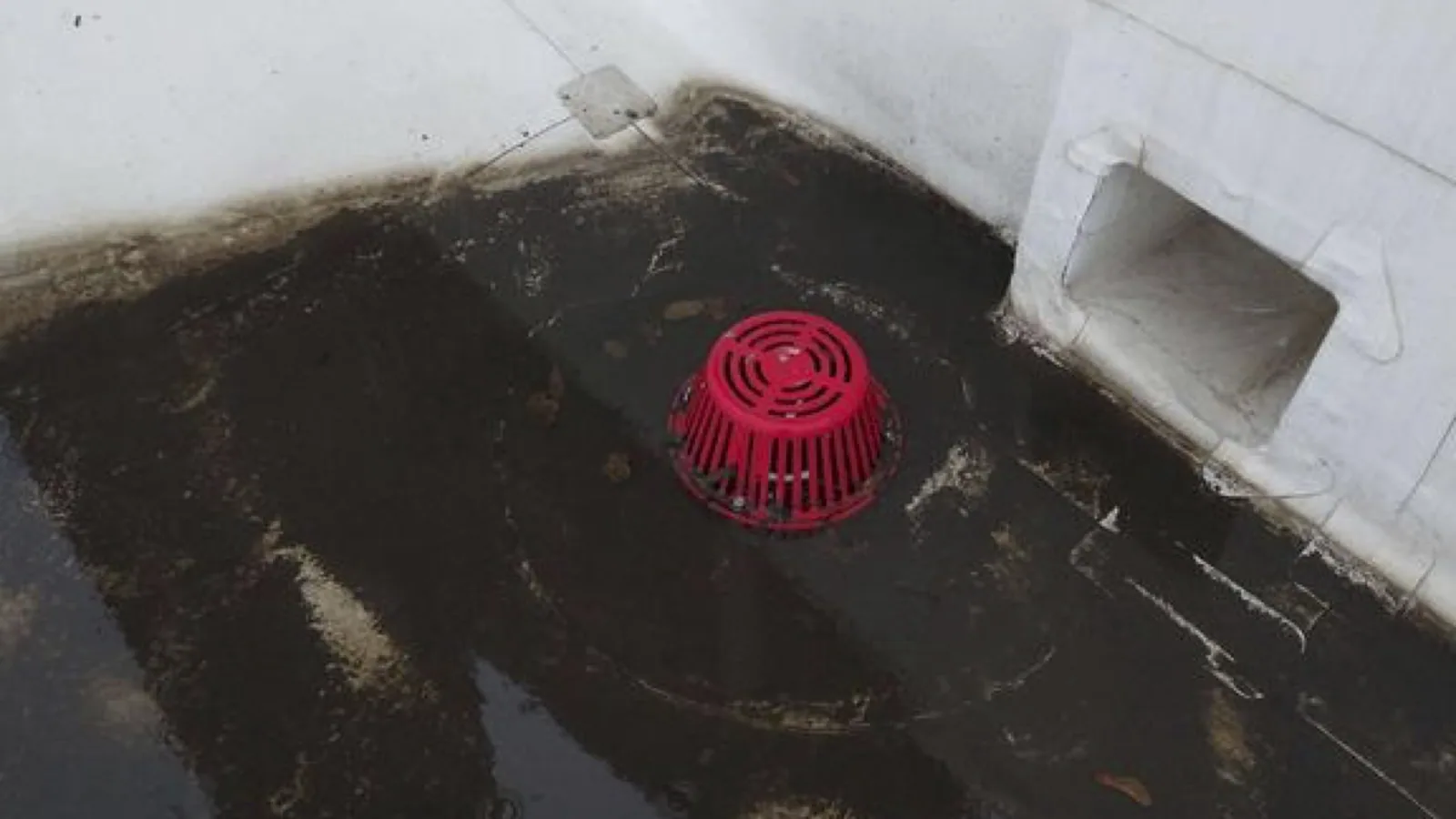
Water can travel horizontally before appearing inside, so an interior stain is useful context but not a direct test point by itself. We compare its location with slope, drain paths, seams, walls, penetrations, and equipment. Where a roof drain or scupper appears relevant, a drainage review can evaluate visible obstruction and flashing as a separate condition from concealed moisture.
Test selected areas before setting quantities
The deliverable can include a roof map, thermal and visible images, candidate-zone labels, test locations, confirmation results, weather notes, and an interpretation summary. We distinguish observed temperature patterns from confirmed moisture and list excluded areas or conditions that limited confidence. The report identifies the specific building and roof section so managers do not mix findings across a portfolio.
Once confirmed boundaries are established, the owner can request a measured removal and replacement scope. A repair evaluation can define a local fix, while widespread or repeat findings may support a larger replacement review. Separate pricing should show testing, removal, substrate repair, insulation, and new membrane as distinct quantities where practical. Unconfirmed candidate zones stay separate from measured wet areas.
For a property team, the report can guide repair budgeting, maintenance scheduling, and future comparisons. Keep the map with roof records and note subsequent openings or repairs; they may change the thermal response on a later survey. A roof condition report can hold the scan beside other inspection findings and maintenance history. A survey cannot establish every concealed wet area, and it does not extend a warranty or replace the project professional's review.
Before closeout, we review the owner’s questions, identify areas requiring follow-up, and note tests that were not authorized. The manager receives a clear separation between confirmed conditions, potential patterns, and items that remain untested. This lets the next estimate start from documented quantities rather than color-coded imagery alone.
Turn the scan into a bounded roof plan
Related Roofing Work
Frequently Asked Questions
Does an infrared roof scan prove the insulation is wet?
No. It identifies temperature patterns that may deserve testing. Weather, shade, materials, equipment, and recent rainfall can affect those patterns, so confirmation is needed before quantities are set.
When should an infrared survey be performed?
The roof needs suitable conditions that create useful thermal contrast. Timing depends on roof assembly, recent weather, surface exposure, and safe access; we review those factors before scheduling.
Will you open the roof during the survey?
Not without the owner's approval. We first map candidate areas, explain the proposed confirmation method, and agree on how each test location will be restored.
Can the scan show where a leak begins?
It can help select follow-up areas, but it does not trace water through the assembly. We compare the scan with interior reports and roof details, then test where needed.
What if the roof has multiple layers or metal deck?
Those conditions may affect readings. We document the assembly limits and may recommend records review, a suitable meter, or an authorized opening to confirm a suspected area.
Send the building address, roof-system records, reported leak areas, recent repair history, and site contact. We will review suitability, define roof sections and access, and explain the confirmation step before any quantity is treated as wet.
Call 555-555-5555 or email [email protected].