
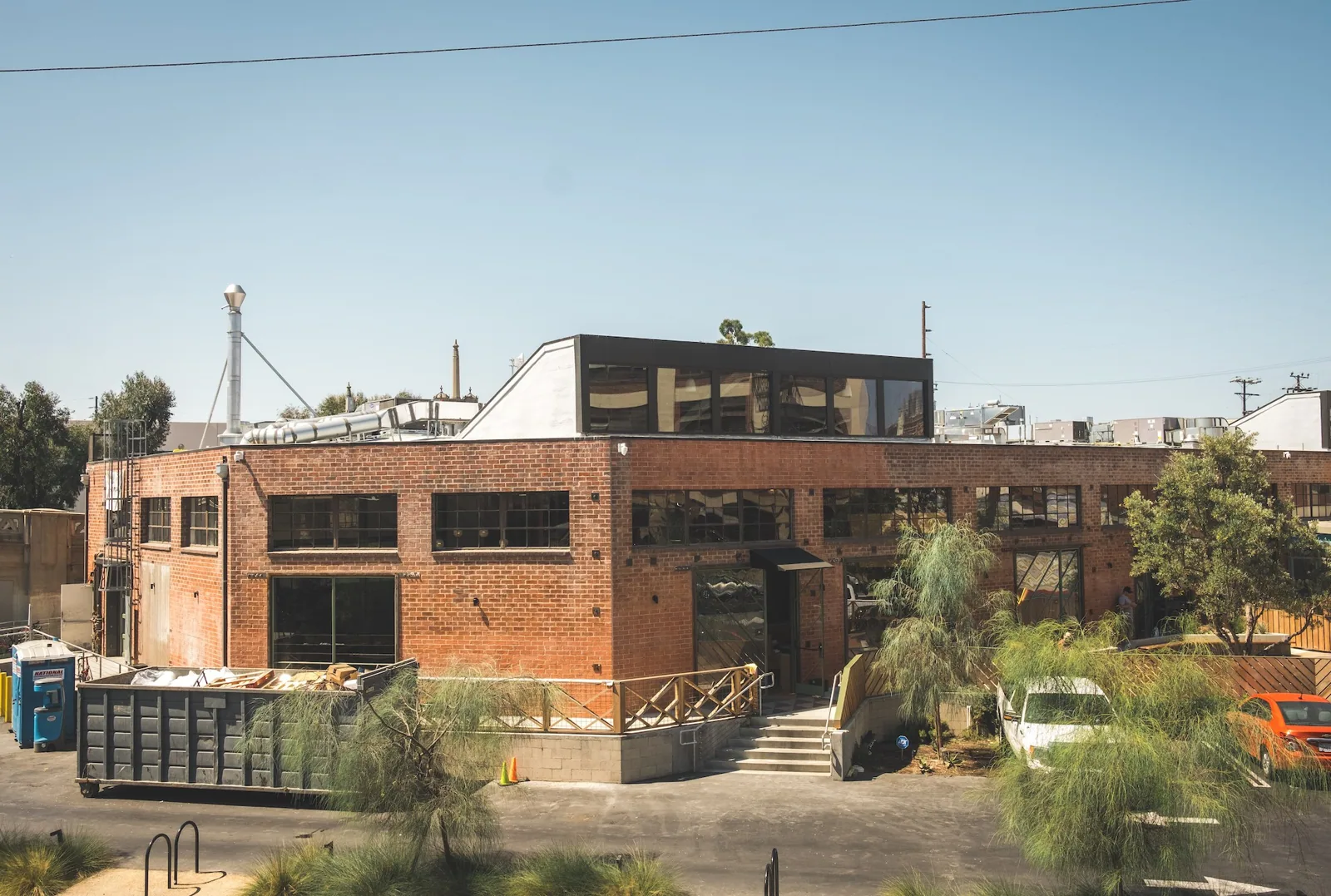
Restaurant Roofing in Victoria, TX
Property Types We Roof · Victoria, TX
Restaurant roofing in Victoria protects dining rooms, kitchens, exhaust curbs, and delivery access through heat, hail, and wind exposure.
Next step
Request a Roof Assessment
Call
555-555-5555
A kitchen exhaust fan may run through every meal service, but its curb and flashing still need a dry, prepared tie-in. Restaurant roofing in Victoria has to account for grease-laden exhaust, rooftop equipment, dining rooms below, and tight delivery windows. Heat, hail, and wind add wear to exposed membrane and metal details. We trace the reported issue to the roof section, coordinate access with the operator, and keep the repair area defined so service can continue with a clear plan.
Restaurant Roofing


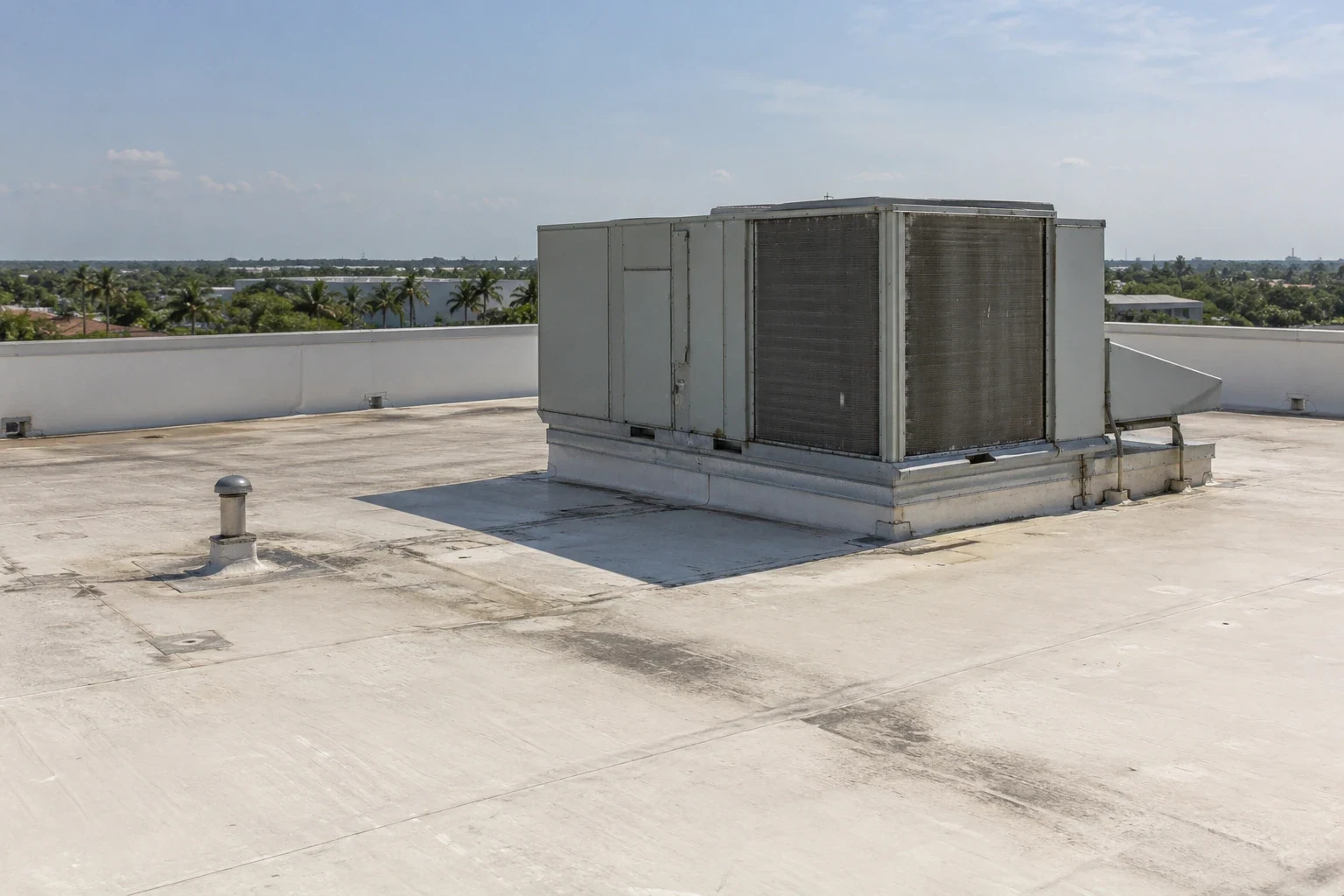
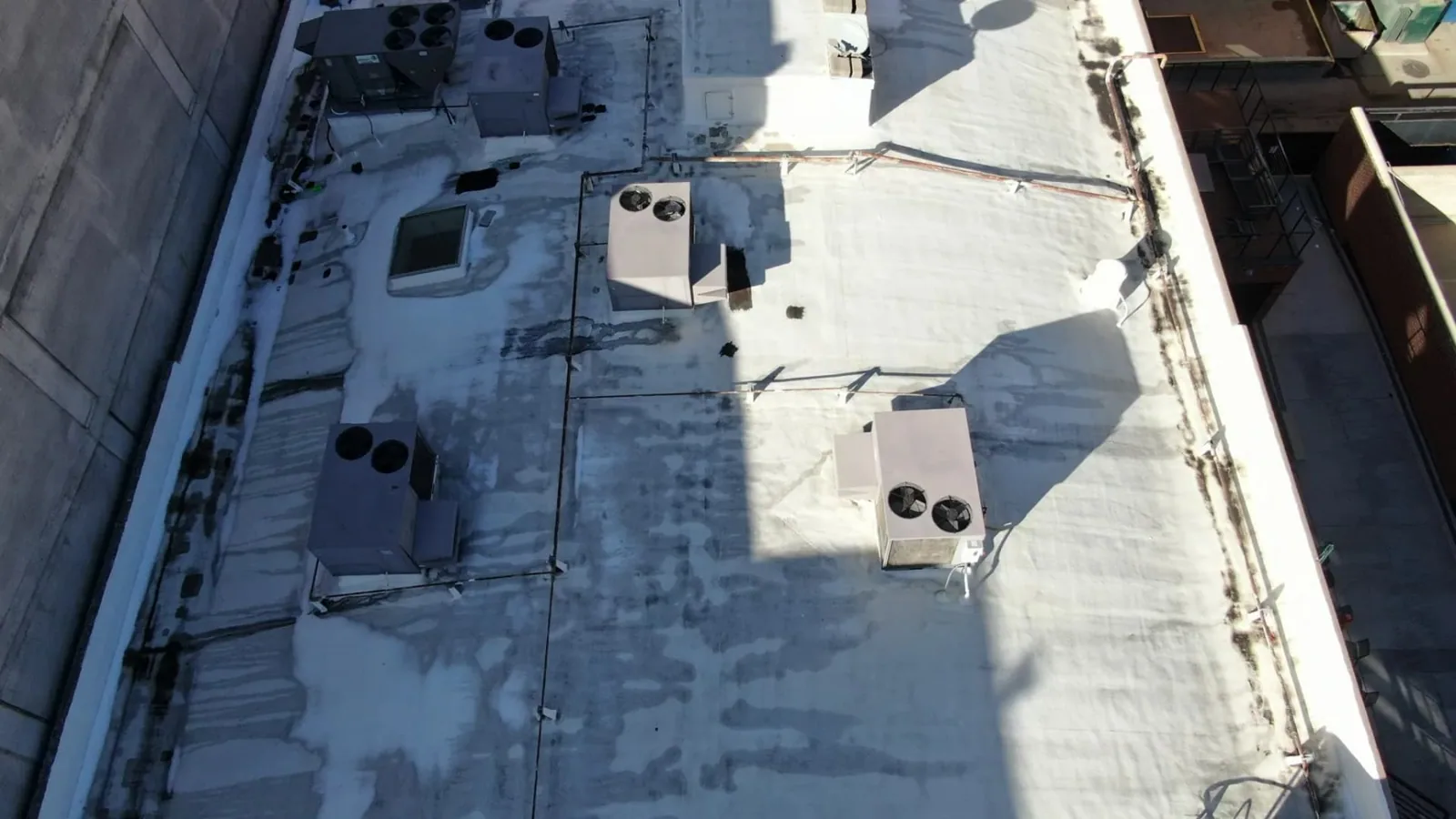
Start with the room where water appears and the equipment above it. A stain near the cook line may trace to an exhaust curb, while a dining-room leak can follow framing from another roof bay. We map hood exhausts, make-up air units, plumbing vents, refrigeration lines, skylights, and roof drains before choosing where to open or test. Each penetration has a flashing detail that must remain compatible with the installed assembly.
Commercial kitchens depend on exhaust equipment, so a repair near a fan or duct may require a shutdown window and coordination with the kitchen lead. The operator identifies prep periods, cleaning cycles, and service hours that constrain access. We discuss how long a unit may need to be isolated, what protection is needed below, and which roof path workers will use. A roof inspection gives the manager photographs and a labeled record rather than a guess based on the ceiling mark alone.
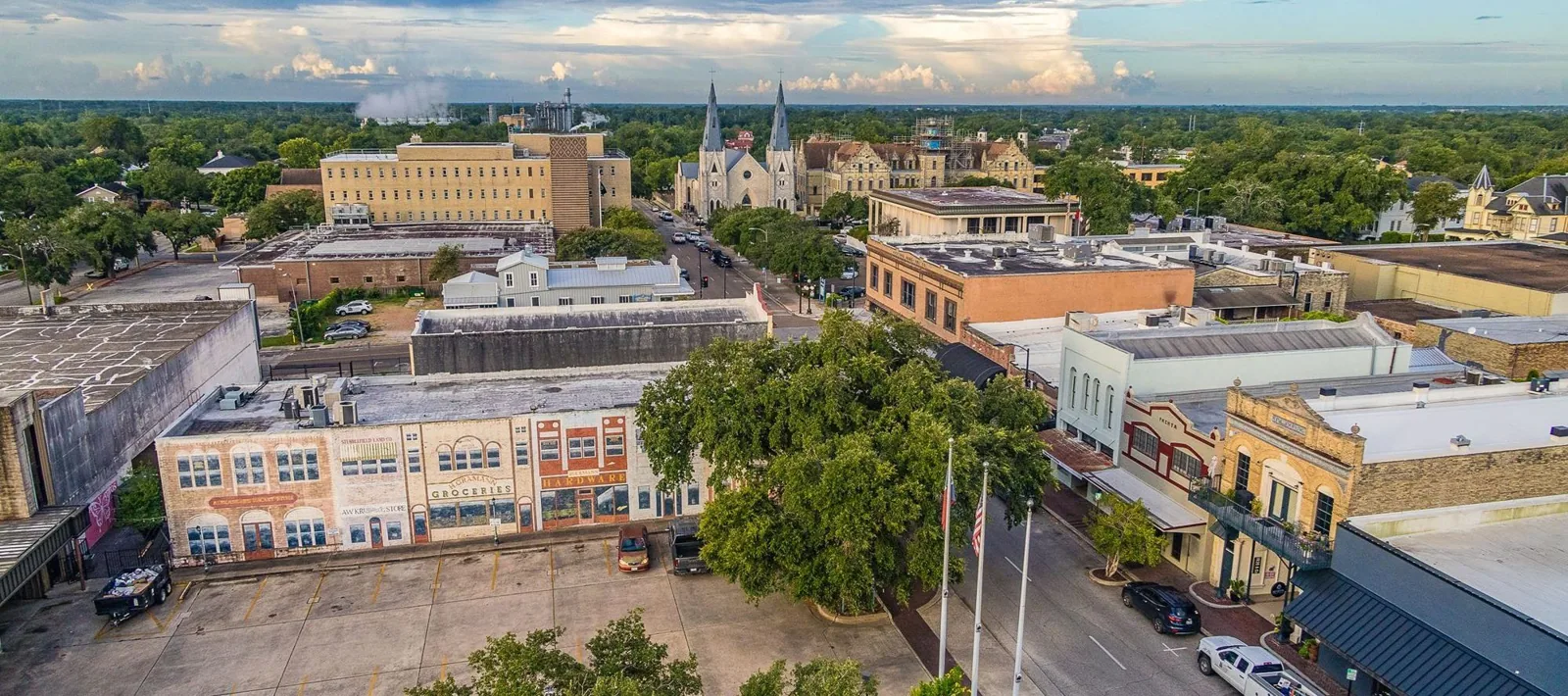
Victoria’s Downtown Business District includes restaurants among its retail and service uses. That mix can mean limited staging or shared access, depending on the individual building. A restaurant within the district still gets its own roof walk and operating plan. The Downtown Victoria Business District gives useful context for older commercial properties and active storefronts; it does not establish a particular roof’s assembly or condition.
Locate kitchens, dining rooms, and roof penetrations
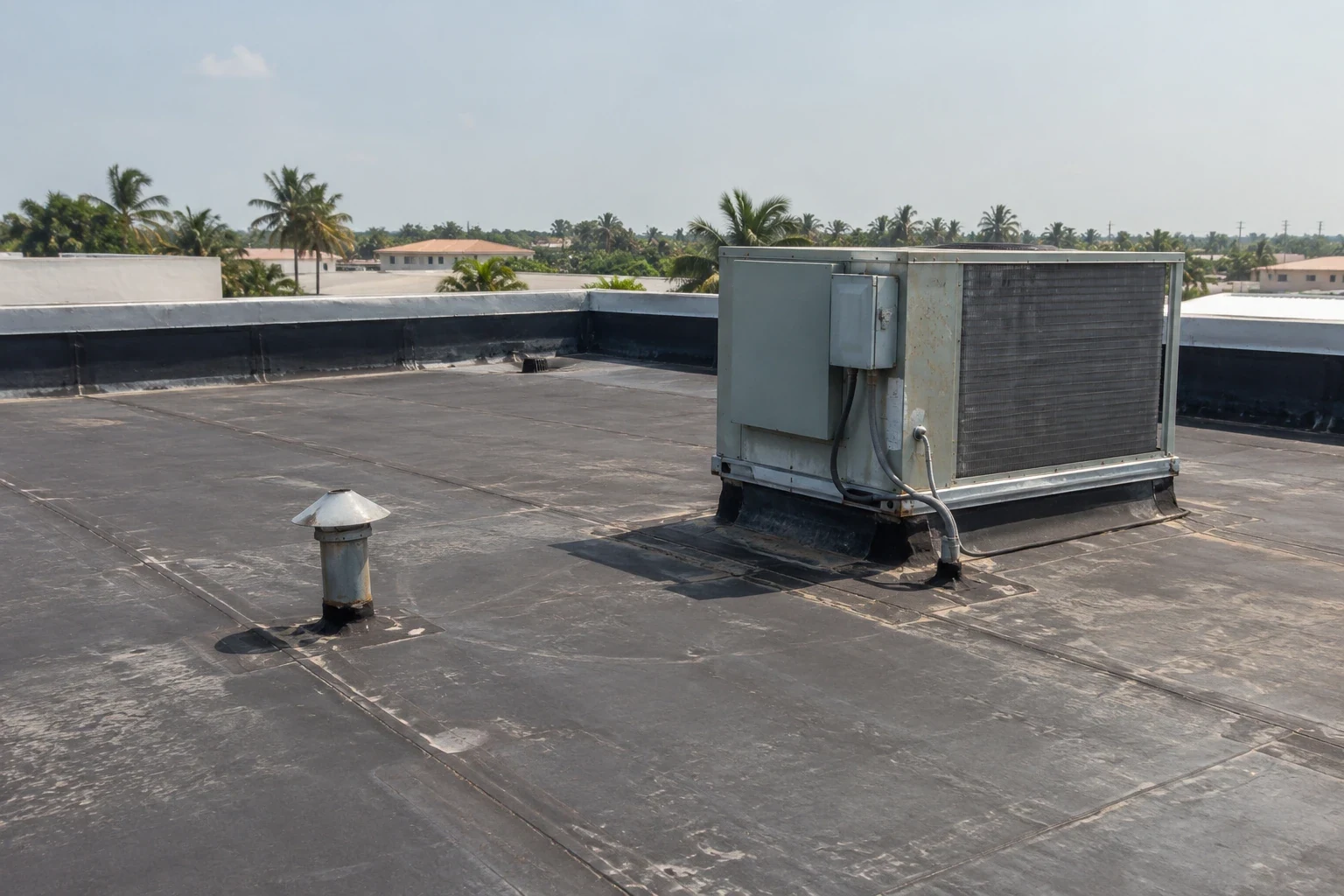
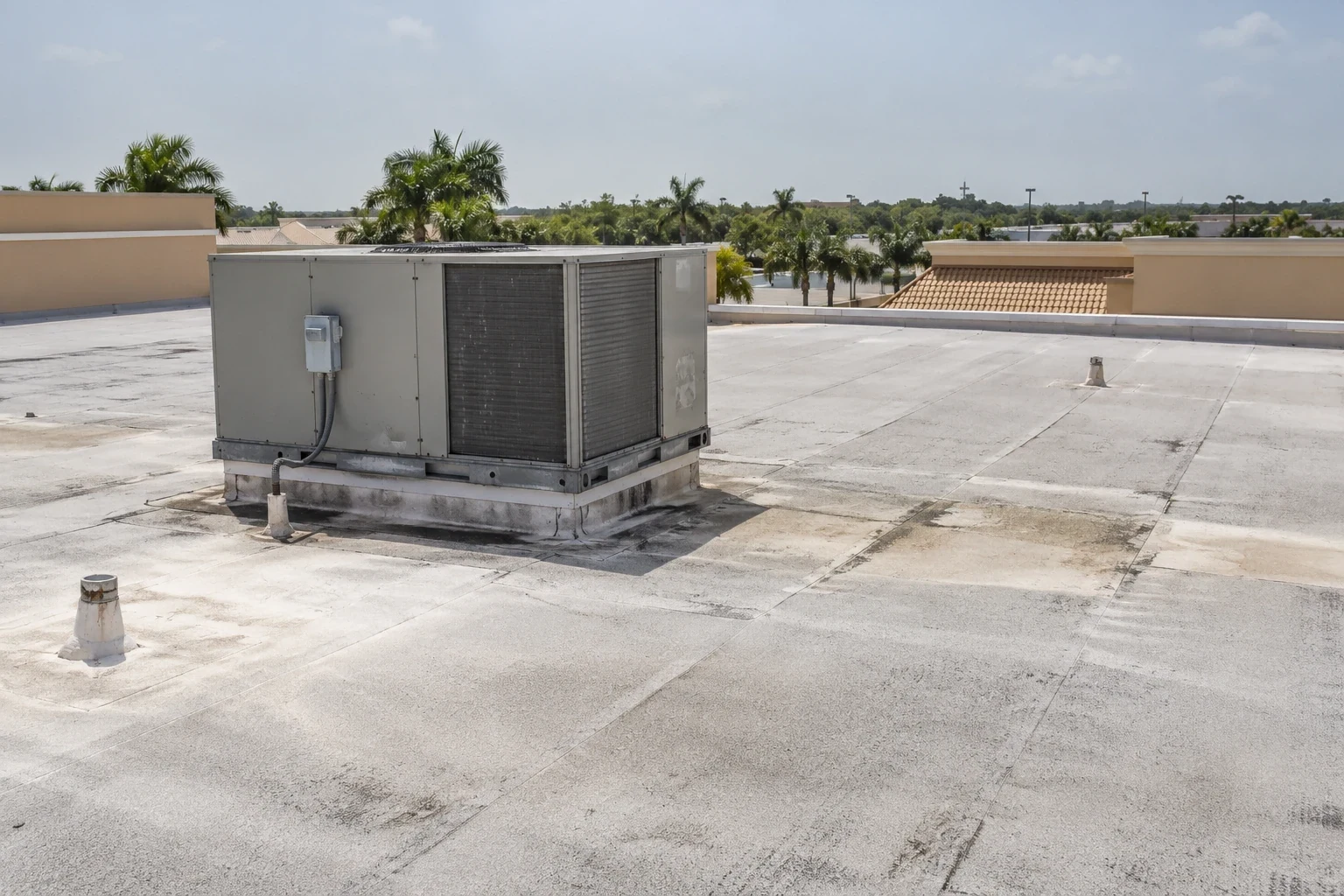
Inspect the curb corners, counterflashing, membrane termination, fasteners, and nearby seams around each exhaust fan. Heat and grease can leave residue that complicates adhesion, so repair preparation includes removing contamination without damaging the roof surface. The curb itself may move under vibration, and an unsupported duct or fan can transfer motion into the flashing. We check support feet, connections, and the surrounding membrane before defining a patch.
Water also enters where old sealant has been used as the only defense at a corner or transition. Sealant can separate as materials move and weather; it cannot replace a sound flashing assembly. We remove failed material, prepare clean surfaces, and install a compatible repair with a closed termination. A flashing repair should return water to the roof surface rather than trap it behind a curb.
After a wind or hail event, review exhaust attachments, metal edges, penetrations, and membrane laps for displacement or impact. The National Weather Service has documented hail and damaging gusts in Victoria County, and NOAA records tropical-cyclone exposure in the region. Those records support a careful inspection; they do not prove damage at a specific restaurant. We photograph observed conditions and identify any area that needs a second look after the roof is safe to access.
Check fan curbs and grease-exposed flashing
Restaurant work has a customer side and a kitchen side. A roof crew may need a clear access route through a service area, while the dining room stays open. The operator confirms where ladders can land, where debris can move, and whether a temporary closure is needed beneath the active roof section. If work occurs above food preparation, we agree on containment and cleanup before cutting out wet material.
Delivery timing deserves equal attention. A material truck or lift can compete with food and beverage deliveries, especially where the loading area is shared. The repair plan identifies arrival time, staging area, roof access, and the path out of the building. The City identifies north Navarro as a retail concentration and reports retail growth near the Loop 463/Navarro interchange. Those broader commercial areas help orient dispatch, but each restaurant has its own circulation, deliveries, and roof access. We verify the route at the property rather than applying an assumption from a nearby center.
Heat can affect both roof materials and the safe work window. Victoria’s July climate record includes a normal high in the mid-nineties and a record above 100 degrees. We schedule roof activity with surface temperature, forecast, and cure requirements in view. An adhesive or coating applied outside its conditions may not bond as intended, while an early inspection can reveal a repair need before a busy service period.
Plan roof work between service windows
A puncture, open seam, or failed curb can be repaired locally when the roof field around it is dry and stable. We check for wet insulation, deteriorated cover board, repeated patches, and separation extending beyond the visible opening. The repair boundary follows confirmed conditions, not an arbitrary square around the stain. For a modified bitumen roof, the surface preparation and tie-in differ from the heat-welded seam on a TPO membrane.
When leaks recur across several penetrations, a roof walk may show a maintenance pattern rather than one failed detail. A repair remains sensible when the surrounding system can accept a sound tie-in. Broader membrane wear, widespread moisture, or numerous failing curbs can change the scope to selective replacement or a larger project. We explain those options and what evidence supports each one.
Cost and timing depend on roof height, access, equipment density, material availability, interior protection, and whether the fan or hood must be isolated. Removing or resetting a piece of equipment adds coordination that a field patch alone does not require. We identify the work sequence and any operating restriction before the restaurant chooses a window. Related shopping-center roofing often shares circulation and tenant coordination challenges, but the restaurant’s exhaust and kitchen schedule control its own work plan.
Match the repair to the membrane and condition
At closeout, photographs should show the repaired curb or seam, nearby drains, and the roof area after debris is removed. The operator receives a short record of materials used, equipment isolated, and any item that remains under temporary protection. If a follow-up test or larger correction is needed, identify the location and the next decision rather than leaving the manager with a vague warning.
For restaurants with more than one location, keep separate roof plans, photographs, and repair histories. Buildings under one brand may have different membranes, equipment layouts, and drainage conditions. A hotel roof also combines occupied spaces with rooftop equipment, but its room and service requirements differ from a restaurant kitchen. Record the actual property details before applying a maintenance schedule to another building.
When requesting service, share the business address, room or kitchen area affected, equipment near the leak, recent roof records, and a workable access time. We inspect the roof field, curb transitions, seams, drains, and metal edges, then document a repair scope tied to the restaurant’s operating window. For active water entry, after-hours response is available. The first visit focuses on safe access and temporary control; the permanent scope follows inspection of the exposed assembly.
Return the kitchen with a clear roof record
Related Roofing Work
Frequently Asked Questions
Can grease or kitchen exhaust cause a roof leak?
Grease residue can interfere with repair bonding, and fan vibration can stress curb flashing. We inspect the exhaust base and adjacent membrane, then clean and prepare the repair area for a compatible tie-in.
Will a roof repair require the kitchen hood to stop?
A repair beside the fan or duct may require temporary isolation. We identify the affected equipment and discuss the work window with the operator before scheduling, so the kitchen can plan service.
Why does a ceiling leak show up away from the roof opening?
Water can travel along insulation, deck flutes, or framing before it reaches the ceiling. We compare the interior location with roof details and use testing when it helps establish the path.
What changes the price of restaurant roof work?
The installed system, amount of wet material, roof access, equipment isolation, and protection below all affect labor and sequence. The written scope identifies those conditions and any option that could reduce repeat work.
Tell us which room is affected, what roof equipment sits above it, and when the kitchen can provide access. We will inspect the curb, membrane, drainage, and flashing details, then document a repair boundary and operating plan.
Call 555-555-5555 or email [email protected].