
Commercial Roofing for Victoria Insurance Restoration
Industries We Serve · Victoria, TX
Commercial roofing for Victoria insurance restoration documents roof conditions, storm observations, temporary protection, and repair scope by building.
Next step
Request a Roof Assessment
Call
555-555-5555
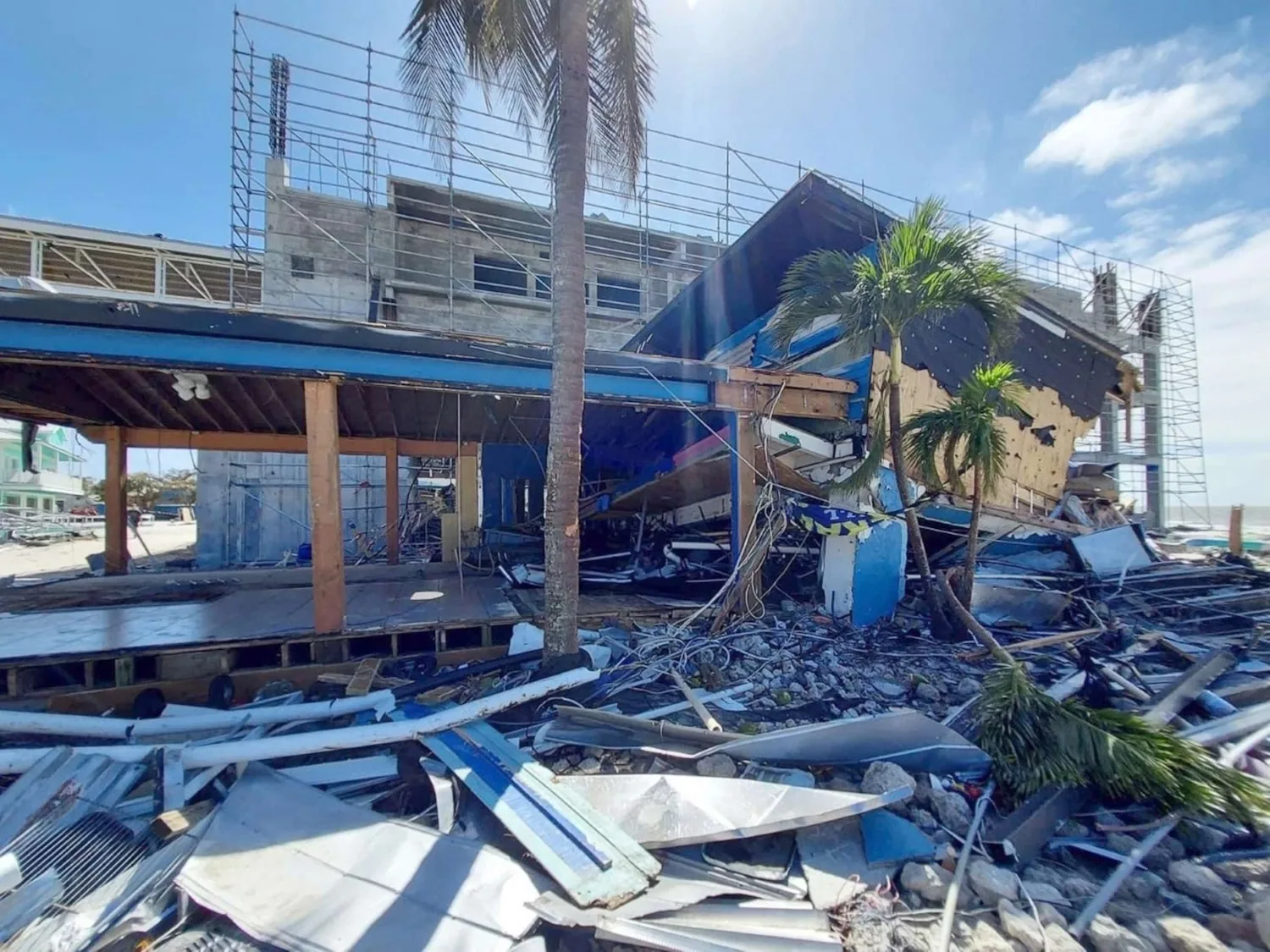
After a storm, the first useful roof record separates what is visible from what still needs testing. Insurance restoration work in Victoria requires a careful roof walk, dated photographs, and a scope tied to the affected building and section. Hail, wind, and tropical rain can expose different details, but weather history alone does not assign a cause. We document observed damage, protect active openings, and describe repair work in terms the property owner and project team can review.
Insurance Restoration
Note the property, date of reported event, weather information provided, interior location, and time the leak appeared. Photograph the full roof area, the suspected detail, and a nearby reference such as a drain, curb, or parapet. A ceiling stain may sit away from the entry point. We inspect seams, skylights, metal edges, equipment attachments, penetrations, and drainage, then label each image by building and roof zone. A commercial roof inspection keeps observed conditions connected to the property record.
Victoria County has received weather alerts citing quarter-size hail and strong gusts, and National Weather Service records include hail reports in Victoria. South Texas storm records include several tropical systems that brought wind and heavy rain to the region. These records help prioritize roof checks, while the field report documents what changed at the inspected property. We record the visible condition and distinguish it from prior wear, repair, or an area that could not be accessed.
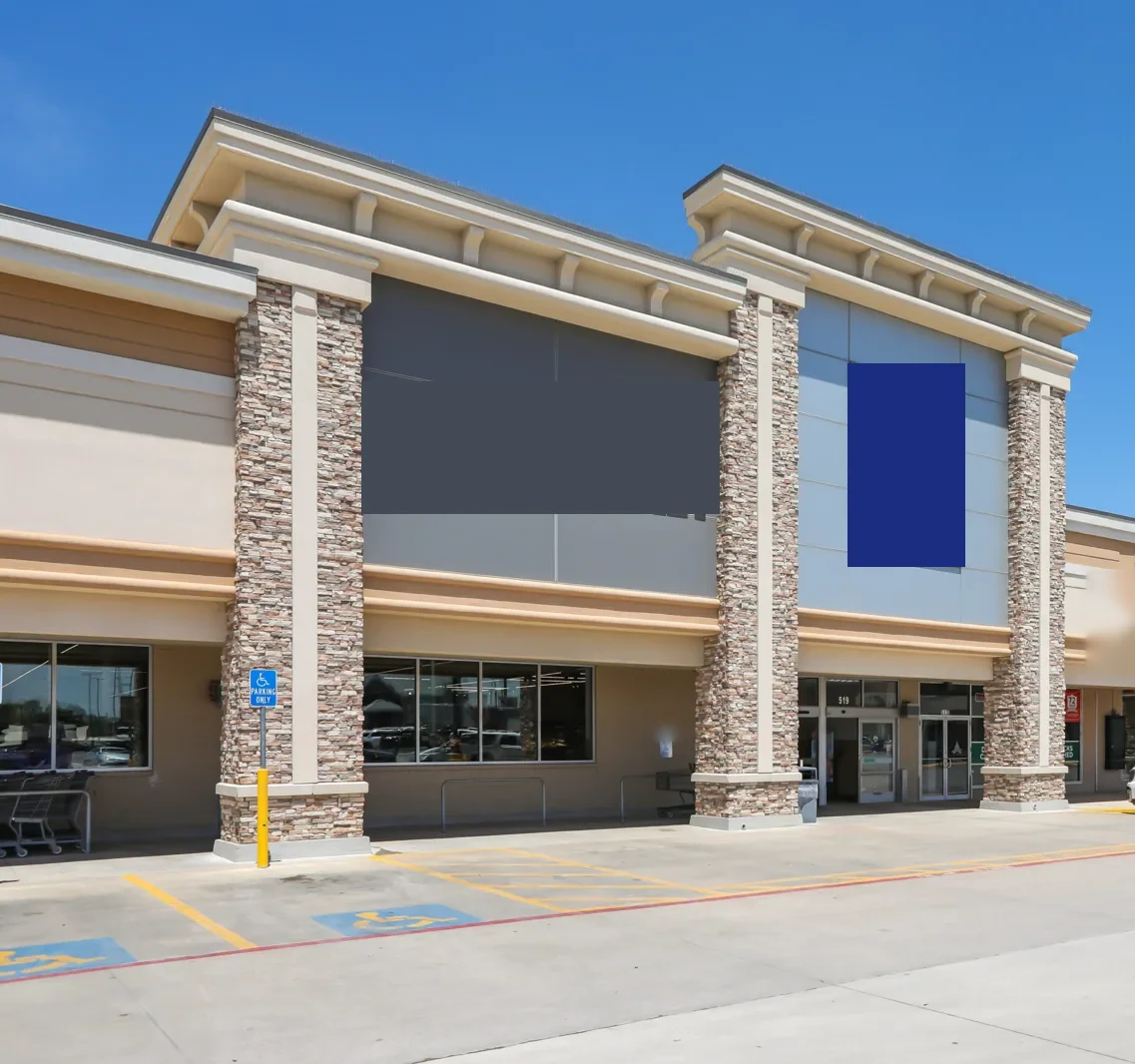
North Navarro Street Retail Corridor and Port of Victoria Industrial Park South represent distinct commercial areas in the market, with different buildings and operations. A North Navarro Street Retail Corridor route describes a genuine broader district. Any claim-related roof inspection remains specific to the property and the date of observed damage.
Record storm observations by roof section
When water is actively entering, immediate protection can limit damage to inventory, equipment, records, and interior finishes. We assess safe roof access and use an appropriate temporary measure where conditions allow. The work record identifies the location protected, material used, and what remains exposed. Temporary work should not be described as the permanent repair or as a determination about payment or coverage.
After the assembly can be inspected, we define the repair boundary and list materials and labor needed to restore the roof. If wet insulation extends beyond the opening, a test or selective removal may be needed to measure the affected area. We state what evidence the next step will provide and obtain direction before enlarging work beyond the authorized scope. That creates a record of the physical condition and repair performed without assigning decisions outside the roofing scope.
Emergency service is available around the clock for active water entry. If rain or high wind prevents a safe repair, secure the opening as conditions permit and explain the follow-up needed. The owner receives an update on access limits and the next roof inspection, rather than a promise about how an insurer will handle the file.
Separate emergency protection from permanent repair
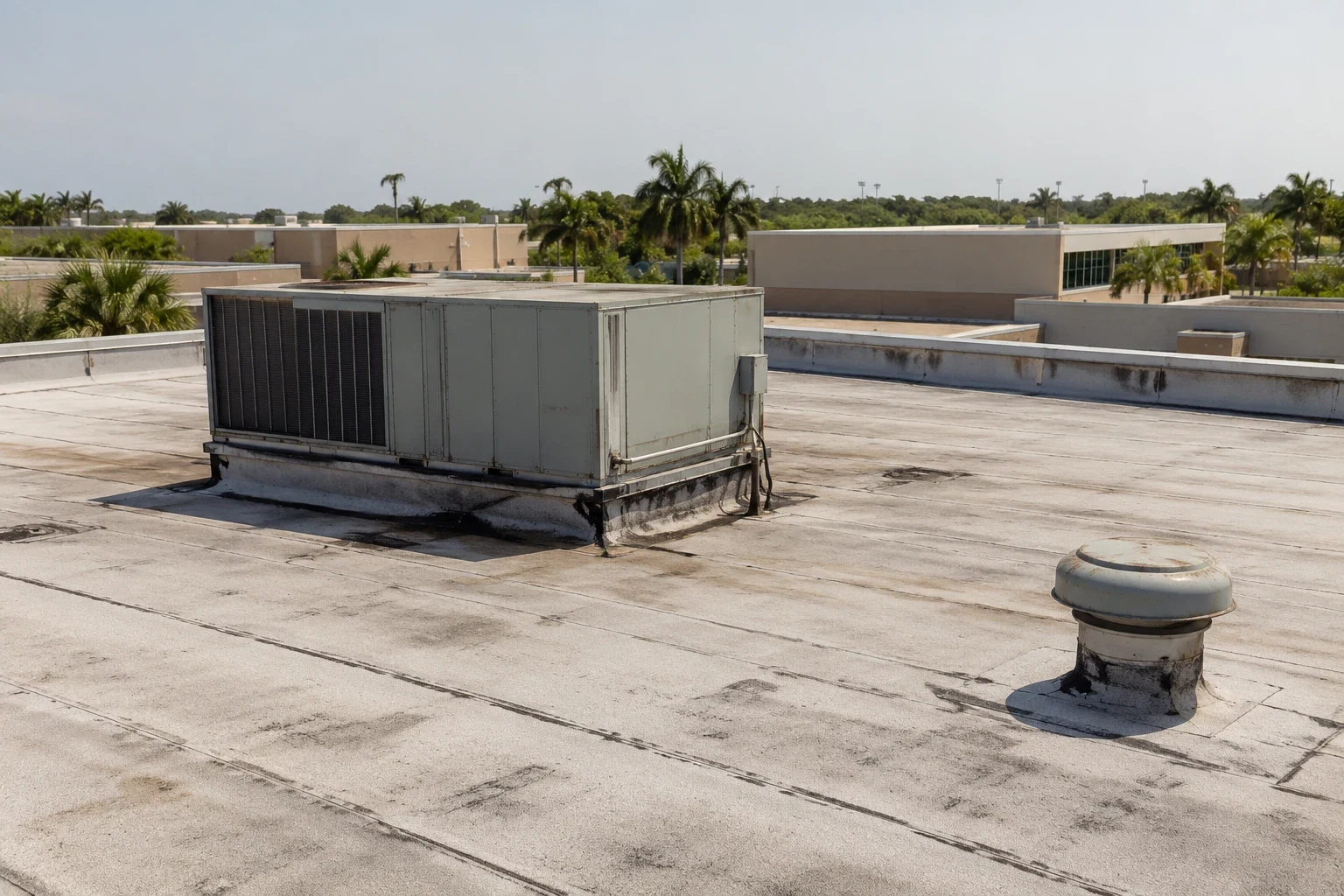
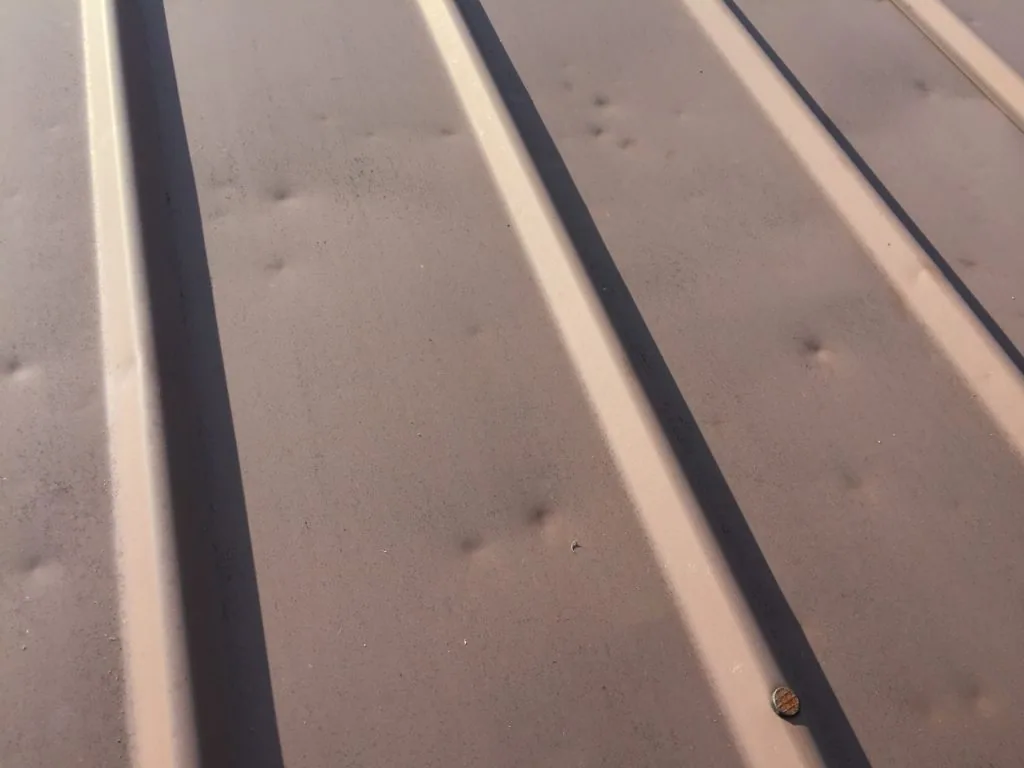
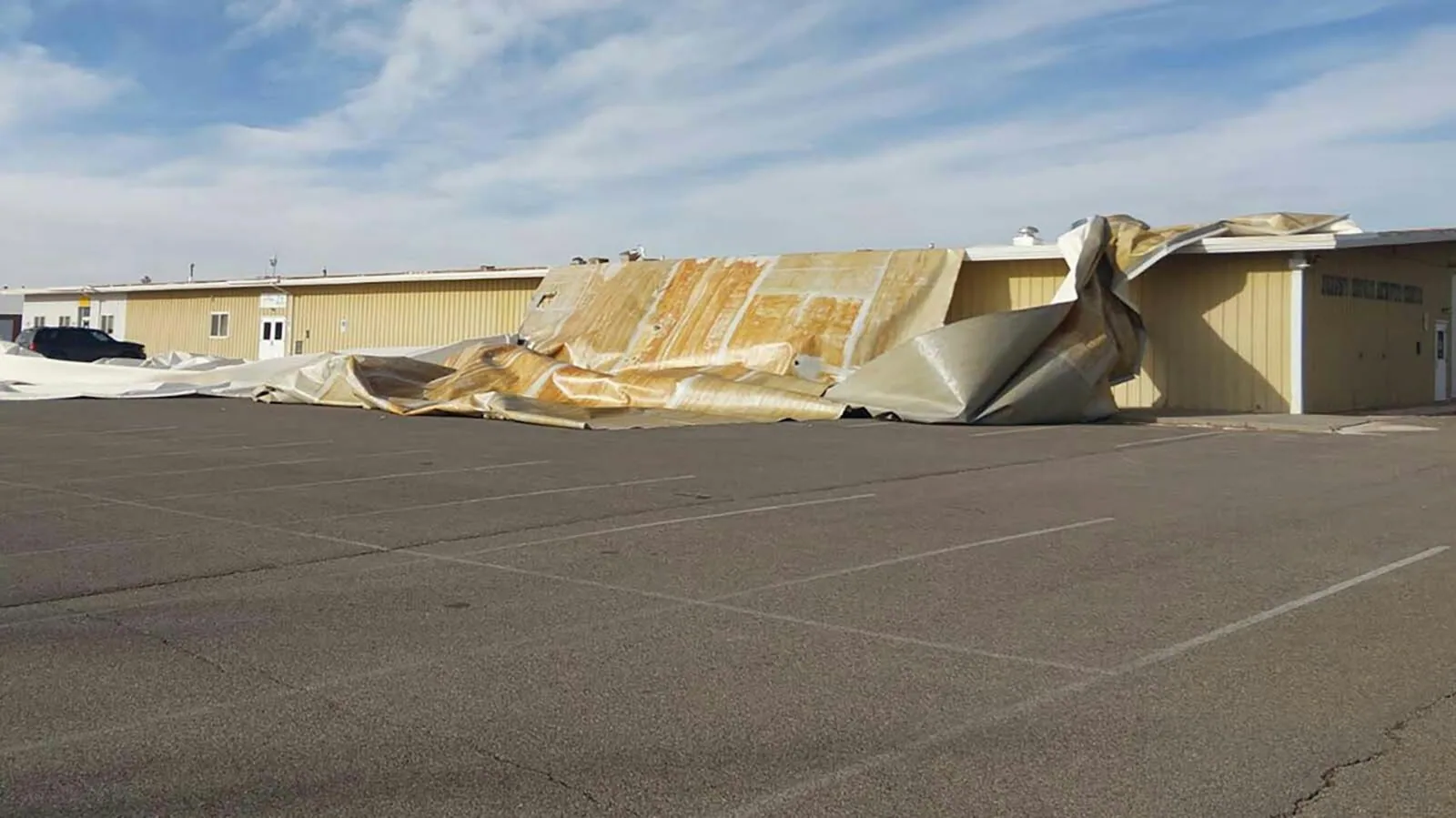
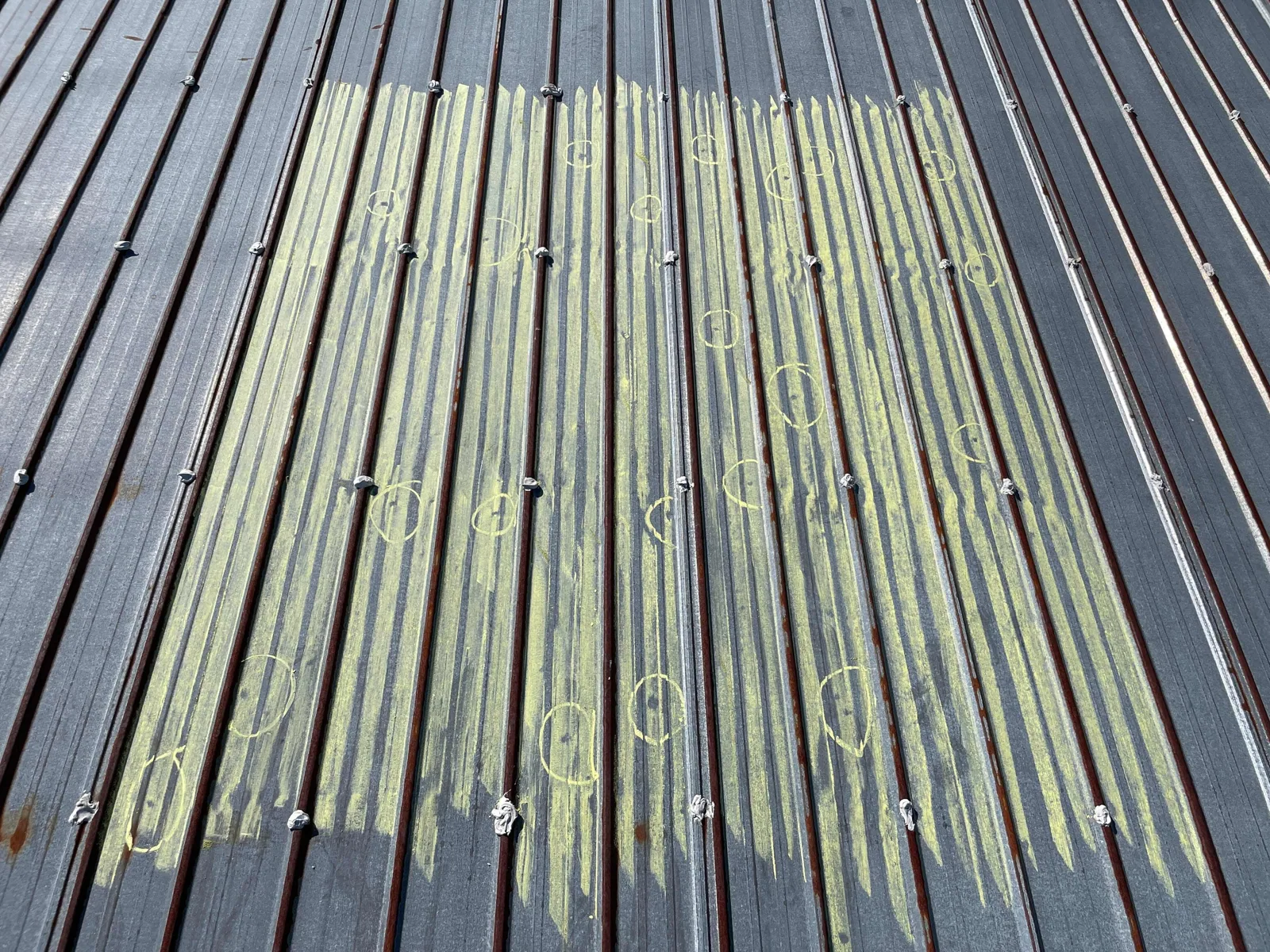
Hail impact can mark metal, crack a brittle component, or damage a skylight, while wind can lift edges, loosen fasteners, or stress flashing. Inspect each material for the kind of change it can show. Document punctures, open laps, separated corners, dented metal, displaced screens, or a failed attachment with a scale or position reference where useful. Avoid treating a nearby stain as proof that a specific roof detail failed.
Drainage can reveal a separate issue after heavy rain. Check whether strainers are blocked, scuppers are clear, overflows work, and the surrounding membrane is intact. A hail damage roof inspection or wind damage assessment can document observed impacts, while a drainage repair addresses a blocked or damaged outlet. Keep each finding and cause assessment distinct in the work description.
Heat exposure can age the roof surface and narrow the period available for adhesive or coating work. We check the actual membrane temperature, moisture, and application instructions before installing a repair. A storm may reveal an older seam issue; the roof walk should record that condition separately from visible impact.
Inspect damage and the surrounding assembly
A localized seam, curb, or flashing repair may restore the roof where surrounding material and insulation remain sound. We describe removal, surface preparation, tie-in, and the area covered. A roof insurance claim documentation service can provide condition photographs and a work record for the owner’s file. The owner can add that material to the claim file alongside policy information and adjuster records.
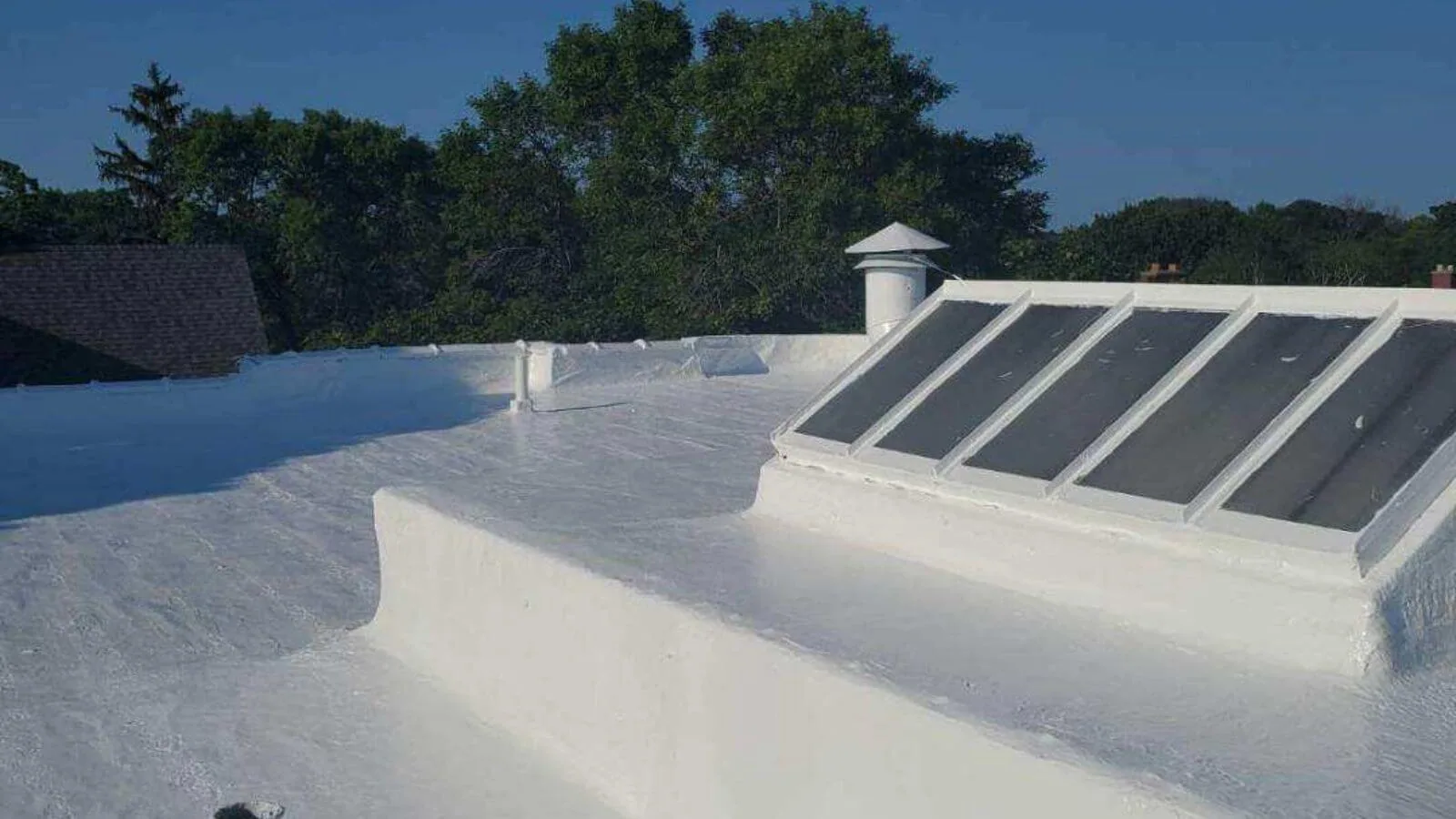
If moisture is broad or the roof has repeated failures, compare localized repair with selective replacement or a larger reroof. State what is confirmed, what remains concealed, and whether a test opening changes the quantity. A coating may be suitable on an eligible dry surface, but it does not replace wet insulation or correct structural movement. Each option should identify materials, repair boundary, access, and any limitation.
Cost and timing depend on system type, roof height, equipment access, material removal, protection below, and weather. A property manager can provide maintenance records and coordinate tenant access, while a general contractor may need trade boundaries and sequencing. The owner or adjuster can evaluate the documented roof facts within their process; our proposal identifies the roofing work and field evidence.
Write a repair scope that can be reviewed
Closeout identifies the building, roof section, repair detail, materials, photographs, and any open or inaccessible area. Preserve the date of temporary protection and the date permanent work was completed. If another trade must move equipment or repair a support, identify the interface and follow-up. The property owner can then connect the roofing record with the wider claim or restoration file. Include a work order number, property contact, and date of each site visit so follow-up items can be traced to the correct event.
Keep weather observations separate from the roof’s repair history. Include the inspection contact and property file reference. A dated photo may show an exposed condition without establishing when it began. Prior service records, installation details, maintenance notes, and post-event inspection images can help the owner compare conditions over time. A roof condition report can organize those observations by roof area and note limitations in access or testing.
Share the building address, reported event date, interior location, roof plan, prior repair records, and the person who can approve access. We will inspect the roof, document observed conditions, and provide a scope tied to the physical assembly. Victoria’s commercial properties span retail corridors, health facilities, schools, industrial parks, and port-related sites; each receives its own report and repair record.
Maintain a complete record after the visit
Related Roofing Work
Frequently Asked Questions
Can a roofer determine whether storm damage is covered?
We document the roof condition and the repair work. Coverage and claim decisions belong to the insurer and policyholder; our report describes observations without promising an outcome.
What photographs help after hail or wind?
Use dated wide views and close details of skylights, edges, seams, curbs, and equipment attachments. Label each image by building and roof section so the location is clear.
Should temporary protection be listed separately?
Yes. Record the location, material, date, and remaining limit of a temporary measure separately from permanent repair. That helps the owner track what still needs authorization or follow-up.
What if storm damage is mixed with older roof wear?
We describe each observed condition and its location, then note what the inspection can or cannot establish. A nearby defect is not assigned to an event without supporting evidence.
Provide the property, reported event date, roof plan, interior leak location, and access contact. We will photograph visible conditions, separate temporary protection from permanent repair, and return a roof scope by section.
Call 555-555-5555 or email [email protected].