
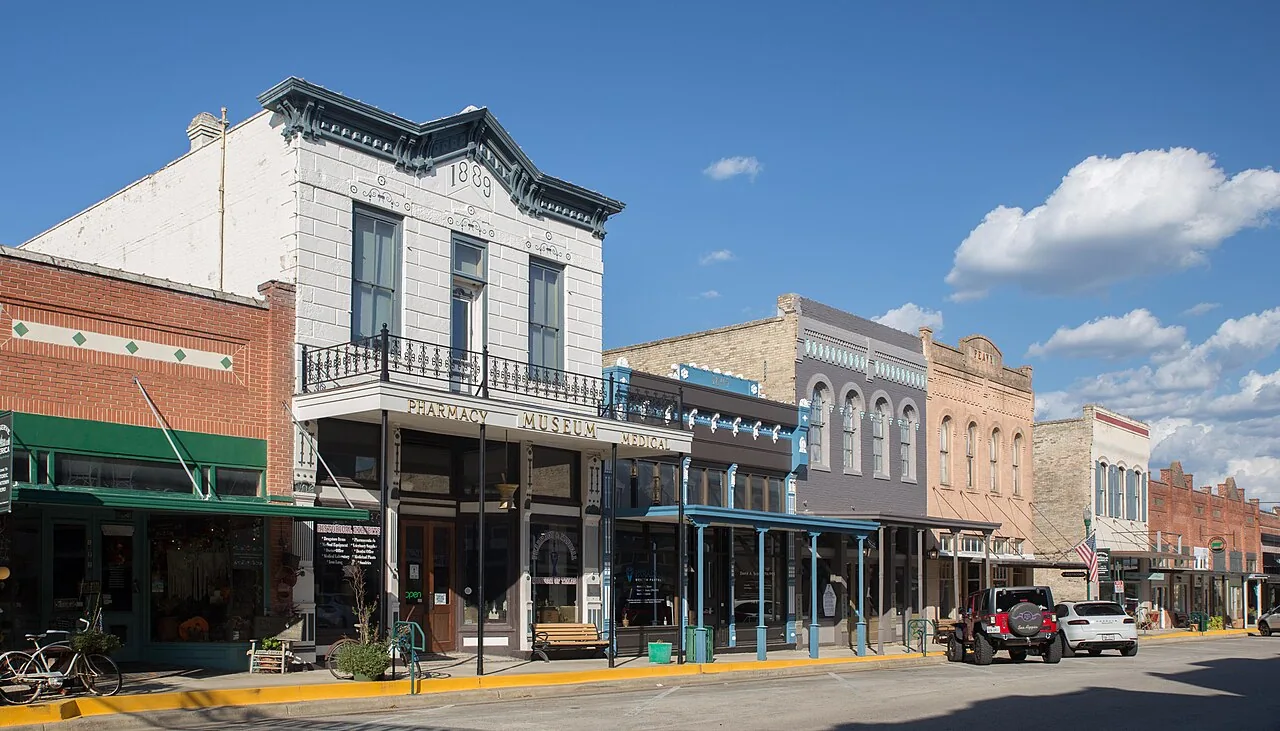
Commercial Roofing in Cuero, TX
Service Areas · Victoria, TX
Commercial roofing in Cuero, TX, with roof inspections, repair planning, and maintenance for retail, healthcare, transport, and light industrial properties.
Next step
Request a Roof Assessment
Call
555-555-5555
Retail, healthcare, transport, and light manufacturing roofs in Cuero call for a clear work boundary before a crew opens the assembly. We start with the building's use, roof plan, reported leak, and access contact. The local economy includes agriculture and those commercial sectors, while US 87 and SH 72 support highway-linked retail and industrial activity. That context helps shape dispatch and staging, but the property inspection establishes the actual roof system and condition. Each recommendation stays tied to the authorized building and the details found there.
Cuero
A roof over a retail space may need an open customer entrance while materials move overhead. A healthcare building can require tighter coordination around occupied rooms and equipment. Light manufacturing or transport work can involve loading routes that must remain clear. Those are planning questions, not assumptions about a particular site. Before arrival, we confirm the hours, entry procedure, staging point, and person authorized to approve testing or added work. A roof sketch with drains, curbs, and prior repairs marked gives everyone the same reference.
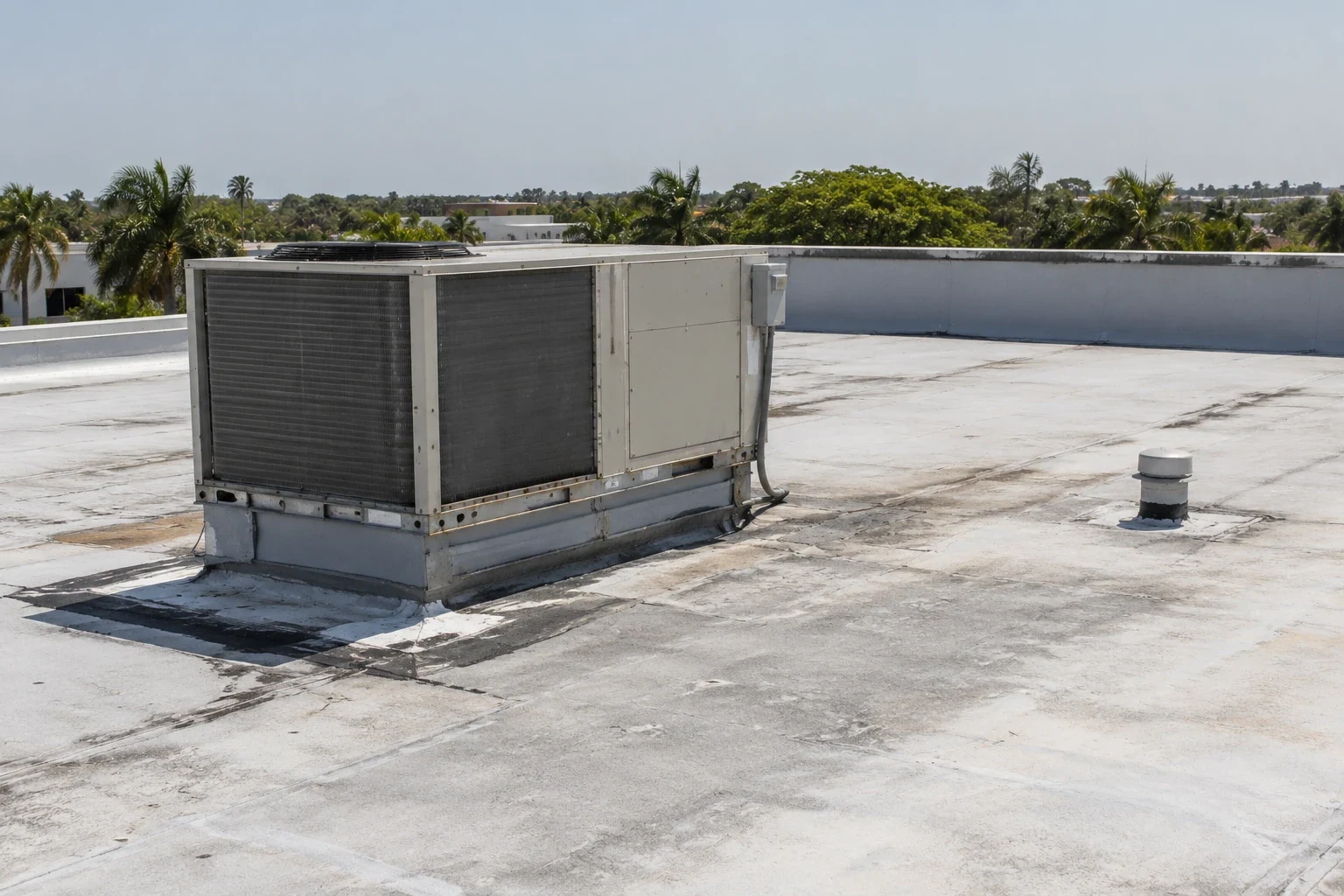
Cuero Regional Hospital serves DeWitt County and surrounding rural communities, a reminder that healthcare is part of the local service mix. It does not establish a roofing condition at that institution or any other property. A medical building's roof plan should identify rooftop units, penetrations, and any areas that need protected access. At a different property, freight or customer movement may drive the schedule instead. The roofing scope follows the building's real operating requirements, not a general label for the town.
Plan for the property's use and access
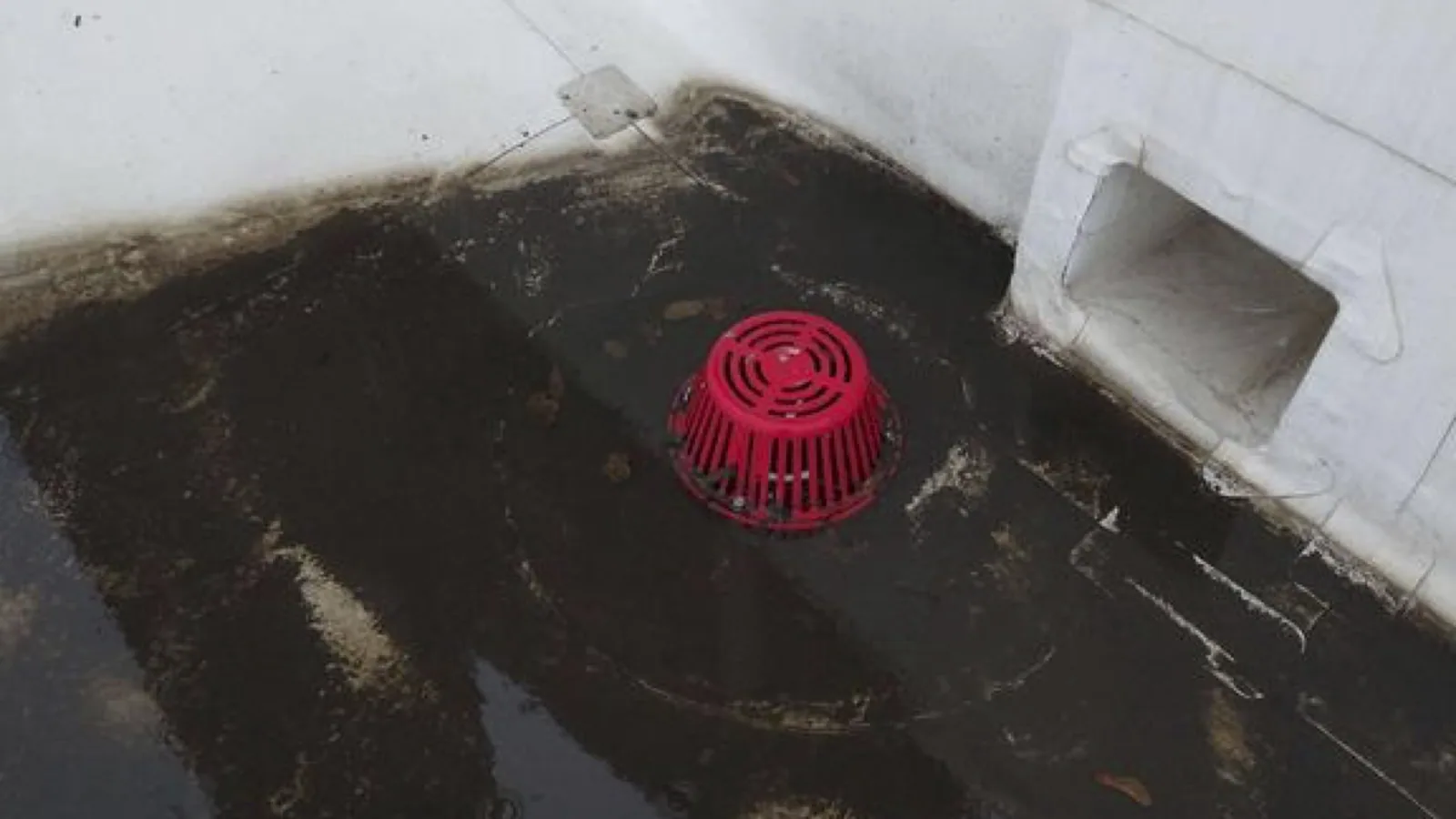
A ceiling mark gives us a starting point, not the repair location. Water can move beneath insulation or along a deck before it reaches an occupied room. On the roof, we check membrane laps, metal joints, flashing corners, drains, scuppers, pipe penetrations, equipment curbs, and the perimeter. We compare the visible details with the interior report and note which roof zone each photograph shows. If an addition meets an older section, we inspect the transition as its own detail instead of assuming the same system continues across both areas.
Cuero's position along US 87 and SH 72 supports transport, retail, and light-industrial activity. At a highway-adjacent property, access and delivery timing may affect the inspection route, but only the site contact can confirm the current conditions. We record the roof surface, drainage, prior patches, weather, and areas reached. A visual walk cannot show every concealed layer or prove that insulation is dry. Where a test could change the proposed repair, define its location and restoration plan before making an opening.
Trace the reported water path
A repair boundary should meet material that can take a sound tie-in. The scope identifies preparation, compatible membrane or metal, flashing treatment, measured quantity, and the closure expected before the crew leaves. If removal reveals wet insulation, damaged deck, or a second roof layer, we secure the opening and show the owner the condition before extending the work. Any added quantity is measured and submitted for approval. Keeping the change visible lets a property manager decide whether to proceed, test farther, or hold at the original limit.
A commercial roof inspection records visible conditions before the estimate. leak repair addresses a confirmed water path, while a drain and scupper review checks outlets and overflow routes. A recover or coating option requires a separate look at existing layers, attachment, drainage, substrate, and perimeter height. The owner should see which condition each line item addresses and what remains outside the approved boundary.
Prepare a repair that closes cleanly
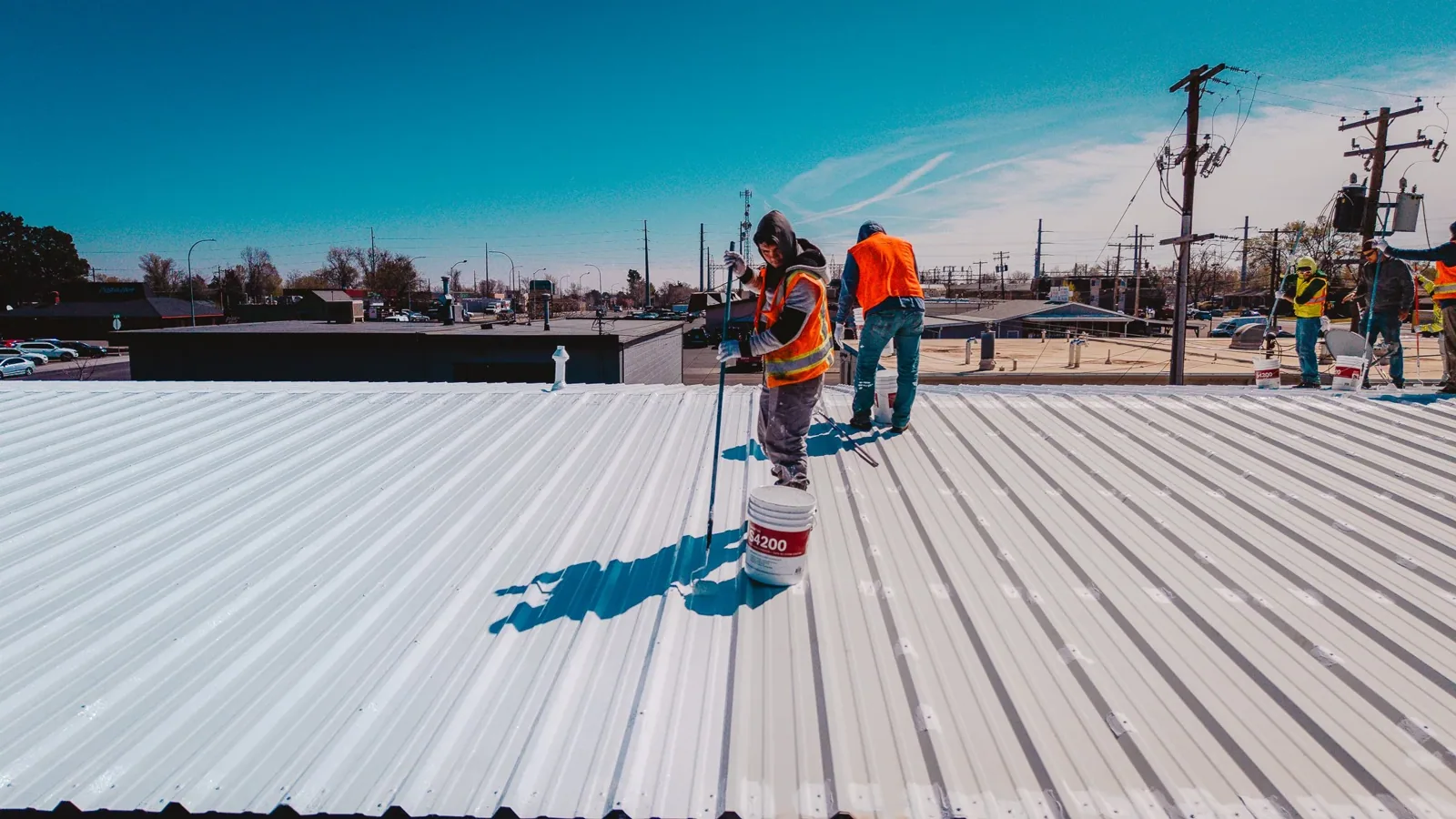
A localized repair can make sense when the surrounding assembly is sound and accepts a compatible detail. Repeated water entry, broad membrane separation, metal corrosion, or moisture indications across several sections may call for testing or a renewal comparison. The recommendation should name the observed condition and distinguish it from an unverified possibility. For a coating or recover, confirm the layers and substrate, check drainage and edge details, then match the proposed system to the existing assembly. The roof's appearance alone does not settle that choice.
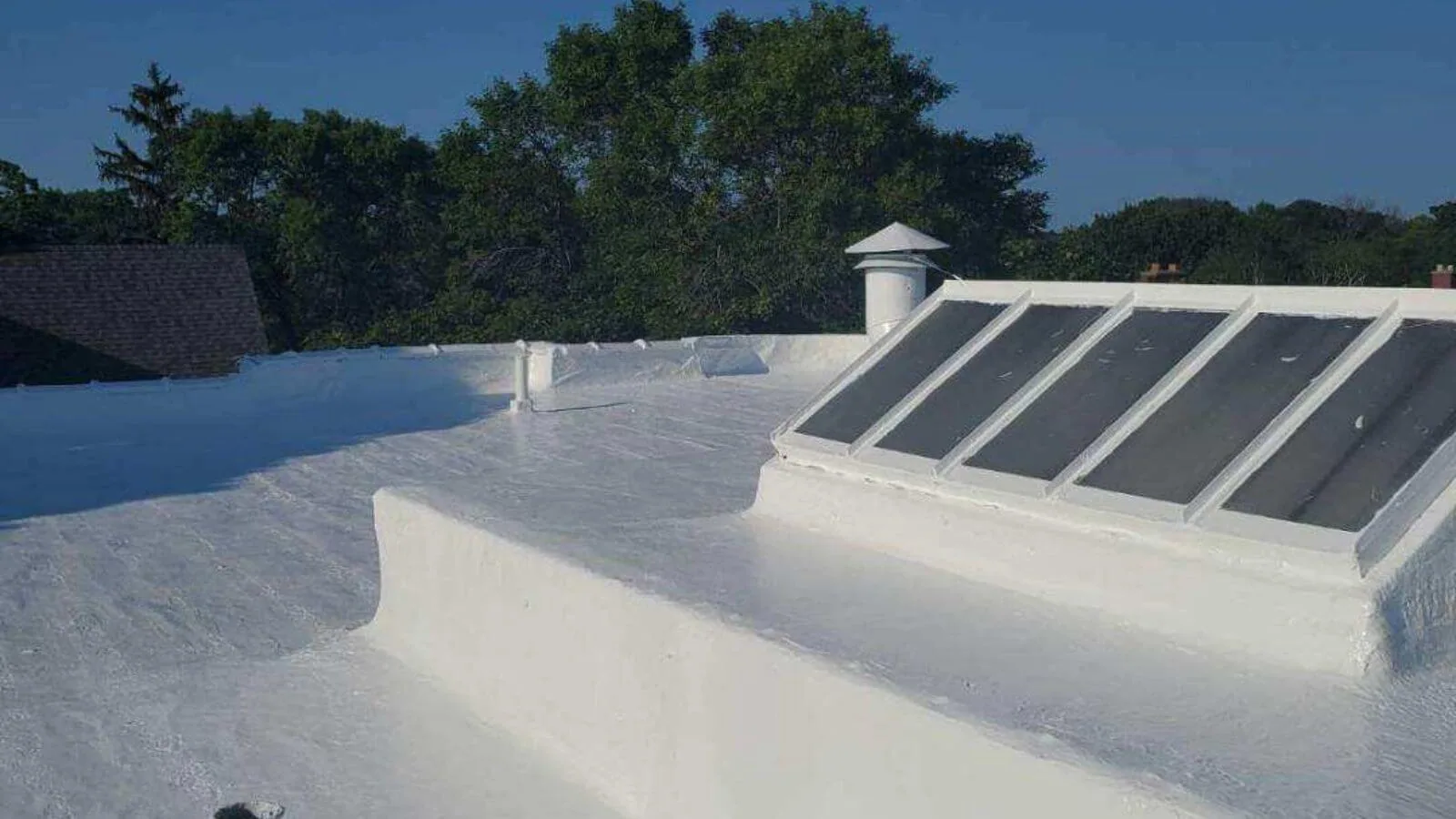
Cost and timing move with access, tear-off, insulation replacement, detail count, material compatibility, disposal, and how much of the building must stay open during work. A healthcare project may need a different sequence than an unoccupied storage area. At a retail property, barriers and delivery windows can affect crew setup. Those factors belong in the scope before a start date is set. Related conditions can also be tracked through scheduled roof maintenance or considered with a coating restoration review when the assembly supports it.
Compare the next work decision
Before dispatch, confirm roof entry, ladder or lift placement, material staging, and the route below the work area. Identify doors, loading lanes, treatment or office rooms, and equipment that need protection. The site contact should name who can approve a test opening or scope change while work is underway. If access to one roof section is restricted, we mark it as uninspected rather than extending nearby findings across it. This keeps the record accurate and avoids pricing work on a section the crew could not reach.
Victoria's market includes hot summer conditions, hail, damaging wind, and tropical-cyclone exposure. Those facts belong to the Victoria market, not as a claim that a Cuero property experienced a particular event. Heat and weather still affect product application and safe exposure time on any roof. We check the forecast, surface condition, and manufacturer instructions, then set a daily stopping point the crew can protect. If a storm report prompts an inspection, the roof itself must show the evidence before damage is described.
For a first visit, put the reported interior location on a simple roof sketch and mark drains, curbs, and any previous patch. If no drawing exists, a rough plan made with the property contact can still connect photographs to the correct section. Keep the name of the person who can approve a test close at hand. That avoids leaving an opening unresolved while a manager is reached and gives the owner a clear record of what changed.
Keep operations below the roof protected
Closeout identifies the property, roof section, system observed, inspection limits, work approved, surface preparation, material, photographs, drainage findings, and remaining decisions. It marks a temporary dry-in separately from completed permanent work and records each approved change. A marked plan lets a later inspector return to the same flashing corner or membrane lap. If the crew covered only one section, the record defines that limit. Owners can use the photographs and notes to plan follow-up without treating an unvisited area as assessed.
For a Cuero roof review, send the building information, roof plan or sketch, reported symptom, access contact, and prior repair notes. We will inspect authorized areas and explain what the field evidence supports. If the property manager also coordinates work in Goliad or Yorktown, identify each building separately so access plans, findings, and approvals stay with the right site. Photos and scope details can then be reviewed without confusing one property's history with another's.
Leave a usable roof record
Related Roofing Work

Frequently Asked Questions
Can a leak be traced from the stain inside?
The stain points to an area to inspect. Roof details and water paths establish the likely entry.
Does a roof walk confirm hidden insulation damage?
No. Concealed moisture may need testing or an approved opening.
Could you coordinate work near a medical or retail operation?
Yes. The site contact sets access, occupied-area protection, and any restricted work hours.
What changes a repair estimate after removal begins?
Wet insulation, damaged deck, or an unexpected layer can change measured quantities. We document the condition and request approval before expanding.
Can you assess more than one Cuero property?
Property visits can be coordinated, with separate roof plans, access contacts, findings, and authorizations for each building.
Share the property, roof plan, reported condition, access contact, and prior repair records. We will inspect the authorized area, photograph the details that affect the scope, and outline the next decision.
Call 555-555-5555 or email [email protected].