
Commercial Cool Roof Installation in Victoria, TX
Commercial Roofing Services · Victoria, TX
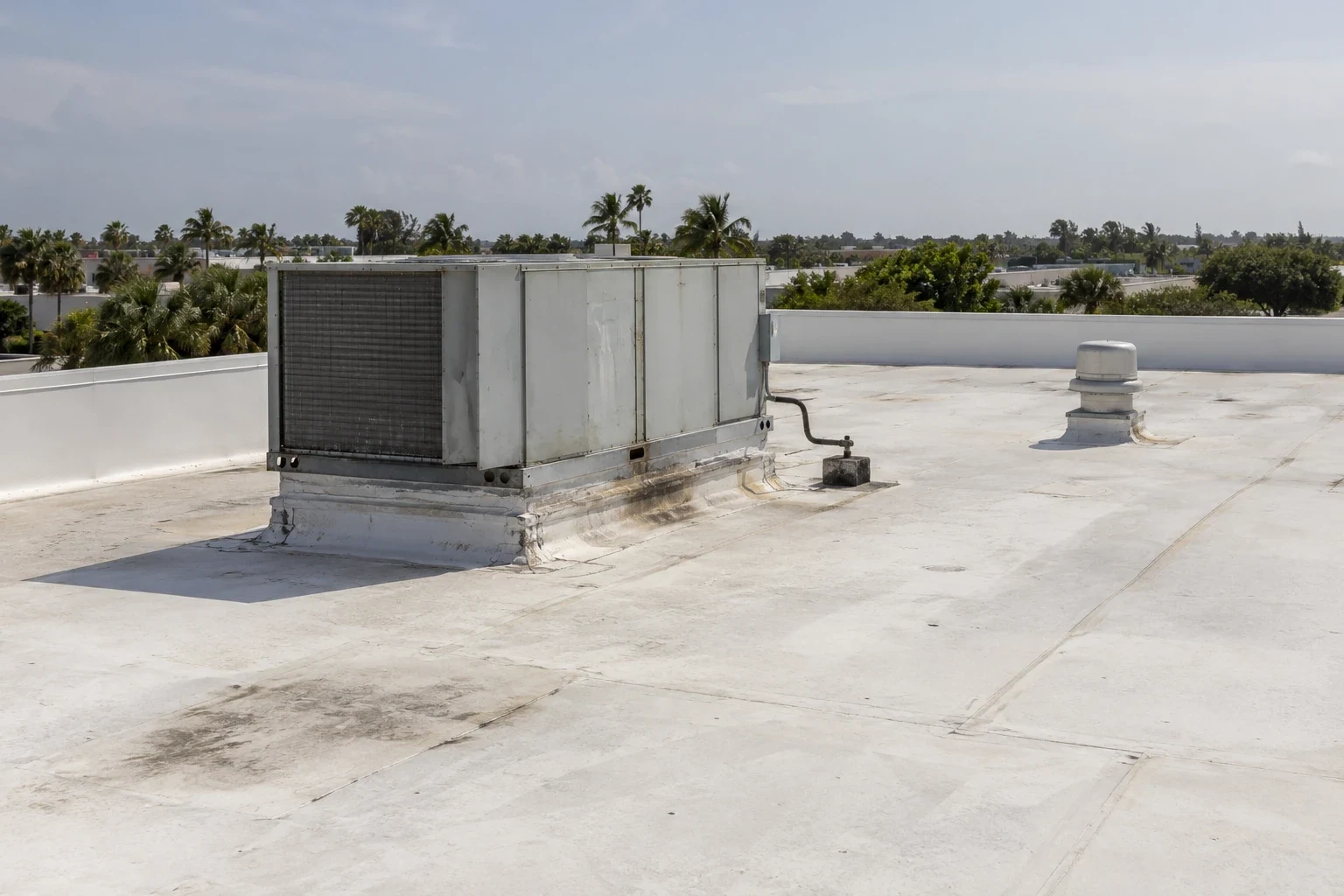
Cool roof installation in Victoria evaluates the existing assembly, surface preparation, and drainage before specifying a reflective membrane or coating.
Next step
Request a Roof Assessment
Call
555-555-5555
A reflective roof surface can reduce solar heat absorbed at the membrane, but color alone does not make a sound project. The roof still needs a compatible assembly, dry substrate, secure attachment, clear drainage, and properly finished transitions. Victoria’s hot summer conditions make roof-surface temperature and application timing practical design considerations. We inspect what is in place and identify whether a reflective coating, membrane, or broader roof replacement fits the building.
Commercial Cool Roof Installation
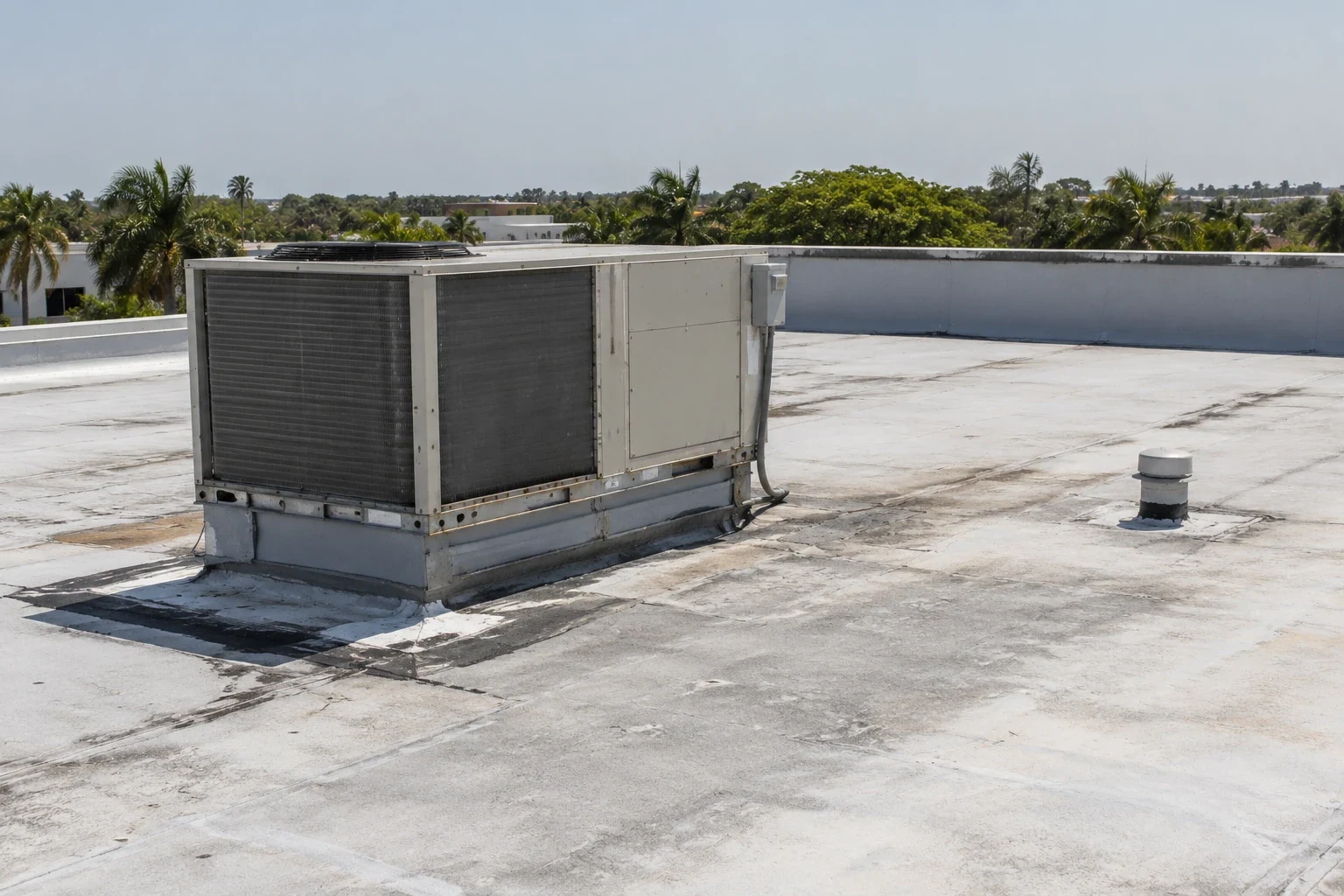
We review the roof plan, current membrane, insulation, repair history, drainage, and the spaces served below. A warehouse, school, clinic, and retail building can have different operating hours and interior temperature needs. We do not promise a specific utility reduction from a roof color; energy use also depends on insulation, HVAC condition, controls, occupancy, and weather. The recommendation focuses on roofing conditions and the system that can be installed reliably.
For Victoria, the July 2026 station log gives 94°F as a normal high and records 110°F as the peak. That local heat context supports reviewing roof exposure, insulation continuity, and work timing. It does not predict how much a particular facility’s indoor temperature or energy bill will change. We note equipment zones and areas where rooftop work needs to avoid a hot process or service window.
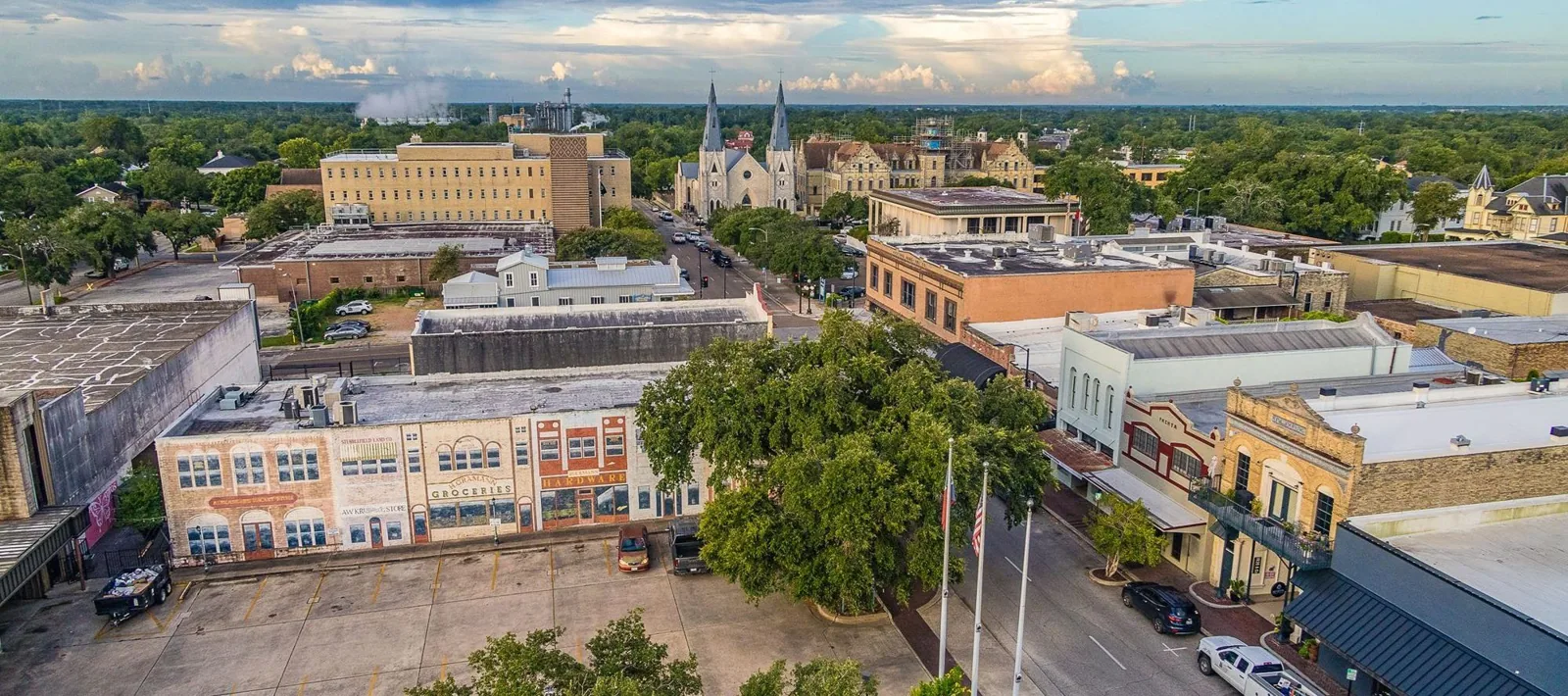
In the Downtown Victoria Business District, older commercial properties sit alongside professional offices and retail uses. Existing layers, parapet heights, and roof access vary from building to building, so we inspect the actual assembly rather than assume one detail applies across a district.
Start with the building and existing roof
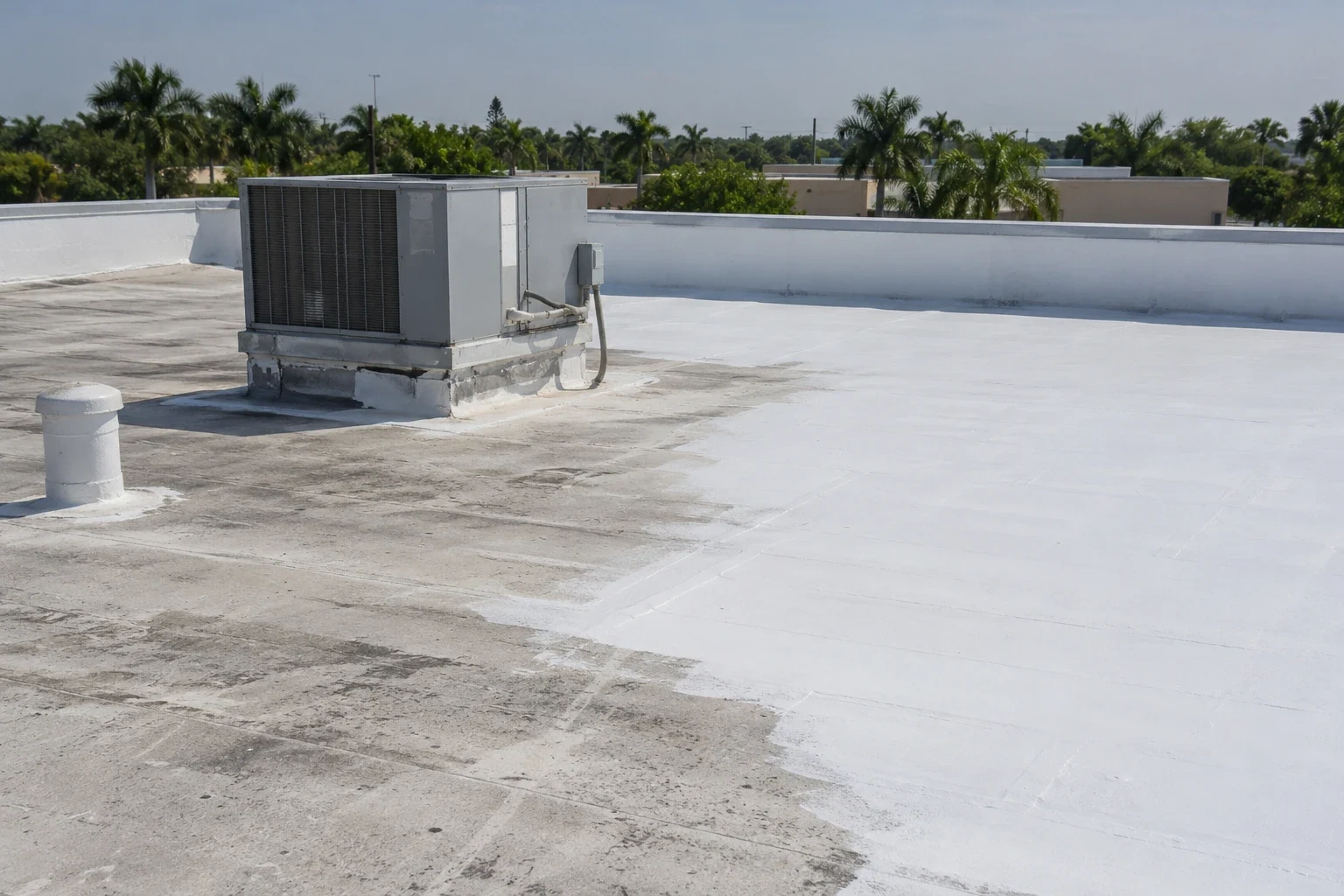
A reflective membrane may be appropriate for a replacement or recover when the assembly, attachment, deck, and drainage support it. A coating may be considered when the existing roof is sound, compatible, and dry enough for restoration. Wet insulation, failed seams, structural movement, or a loose perimeter require correction before a reflective finish is applied. We explain the limits of each option and keep repair, coating, and replacement recommendations distinct.
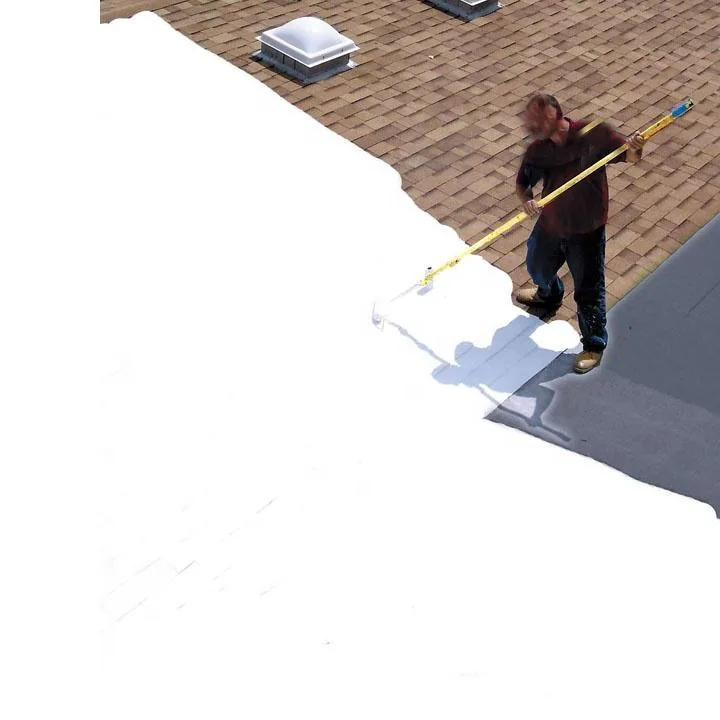
Silicone and acrylic systems have different properties and application requirements. The silicone coating system or an acrylic roof coating must match the substrate, drainage conditions, and project specification. We check compatibility with existing material and use test areas when needed. A coating is not used to cover a moving curb, saturated section, or drain failure.
For a new membrane assembly, a TPO roof system can provide a reflective surface when the chosen product and project design call for it. We confirm the membrane type and installation details rather than infer the system from a white roof or an old bid file. The selected assembly must connect correctly to walls, curbs, drains, and edge metal.
Choose a reflective system for the roof condition
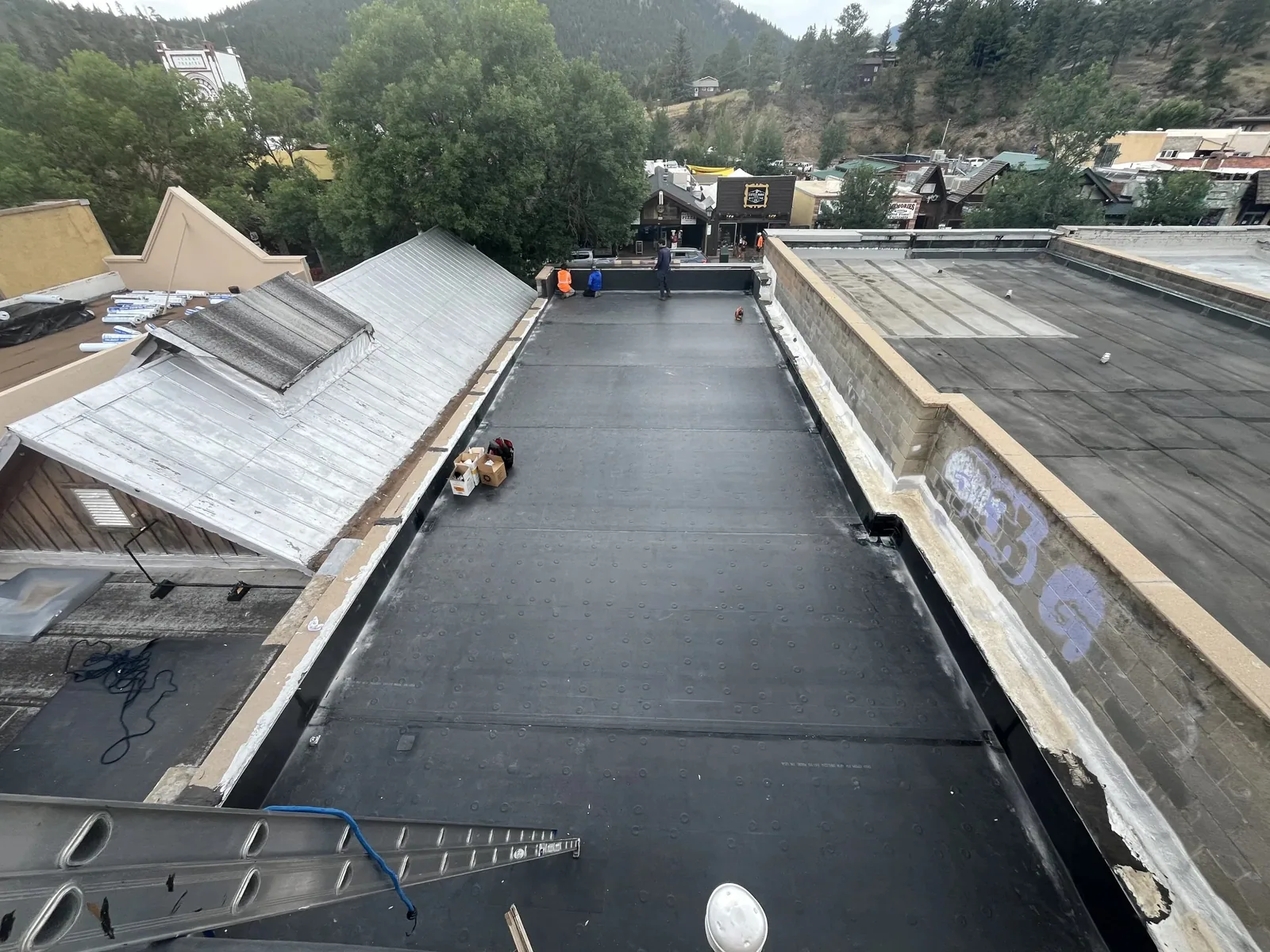
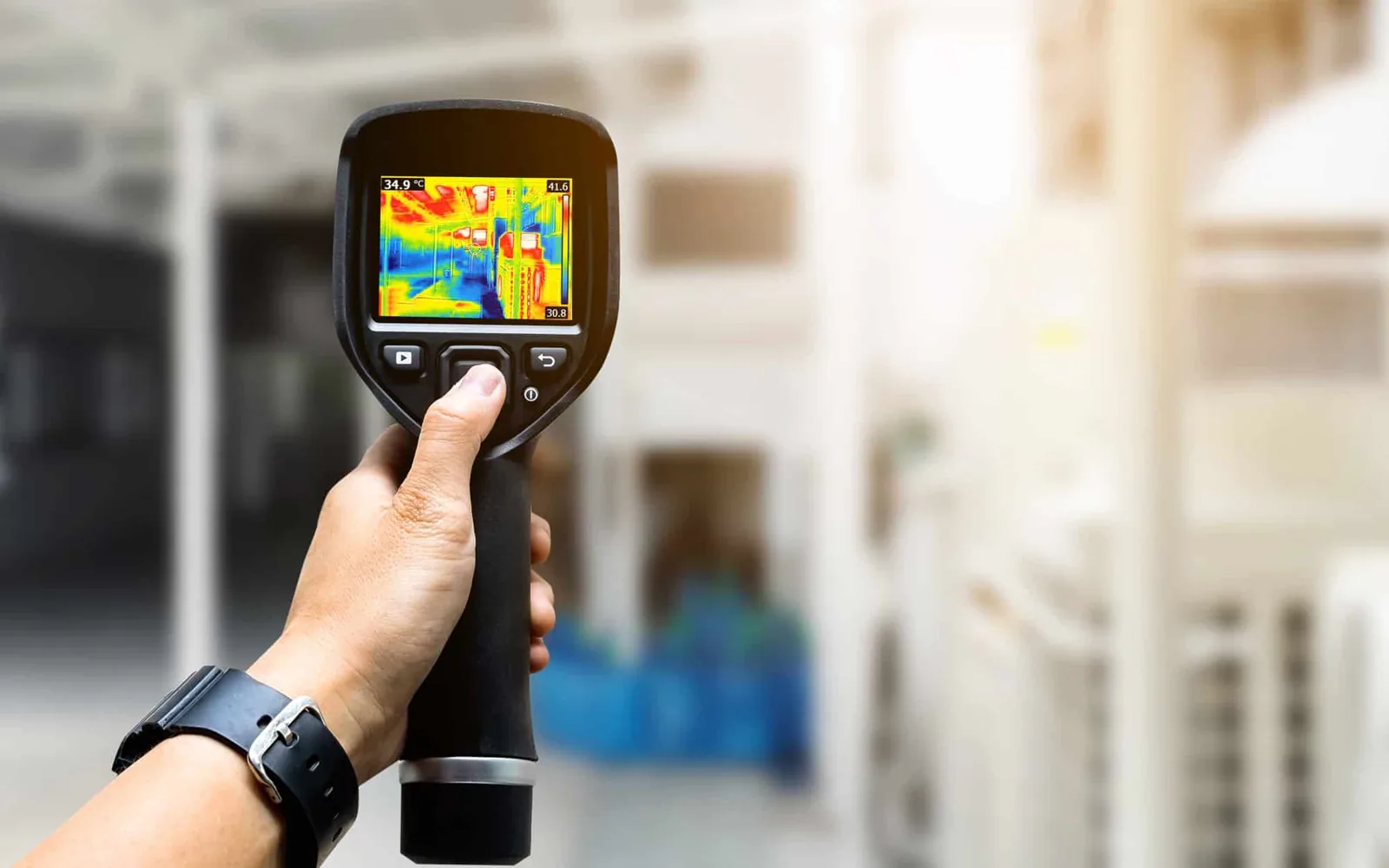
Surface preparation starts with removing loose material and locating repairs, contamination, and unstable areas. The crew confirms the roof is dry, secure, and suitable for the proposed system. If moisture may change the plan, targeted testing or selective opening can identify whether insulation can remain. An infrared moisture survey helps focus investigation but does not replace confirming a suspect layer where the result affects the work.
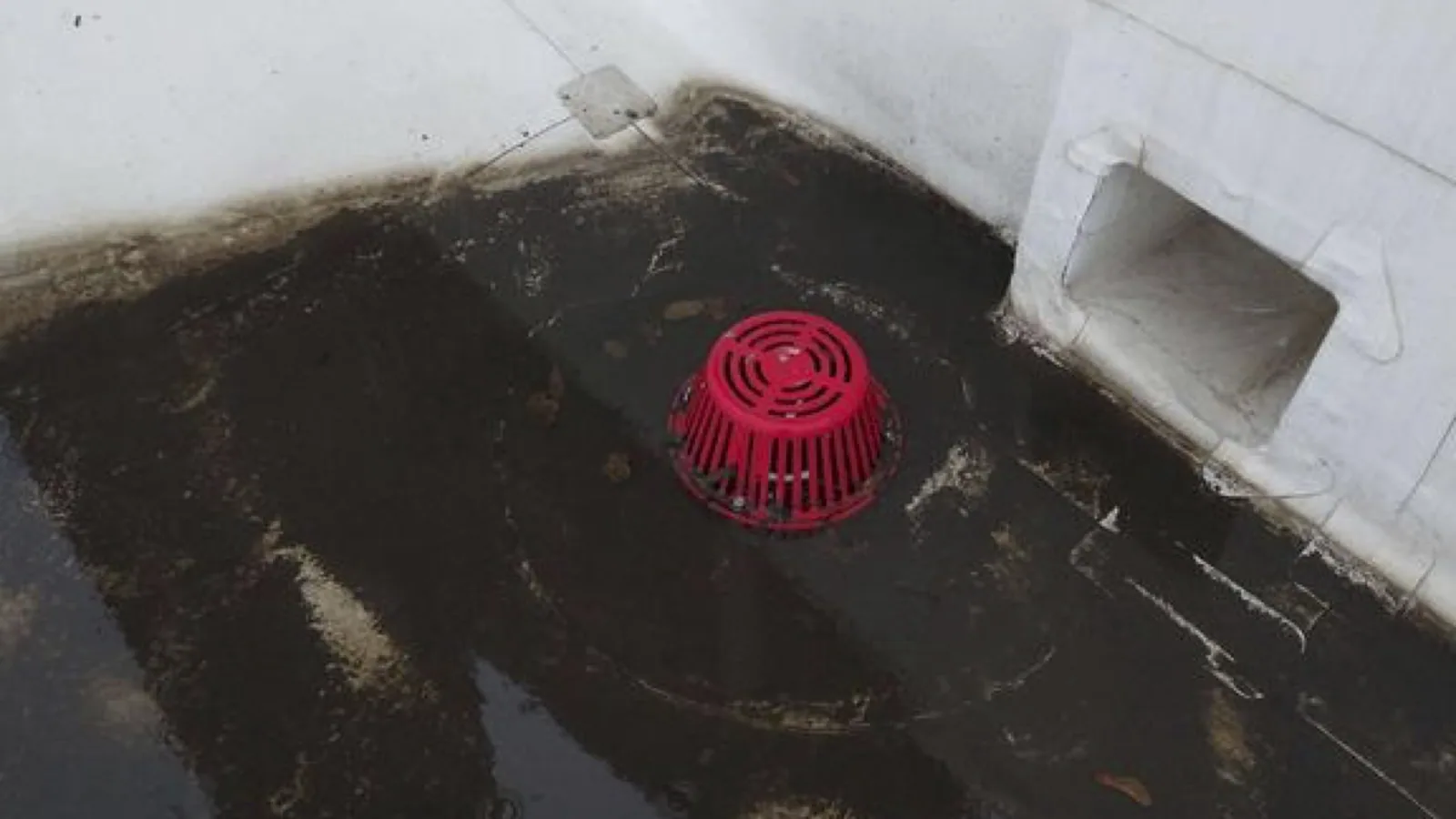
Drain bowls, scuppers, crickets, and overflows must remain functional through installation. A thicker coating or added insulation can change outlet height and roof edge clearance. We check the drain connection, curb transitions, wall flashing, and metal edge before setting material thickness. If water remains because the roof has a low area or blocked outlet, a drainage repair may come before the reflective surface.
Victoria Regional Airport’s development areas include industrial and commercial sites connected from US 59 Business. For a facility with deliveries or rooftop equipment, confirm material staging, equipment shutdowns, and roof access with the individual manager. The citywide industrial setting is useful context; it does not establish a particular property’s roof assembly or operating limits.
Prepare the roof before installation
We divide the roof into work areas that can be prepared, installed, and protected without leaving a wide open section. At each transition, verify the tie-in detail before coating or membrane work advances. Coatings require application thickness and cure conditions specified for the selected system. Membrane installation requires proper seam preparation and attachment. The crew checks details as work progresses so a finished white field does not conceal a missed corner or open lap.
High roof-surface temperatures, rain, condensation, wind, and airborne dust can affect a coating’s bond or cure. We follow the product’s actual application limits and track conditions at the roof, not just at a ground-level weather station. If a storm changes the work window, secure the active section and document what remains to complete. Victoria’s documented hail and wind exposure makes weather readiness part of the schedule without treating every forecast as roof damage.
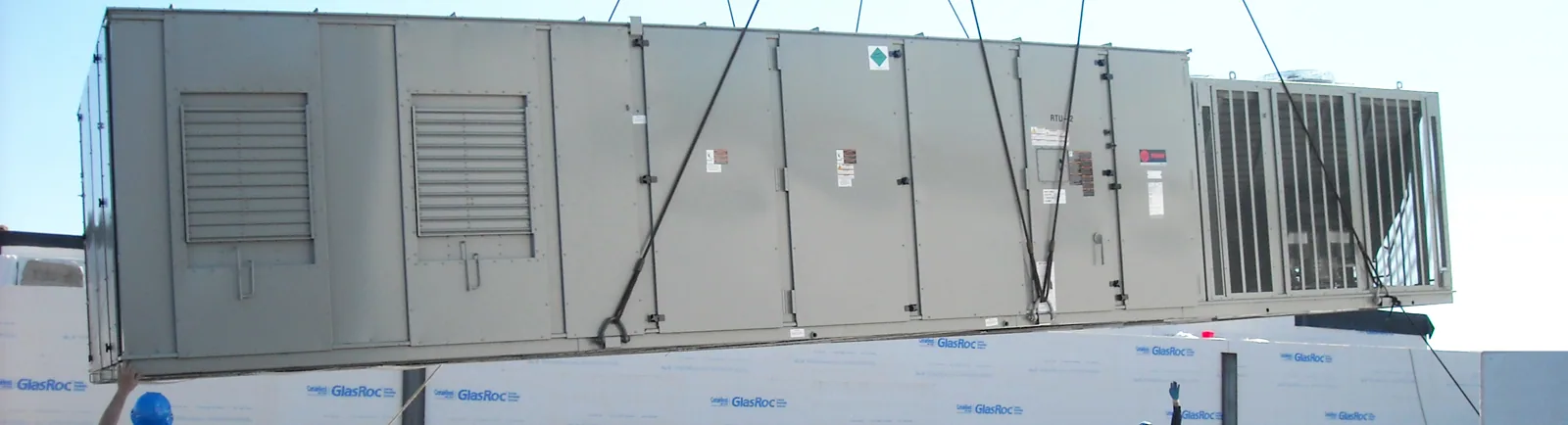
On occupied buildings, plan around intakes, rooftop service, tenant access, and the area below the work. Keep materials and wash water controlled, protect openings, and share any temporary restrictions with the property contact. If a unit needs mechanical service during installation, preserve safe access and avoid covering its curb or panel clearance.
Install the surface in controlled sections
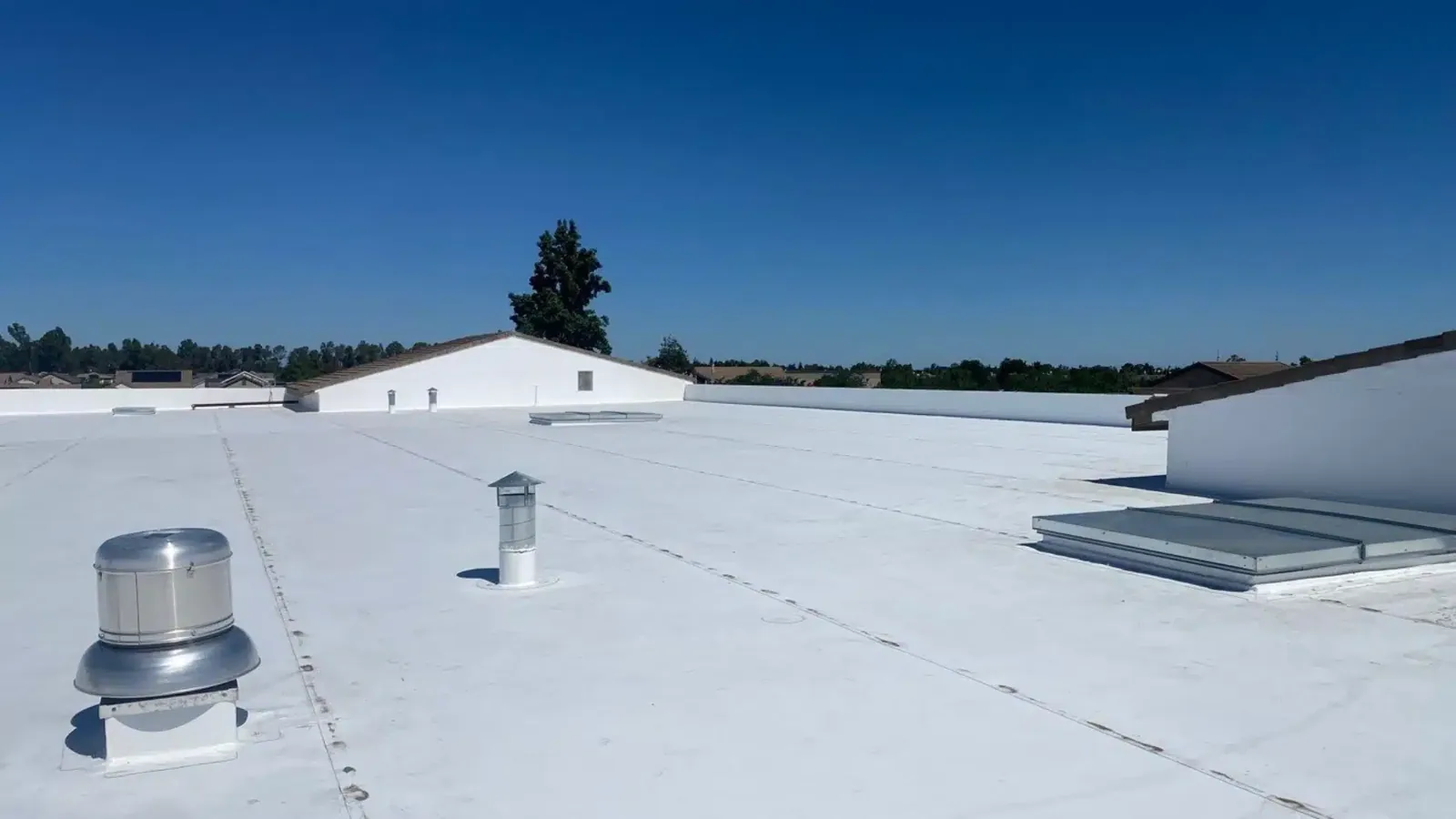
Closeout examines seams, corners, parapets, drains, curbs, penetrations, and metal edges. For a coated roof, record prepared areas, repairs, application details required by the scope, and any excluded sections. For a membrane, photograph seams and terminations before they are hidden by later work. A reflective appearance confirms the surface color, not attachment quality or moisture condition below it.
We compare the final surface with the approved roof plan and confirm that access points, drains, and equipment routes remain usable. If a roof has several buildings or construction phases, label each section separately and retain photos with the correct asset. A roof condition report can include existing concerns that were not part of the reflective roof scope.
After installation, future maintenance should use compatible materials and avoid cuts or equipment changes that leave open flashing. A maintenance program can track repairs and roof condition over time. Do not assume the surface needs recoating on a fixed interval without checking its condition and manufacturer requirements.
Check details, not just the finished color
When requesting a cool roof review in Victoria, provide the building type, roof records, energy or heat concerns, leak history, and access window. We will inspect the existing layers and drainage, compare a coating or reflective membrane option where supported, and state what must be repaired first.
Owners should evaluate roof performance alongside insulation, equipment, controls, and use of the building. A reflective surface may be one part of a larger improvement plan, but it cannot correct an undersized HVAC system or wet roof assembly. We describe the roofing work and its limits in terms the facility team can compare with its other planned upgrades.
For properties with multiple roofs, identify the building, section, and operating contact for each. A roof plan and recent photos help define transition heights, staging points, and areas requiring special access. The written scope will connect each recommendation to the observed assembly and the work sequence.
Request a cool roof evaluation
Related Roofing Work
Frequently Asked Questions
Will a reflective roof lower my utility bill?
A reflective surface changes solar heat absorption, but energy use also depends on insulation, HVAC, controls, occupancy, and weather. We do not promise a specific savings amount.
Can a cool roof coating go over the existing membrane?
Only when the roof is stable, dry enough, and compatible with the selected coating. We check repairs, moisture, transitions, and adhesion first.
Does a white roof solve a drainage problem?
No. A blocked outlet or low section needs its cause identified and corrected. Reflective finish work should preserve clear outlets and overflows.
Is TPO always the right reflective roof?
No. The roof assembly, deck, insulation, attachment, and project requirements determine the appropriate system. We verify the conditions before recommending one.
What affects a coating schedule in Victoria?
Surface heat, rain, humidity, wind, and the system’s application limits affect when work can proceed. Site operations and roof access also shape the sequence.
Share the roof type, building use, energy concerns, records, and access window. We will check the assembly, drainage, and transitions, then outline reflective options supported by field conditions.
Call 555-555-5555 or email [email protected].